
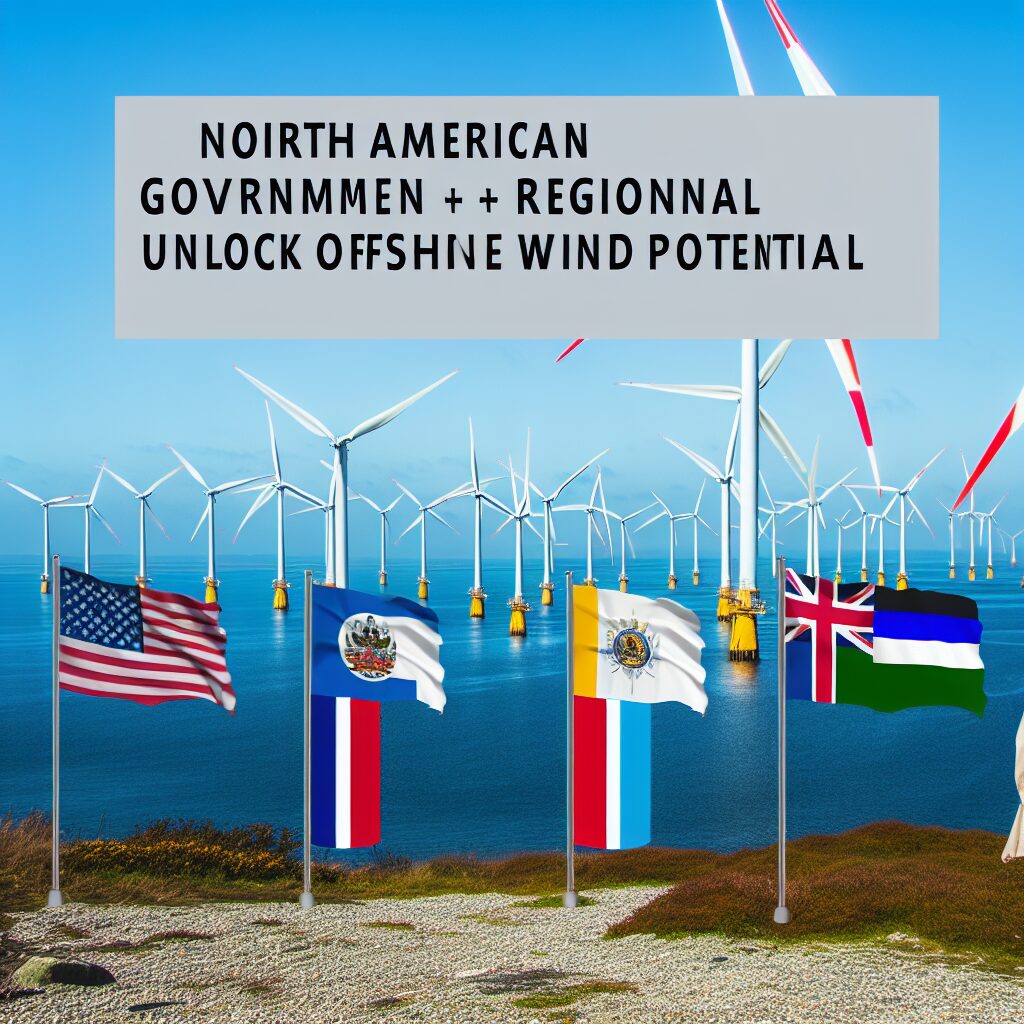
Government of Canada and Nova Scotia Unlock Offshore Wind Potential
A Joint Commitment to Renewable Energy in Atlantic Canada
The Government of Canada, in collaboration with the Province of Nova Scotia, has laid out a strategic framework to accelerate the development of offshore wind energy. This initiative is designed to harness the vast renewable energy potential off the province’s coastlines, positioning Nova Scotia as a key player in Canada’s clean energy transition.
Regulatory Roadmap for Offshore Wind Development
The new direction aims to establish clear regulations and streamlined permitting processes for offshore wind projects located in federal waters adjacent to Nova Scotia. To facilitate this, both levels of government have agreed on a framework that defines roles, responsibilities, and timelines.
Key elements of the agreement include:
- Establishing a regulatory regime under the Canada-Nova Scotia Offshore Petroleum Board (CNSOPB), which will be renamed to reflect its expanded mandate.
- Creating a joint management approach ensuring coordinated environmental assessments and Indigenous consultations.
- Launching competitive calls for proposals starting in 2025, targeting commercial-scale offshore wind developments.
Canada’s Broader Climate Objectives
This partnership aligns with Canada’s goal of reaching net-zero greenhouse gas emissions by 2050. The advancement of offshore wind infrastructure supports the country’s strategy to diversify clean energy sources, reduce dependence on fossil fuels, and meet energy demands sustainably.
According to Natural Resources Canada, offshore wind has the technical potential to generate over 35 gigawatts (GW) of electricity annually off Nova Scotia’s coasts — a significant contribution to national and provincial energy needs.
Nova Scotia’s Role in Clean Power Generation
Nova Scotia has set an ambitious target of deriving 80% of its electricity from renewable sources by 2030. Offshore wind development is expected to play a critical role in achieving this milestone.
Tim Houston, Premier of Nova Scotia, emphasized the province’s readiness to lead in offshore wind. “We’re building a future where Nova Scotians can benefit from clean energy opportunities right here at home,” he stated.
Economic and Environmental Considerations
The offshore wind sector presents not only environmental benefits but also economic opportunities. The collaborative plan outlines several key advantages:
- Job creation across engineering, construction, and maritime sectors.
- Increased investment in coastal communities and infrastructure.
- Long-term partnerships with Indigenous communities and local stakeholders.
While promoting economic growth, both governments have committed to rigorous environmental oversight. All projects must undergo comprehensive impact assessments to ensure protection for marine ecosystems and biodiversity.
Next Steps Toward Implementation
To prepare for the launch of commercial bidding, several preparatory steps will be taken:
- Updating legislation to enable offshore wind development under the CNSOPB.
- Initiating early engagement with Indigenous groups and fisheries organizations.
- Conducting regional environmental and socio-economic studies.
The first call for bids is scheduled for 2025, with project approvals and construction expected to follow in subsequent years.
Industry Outlook and Global Context
Globally, offshore wind is one of the fastest-growing segments in renewable energy. Canada’s move to formalize its entry into this market signals increasing interest from international developers and investors.
The restructured Canada-Nova Scotia Offshore Petroleum Board will oversee licensing and regulation, assuming a pivotal role in managing sustainable development while maintaining safety and environmental standards.
Conclusion
The joint announcement by the Government of Canada and the Province of Nova Scotia marks a significant step toward unlocking the region’s offshore wind potential. Through coordinated governance, environmental protection, and stakeholder engagement, the initiative sets the stage for long-term clean energy generation and economic development in Atlantic Canada.
Analyzed and outlined by ChatGPT-4o, images by DALL·E 3.
Source
Government of Canada and Nova Scotia Set Direction for Offshore Wind Future