
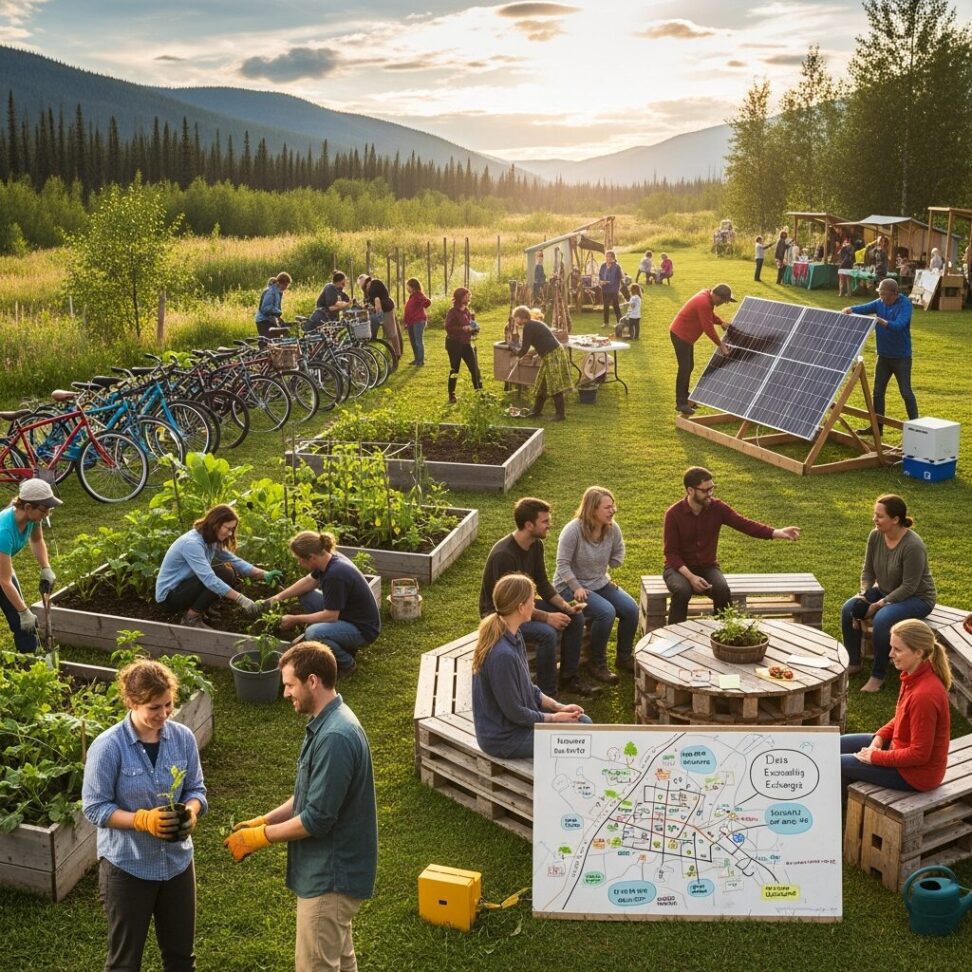
Yukon Government Sustainable Communities Forum Drives Renewable Energy Solutions
The Government of Yukon recently organized the Sustainable Communities Forum, bringing together municipal leaders, Indigenous governments, and renewable energy experts to address the territory’s clean energy transition. The event focused on practical solutions for communities looking to reduce their carbon footprint and embrace sustainable energy alternatives.
Forum Objectives and Participants
The forum served as a platform for knowledge sharing and collaboration among various stakeholders committed to building a greener future for Yukon communities. Representatives from local governments, First Nations, and energy sector professionals gathered to discuss challenges and opportunities in implementing renewable energy projects across the territory.
The event emphasized the importance of community-level action in achieving broader climate goals. Participants exchanged insights on successful renewable energy initiatives and explored strategies for overcoming barriers to implementation in remote and northern contexts.
Key Discussion Topics
Several critical areas dominated the forum conversations:
- Solar energy deployment in northern climates
- Biomass heating systems for community buildings
- Wind power feasibility studies
- Energy efficiency retrofits for existing infrastructure
- Funding mechanisms and financial support programs
- Technical expertise and capacity building needs
Forum participants recognized that transitioning to renewable energy requires tailored approaches that account for each community’s unique circumstances, including geographic location, existing infrastructure, and available resources.
Government Support and Resources
The Government of Yukon highlighted various programs and funding opportunities available to communities pursuing renewable energy projects. These resources aim to remove financial and technical barriers that often prevent smaller communities from implementing clean energy solutions.
Officials outlined how communities can access support for feasibility studies, project planning, and implementation phases. The government’s commitment to assisting communities reflects a recognition that achieving territorial climate targets requires coordinated action at all levels.
Indigenous Leadership in Clean Energy
Indigenous governments played a central role in the forum discussions, sharing their experiences with renewable energy projects and traditional knowledge about sustainable resource management. Many First Nations communities in Yukon have taken leadership positions in developing clean energy solutions that align with their values and long-term community planning goals.
The integration of Indigenous perspectives proved valuable in exploring holistic approaches to energy transition that consider environmental, cultural, and economic factors. Several Indigenous-led renewable energy projects were presented as case studies, demonstrating successful models that other communities could adapt.
Challenges Specific to Northern Communities
Forum participants acknowledged the unique challenges facing Yukon communities in their renewable energy pursuits:
- Extreme weather conditions affecting equipment performance
- Higher initial capital costs for northern projects
- Limited access to technical expertise and maintenance services
- Transportation costs for equipment and materials
- Grid integration complexities in remote locations
- Seasonal variations in renewable energy generation
Despite these obstacles, attendees expressed optimism about the potential for innovative solutions adapted to northern conditions. The forum facilitated connections between communities facing similar challenges, enabling peer-to-peer learning and potential partnerships.
Moving Forward with Community Action
The Sustainable Communities Forum concluded with participants developing action plans for their respective communities. The event catalyzed new partnerships and strengthened existing relationships among organizations working toward common sustainability goals.
Communities left the forum with concrete next steps, including conducting energy audits, exploring specific renewable energy technologies, and applying for available funding programs. The collaborative atmosphere generated momentum for continued dialogue and coordinated action on clean energy initiatives.
The Government of Yukon committed to hosting similar forums in the future, recognizing the value of regular convening spaces where communities can share progress, address emerging challenges, and maintain momentum in the transition to renewable energy.
Impact on Territorial Climate Goals
The forum represents an important step in Yukon’s broader climate strategy. By empowering communities with knowledge, resources, and networks, the territory is building a foundation for distributed renewable energy development that can contribute to emissions reduction targets.
Local action on renewable energy not only supports territorial climate objectives but also delivers benefits directly to communities, including reduced energy costs, improved energy security, and local economic opportunities in the growing clean energy sector.
Analyzed and outlined by Claude Sonnet 4.5, images by Gemini Imagen 4.
**Source**
https://yukon.ca/en/news/government-yukon-hosts-sustainable-communities-forum