
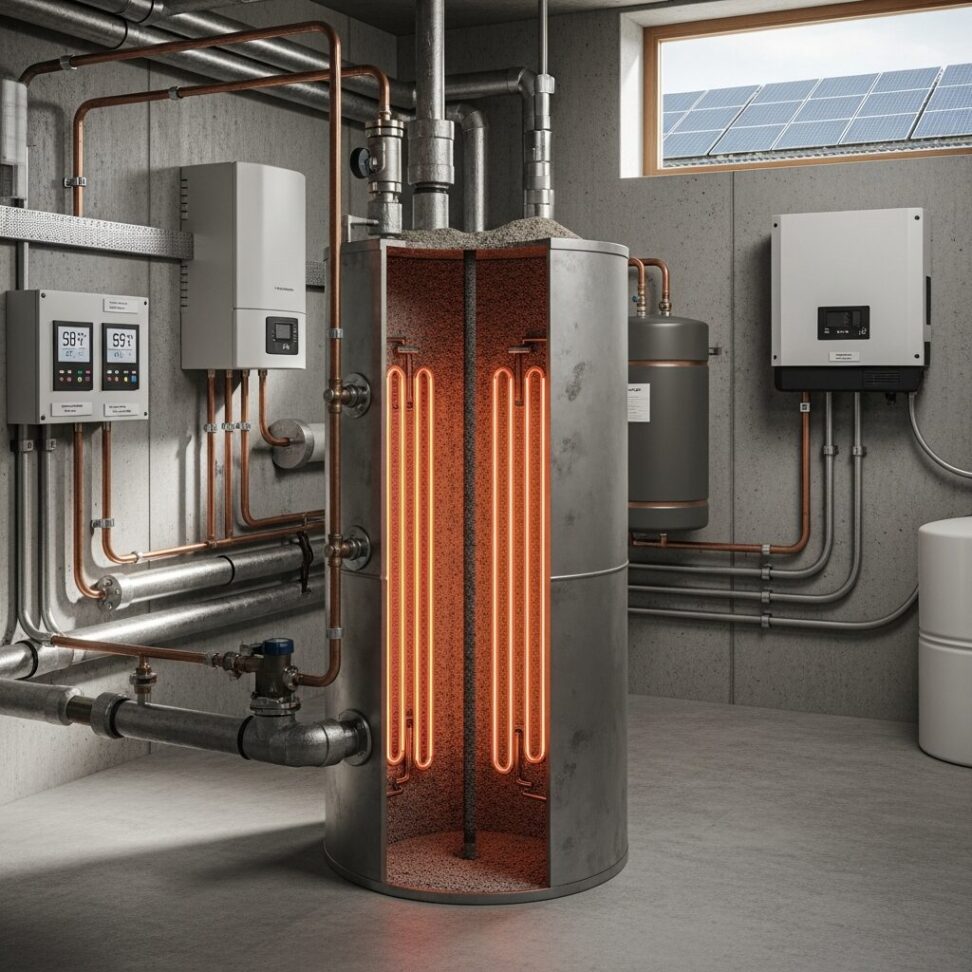
Sand Battery Technology: The Future of Home Energy Storage
The quest for efficient and sustainable energy storage solutions has led researchers and engineers down many paths. While lithium-ion batteries have dominated the market for years, a new approach using one of Earth’s most abundant materials is gaining attention: sand.
What Makes Sand Batteries Different
Sand batteries represent a shift in thinking about energy storage. Rather than storing electricity directly in chemical form like conventional batteries, these systems store energy as heat within sand or sand-like materials. The concept relies on the thermal properties of silica-based materials, which can retain heat for extended periods.
The technology works by converting excess electricity into heat, which is then stored in specially treated sand contained within insulated containers. When energy is needed, the stored heat can be converted back into electricity or used directly for heating purposes. This approach offers several practical benefits compared to traditional battery systems.
Key Advantages of Sand-Based Storage
Sand batteries bring several compelling features to the energy storage landscape:
- Material abundance and low cost compared to rare earth elements used in conventional batteries
- Long lifespan with minimal degradation over time
- Safety benefits due to non-toxic and non-flammable materials
- Ability to store large amounts of energy for extended periods
- Dual functionality for both electricity generation and direct heating applications
Real-World Implementation
Finnish company Polar Night Energy has moved this technology from concept to reality. The company installed the world’s first commercial sand battery in Kankaanpää, Finland, where it has been operational since 2022. This installation serves as a proof of concept, demonstrating that sand-based thermal storage can function effectively in real-world conditions.
Polar Night Energy specializes in developing thermal energy storage solutions that address the intermittency challenges of renewable energy sources. Their sand battery system can store heat at temperatures reaching up to 500 degrees Celsius, making it suitable for various industrial and residential applications.
How It Fits Into Home Energy Systems
For residential use, sand batteries could integrate with existing renewable energy setups. Solar panels or wind turbines could charge the sand battery during periods of excess generation. The stored thermal energy could then provide heating for homes during cold months or be converted back to electricity when needed.
This dual-use capability sets sand batteries apart from purely electrical storage systems. In regions with significant heating demands, the ability to use stored thermal energy directly for space heating or water heating increases overall system efficiency.
Current Limitations and Challenges
Despite the potential, sand battery technology faces hurdles before widespread residential adoption. The conversion efficiency from heat back to electricity remains lower than direct electrical storage methods. This makes sand batteries more suitable for applications where heat itself is the desired output.
The physical size of sand battery systems also presents challenges for typical homes. Current installations require substantial space for the insulated containers and associated equipment. Miniaturization and design improvements will be necessary for seamless integration into residential properties.
The Path Forward
Research continues into improving the efficiency and practicality of sand-based storage systems. Scientists are exploring different materials and configurations to enhance heat retention and conversion efficiency. Some projects are examining composite materials that combine sand with other substances to improve thermal properties.
The technology appears particularly well-suited for community-scale implementations, where a single larger sand battery could serve multiple homes or a neighborhood. This approach would address space constraints while maintaining the cost and safety benefits of the technology.
Market Outlook
As renewable energy adoption continues to grow, the need for diverse storage solutions becomes more pressing. Sand batteries may not replace lithium-ion systems entirely, but they could fill specific niches in the energy storage market. Their potential for seasonal storage and heating applications makes them complementary to existing technologies.
The development of sand battery technology reflects a broader trend toward exploring alternative materials and approaches in energy storage. With continued refinement and cost reduction, these systems could become a viable option for homeowners seeking sustainable and reliable energy solutions.
Analyzed and outlined by Claude Sonnet 4.5, images by Gemini Imagen 4.
**Source**
https://www.msn.com/en-us/money/news/how-a-sand-battery-could-revolutionize-home-energy-storage/vi-AA209ylz