
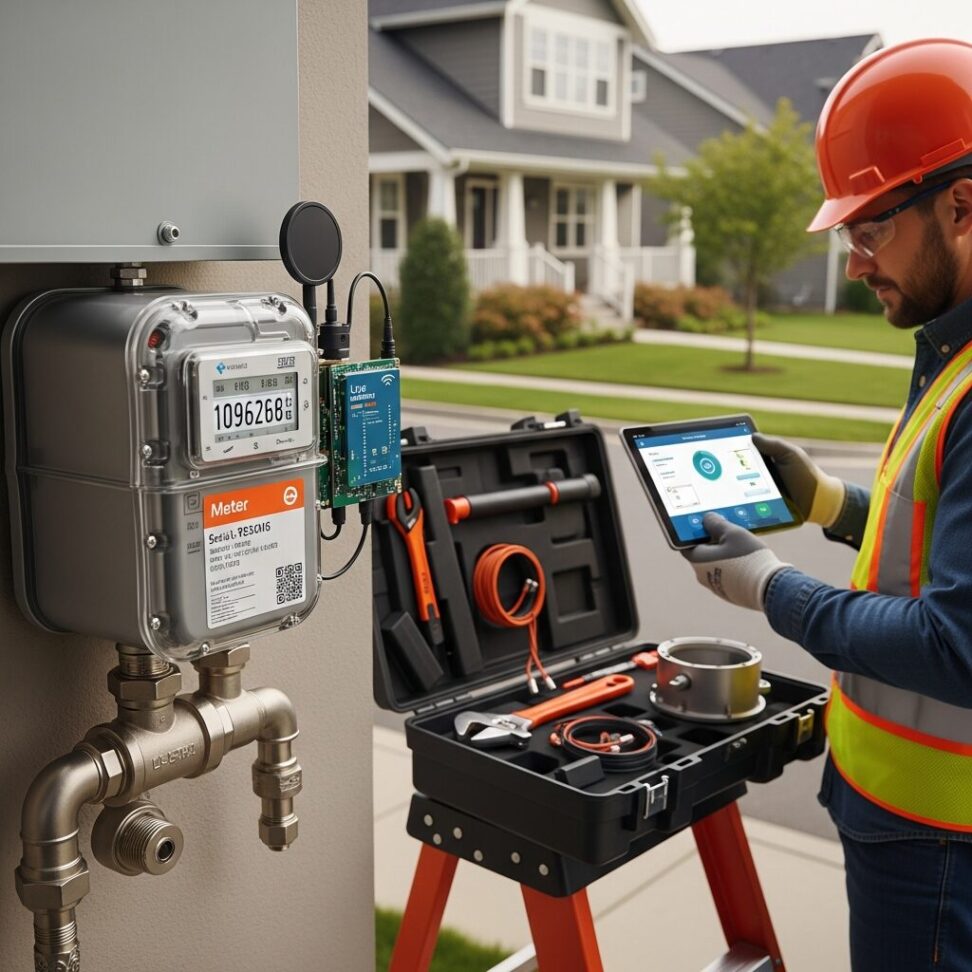
Residential AMI Gas Meters Integration With Solar Battery Storage 2035
The residential gas metering landscape is undergoing a significant transformation as Advanced Metering Infrastructure (AMI) technology converges with renewable energy storage solutions. Industry projections indicate that by 2035, the integration of smart gas meters with solar battery storage systems will become a standard feature in modern homes.
The Drive Behind Smart Gas Meter Adoption
Government mandates across multiple regions are accelerating the deployment of AMI gas meters in residential settings. These regulatory requirements stem from efforts to enhance energy efficiency, reduce carbon emissions, and modernize aging utility infrastructure. Smart gas meters equipped with AMI technology enable two-way communication between utilities and consumers, providing real-time data on consumption patterns and system performance.
The implementation of these mandates varies by region, but the overall trajectory points toward widespread adoption before 2035. Utility companies are investing heavily in the infrastructure needed to support these advanced metering systems, recognizing that the initial capital expenditure will yield long-term operational savings and improved customer service capabilities.
Technical Integration With Battery Storage
The convergence of AMI gas meters with solar battery storage represents a logical evolution in home energy management. These integrated systems allow households to optimize their energy usage across multiple fuel sources, creating a more resilient and efficient energy ecosystem.
The technical architecture involves several key components:
- Smart gas meters that communicate consumption data in real-time
- Battery storage systems that store excess solar energy
- Energy management software that coordinates gas and electric usage
- Grid connectivity that enables demand response participation
This integration enables homeowners to make informed decisions about when to use gas versus stored solar electricity, potentially reducing overall energy costs while minimizing environmental impact.
Market Growth Projections
The residential AMI gas meter market is experiencing robust growth driven by multiple factors. The combination of regulatory pressure, technological advancement, and consumer interest in smart home solutions is creating favorable conditions for market expansion through 2035.
Utility companies are recognizing that AMI gas meters provide operational benefits beyond basic consumption monitoring. These devices can detect leaks, identify abnormal usage patterns, and reduce the need for manual meter readings. When integrated with solar battery storage, they become part of a comprehensive home energy management system that can participate in grid stabilization programs.
Consumer Benefits and Adoption Challenges
Homeowners stand to gain several advantages from integrated AMI gas meter and solar battery storage systems. Access to detailed consumption data helps identify opportunities for efficiency improvements. The ability to shift energy usage between gas and stored electricity provides flexibility and potential cost savings. Additionally, participation in utility demand response programs can generate additional revenue streams.
However, adoption faces certain obstacles. The upfront cost of installing both AMI meters and battery storage systems remains substantial, though declining equipment prices and available incentives are improving affordability. Technical complexity can be daunting for some consumers, requiring user-friendly interfaces and robust customer support from utilities and equipment manufacturers.
The Path to 2035
The timeline to widespread integration extends over the next decade, allowing for gradual infrastructure development and market maturation. Utility companies are developing implementation roadmaps that phase in smart meter deployments while ensuring grid stability and customer satisfaction.
Technology providers are working to standardize communication protocols and improve interoperability between different system components. This standardization will be essential for achieving the seamless integration envisioned for 2035 and beyond.
The residential energy landscape of 2035 will likely feature homes where gas and electric systems communicate seamlessly, optimizing energy usage based on cost, availability, and environmental considerations. AMI gas meters will serve as critical nodes in this integrated network, providing the data and control capabilities necessary for sophisticated energy management.
As government mandates continue to drive deployment and technology costs decline, the integration of residential AMI gas meters with solar battery storage will transition from an innovative concept to a standard feature of modern homes.
Analyzed and outlined by Claude Sonnet 4.5, images by Gemini Imagen 4.
**Source**
https://www.indexbox.io/blog/residential-ami-gas-meter-market-to-2035-driven-by-stringent-government-smart-meter-deployment-mandates/