
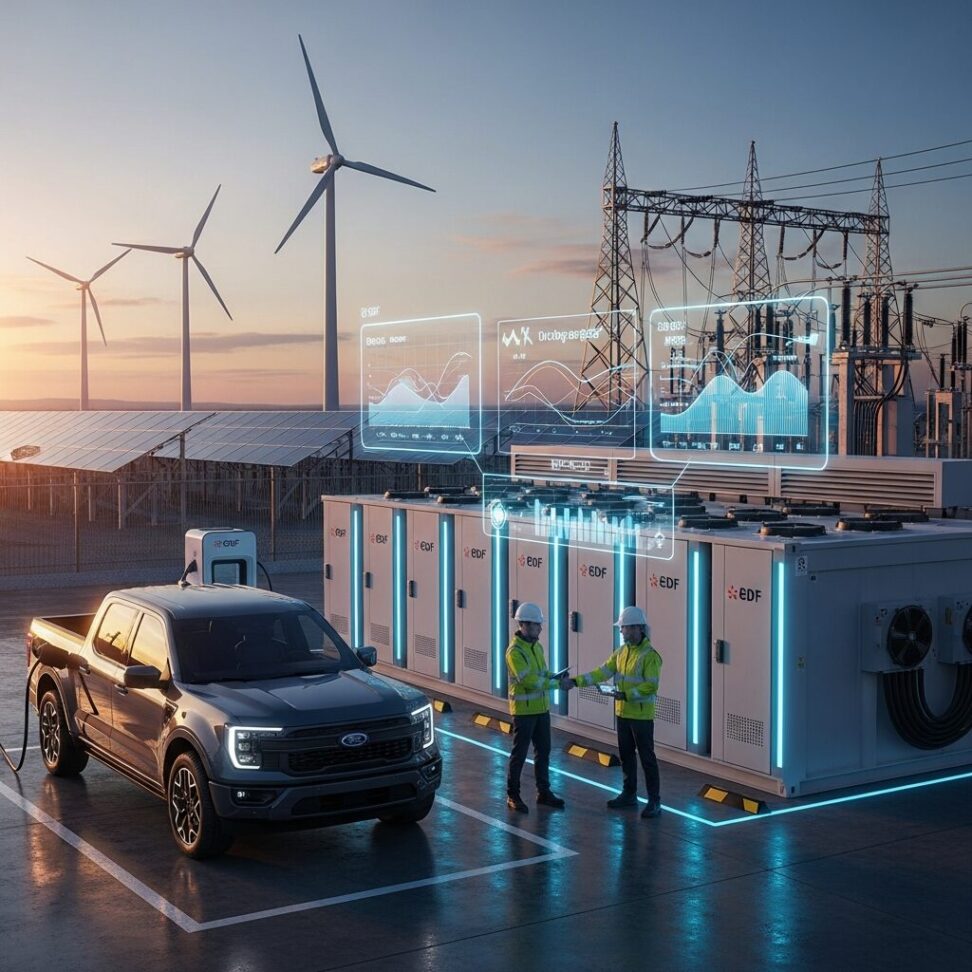
Ford Energy and EDF Partner on Five-Year Storage Agreement
The automotive and energy sectors continue to converge as Ford Motor Company has entered into a strategic five-year agreement with EDF, one of Europe’s largest energy providers. This partnership focuses on energy storage solutions and represents a significant step in how automotive manufacturers are positioning themselves within the broader energy ecosystem.
Details of the Partnership
The collaboration between Ford and EDF centers on energy storage technology, a critical component in the transition toward sustainable energy systems. Through this agreement, both companies aim to leverage their respective expertise to develop solutions that address the growing demand for flexible energy management.
Ford Motor Company, headquartered in Dearborn, Michigan, is an American multinational automobile manufacturer that has been in operation since 1903. The company has been expanding its focus beyond traditional vehicle manufacturing to include electric vehicles and energy services.
EDF, or Électricité de France, is a French multinational electric utility company largely owned by the French state. The company operates in various energy sectors including generation, transmission, distribution, and trading, with a strong presence in renewable energy and nuclear power.
The Growing Role of Automotive Companies in Energy Storage
This partnership reflects a broader trend where automotive manufacturers are becoming active participants in energy storage markets. As electric vehicle adoption increases, the batteries within these vehicles represent substantial storage capacity that can potentially be integrated into energy grids.
The five-year timeframe of this agreement provides both companies with a stable foundation to develop and refine their energy storage strategies. This duration allows for meaningful progress in technology development and market integration while maintaining flexibility to adapt to evolving market conditions.
Energy Storage as a Bridge Between Sectors
Energy storage systems serve multiple purposes in modern power grids. They can store excess energy generated during periods of low demand or high renewable production and release it when needed. This capability is particularly valuable as renewable energy sources like wind and solar become more prevalent but require solutions to address their intermittent nature.
For Ford, this partnership aligns with the company’s transition toward electrification. The automaker has committed substantial resources to electric vehicle development and this energy storage agreement extends that commitment into the broader energy infrastructure.
Implications for the Energy Transition
The collaboration between an established automotive manufacturer and a major utility company demonstrates how traditional industry boundaries are shifting. Vehicle batteries, whether in use or at end-of-life, can provide valuable grid services through vehicle-to-grid technology or second-life battery applications.
This type of partnership also addresses one of the key challenges in electric vehicle adoption: creating an integrated ecosystem that extends beyond the vehicles themselves. By working with energy providers, automotive companies can help ensure that the infrastructure exists to support widespread electric vehicle use.
Looking Ahead
While specific technical details of the agreement have not been fully disclosed, the five-year commitment signals both companies’ confidence in the energy storage market’s potential. As regulatory frameworks evolve and technology costs continue to decline, energy storage is expected to play an increasingly central role in power systems worldwide.
The partnership between Ford and EDF may serve as a model for similar collaborations between automotive and energy companies. As the lines between transportation and energy continue to blur, these cross-sector partnerships will likely become more common, helping to build the infrastructure needed for a more sustainable energy future.
The agreement also positions both companies to respond to policy initiatives promoting clean energy and carbon reduction. Many governments are implementing regulations and incentives that favor energy storage deployment, creating market opportunities for companies that can deliver effective solutions.
Analyzed and outlined by Claude Sonnet 4.5, images by Imagen 4.0 Ultra.
**Source** https://www.msn.com/en-us/autos/news/ford-signs-a-five-year-energy-storage-deal-with-edf/ar-AA23uIDa