
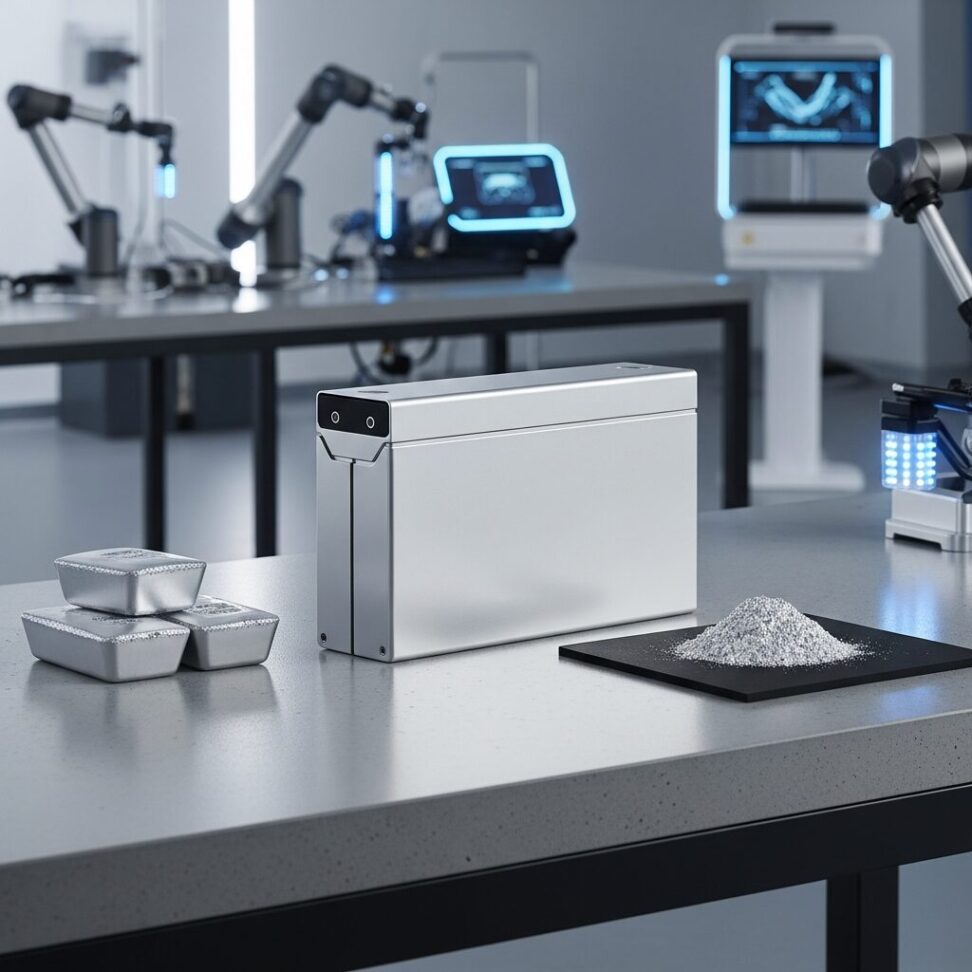
Eqonic Aluminum Battery Chemistry Outlasts the Critical Mineral Crisis
The energy storage industry faces a critical challenge as demand for lithium-ion batteries continues to surge while essential mineral supplies remain constrained. Eqonic, a battery technology company, has introduced an aluminum-based battery chemistry that sidesteps the scarcity issues plaguing conventional battery materials.
Addressing the Critical Mineral Shortage
Current battery production relies heavily on lithium, cobalt, and nickel—materials classified as critical minerals due to supply chain vulnerabilities and geographic concentration. Eqonic’s approach utilizes aluminum, one of the most abundant elements in the Earth’s crust, representing roughly 8% of the planet’s composition. This shift away from scarce materials positions the technology as a viable alternative during a period when traditional battery minerals face supply constraints.
The company’s battery chemistry eliminates the need for lithium, cobalt, and nickel entirely. Instead, it employs aluminum in combination with readily available materials, creating a system that can be manufactured without dependence on limited geological resources or politically sensitive supply chains.
About Eqonic
Eqonic operates as a battery technology developer focused on creating sustainable energy storage solutions. The company concentrates its efforts on aluminum-ion battery development, working to deliver alternatives to lithium-based systems for industrial and grid-scale applications.
Technical Advantages of Aluminum Chemistry
The aluminum-based battery technology offers several distinct characteristics compared to conventional lithium-ion systems:
- Extended cycle life with the potential to exceed 10,000 charge-discharge cycles
- Enhanced safety profile due to reduced fire risk compared to lithium batteries
- Lower material costs stemming from aluminum’s abundance and established supply chains
- Improved environmental footprint with more sustainable sourcing and recycling potential
The extended cycle life particularly benefits applications requiring long-term reliability, such as grid energy storage and industrial backup power systems. Where lithium-ion batteries typically degrade after several thousand cycles, aluminum chemistry maintains performance over significantly more charge cycles.
Market Timing and Industry Context
The announcement arrives as the battery industry grapples with escalating material costs and supply uncertainty. Lithium prices have experienced volatility over the past several years, while cobalt sourcing continues to raise ethical and logistical concerns. Geopolitical tensions have further complicated access to critical minerals, with major deposits concentrated in specific regions.
This context makes alternative battery chemistries particularly relevant for manufacturers and end users seeking supply chain stability. Aluminum production infrastructure already exists globally, with established refinement processes and recycling systems in place.
Applications and Target Markets
Eqonic has positioned its aluminum battery technology for specific use cases where its characteristics align with market needs. Grid-scale energy storage represents a primary target, where cycle life and safety outweigh the energy density advantages of lithium-ion batteries.
Industrial applications also present opportunities, particularly in sectors requiring reliable backup power or stationary storage. The technology may find adoption in telecommunications infrastructure, data centers, and renewable energy installations where weight constraints are less critical than longevity and safety.
Challenges Ahead
Despite the benefits, aluminum battery chemistry faces hurdles before widespread commercial deployment. Energy density—the amount of energy stored per unit of weight or volume—typically lags behind lithium-ion equivalents. This limitation restricts applications in electric vehicles and portable electronics where space and weight are premium considerations.
Manufacturing scale presents another consideration. While aluminum is abundant, the specific battery chemistry requires production processes that differ from established lithium-ion manufacturing lines. Building this infrastructure will require capital investment and time.
Industry Implications
The development contributes to a broader trend toward battery chemistry diversification. Sodium-ion, solid-state, and other alternative technologies are also gaining traction as the industry seeks to reduce dependence on constrained materials.
For the renewable energy sector, technologies like aluminum batteries could accelerate grid storage deployment by offering more predictable material costs and supply availability. This stability may help utilities and project developers plan long-term energy storage investments with greater confidence.
As battery demand continues to grow across multiple sectors, solutions that leverage abundant materials while delivering acceptable performance metrics will play an increasingly important role in the energy transition. Eqonic’s aluminum chemistry represents one path toward a more diversified and resilient battery supply ecosystem.
Analyzed and outlined by Claude Sonnet 4.5, images by Gemini Imagen 4.
**Source**
https://www.techtimes.com/articles/323116/20260805/eqonic-reveals-aluminum-battery-chemistry-built-outlast-critical-mineral-crisis.htm