
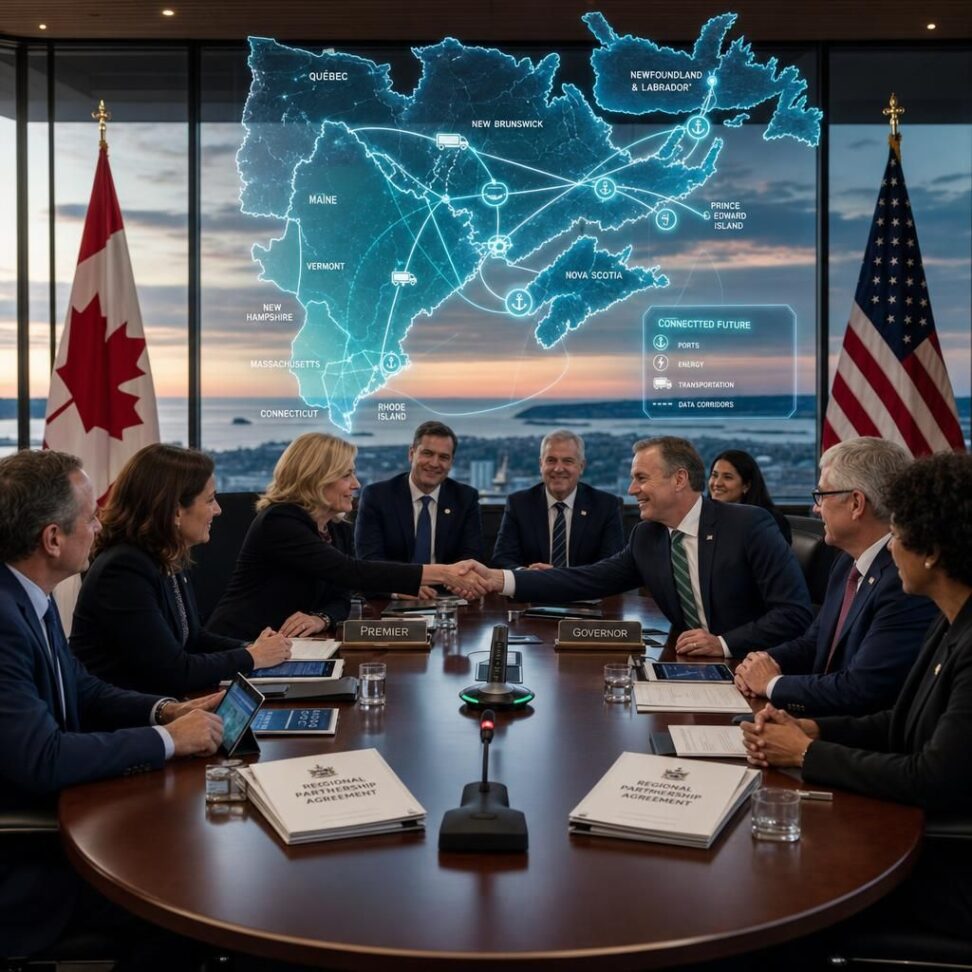
Eastern Canada and New England Unite on Offshore Wind Energy
Leaders from Eastern Canada and New England have reaffirmed their commitment to cross-border collaboration on clean energy, with offshore wind development taking center stage in recent discussions. The regional partnership continues to build momentum as both sides recognize the shared economic and environmental benefits of coordinated renewable energy strategies along the Atlantic coast.
A Long-Standing Regional Partnership
The Conference of New England Governors and Eastern Canadian Premiers has served as a forum for regional cooperation for decades, bringing together leadership from Canadian provinces and northeastern U.S. states. During their latest meeting, participants highlighted energy security, climate action, and economic development as priority areas—with offshore wind emerging as a defining opportunity for the region.
Premiers and governors emphasized that the Gulf of Maine and surrounding Atlantic waters represent one of the most promising offshore wind resources in North America. Coordinated planning across the border can help streamline permitting, share transmission infrastructure, and accelerate deployment timelines.
Why Offshore Wind Matters for the Region
Offshore wind offers a path to reliable, large-scale clean electricity for both Eastern Canada and New England, regions that have historically depended on imported fuels and aging generation infrastructure. Benefits identified during the discussions include:
- Diversified energy supply and improved grid resilience
- Job creation in manufacturing, port operations, and marine services
- Reduced greenhouse gas emissions in line with regional climate targets
- Opportunities for shared supply chains and workforce training programs
- Enhanced cross-border electricity trade
Nova Scotia’s Leadership Role
Nova Scotia has positioned itself as a central player in the offshore wind conversation. The province has set a goal of offering licenses for five gigawatts of offshore wind energy by 2030, a target that could transform the Atlantic coast into a major clean energy hub. Provincial leaders continue to advocate for regulatory alignment with U.S. counterparts to ensure projects can move forward efficiently.
New England States Advancing Ambitious Targets
States including Massachusetts, Maine, Rhode Island, and Connecticut have already committed to significant offshore wind procurement. Maine, in particular, has focused on floating offshore wind technology, which is well-suited to the deeper waters of the Gulf of Maine. Collaboration with Canadian partners could help unlock shared research, port development, and supply chain investment across the region.
Building a Shared Supply Chain
One theme that emerged from the meeting was the need to develop a robust regional supply chain. Turbine components, specialized vessels, port infrastructure, and skilled labor are all in high demand as the offshore wind industry scales. By working together, Eastern Canadian provinces and New England states can avoid duplication and attract greater investment from global developers and manufacturers.
Ports in Halifax, Sydney, Portland, New Bedford, and other coastal communities are already being evaluated for their potential to serve as staging and assembly hubs for offshore wind projects.
Challenges Ahead
Despite the