
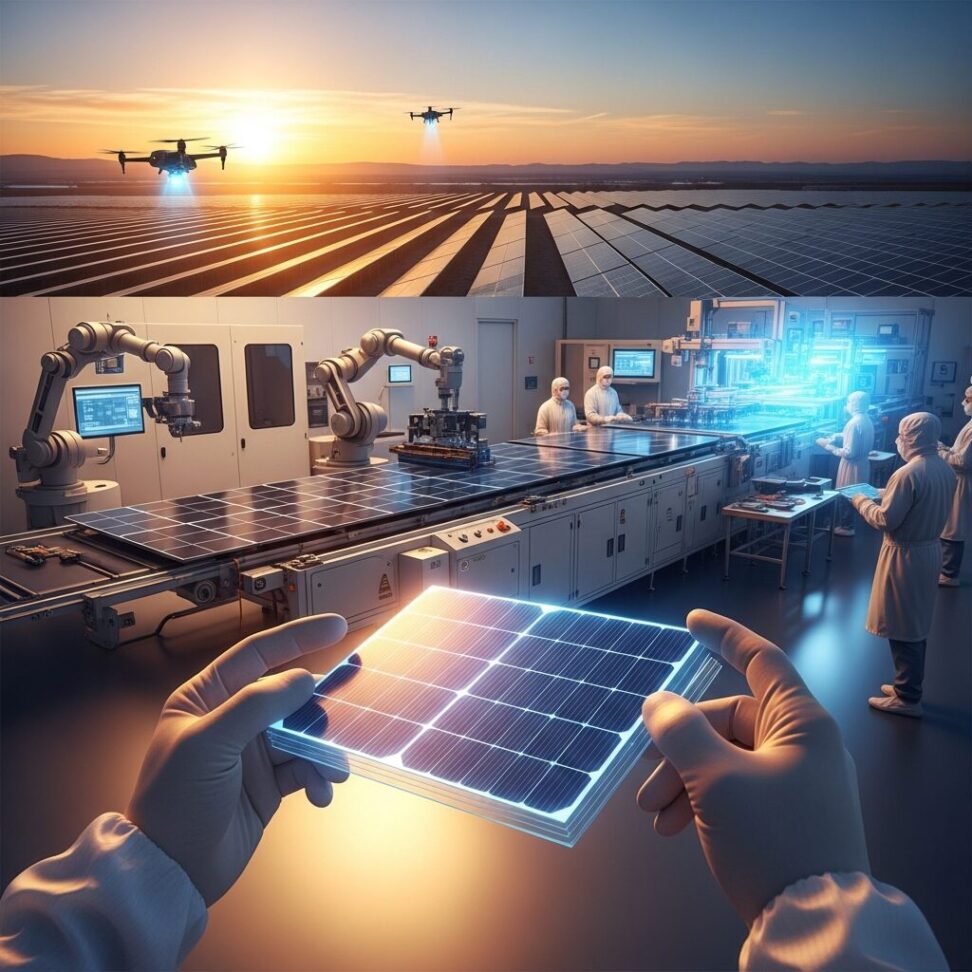
North America Solar Cell Market Growth Driven by Energy Storage Innovations
The North American solar cell market is entering a new phase of expansion, propelled by advances in energy storage technology and a growing appetite for clean power across the United States, Canada, and Mexico. As utilities, businesses, and homeowners look for reliable ways to integrate solar energy into daily use, storage-enabled systems are quickly becoming the backbone of the region’s renewable energy transition.
Energy Storage as a Catalyst for Solar Adoption
One of the biggest challenges facing solar power has always been intermittency. Sunlight is not available around the clock, and without a way to store excess energy, solar systems can fall short of meeting continuous demand. New developments in battery storage—particularly lithium-ion and emerging solid-state technologies—are changing that equation. Modern storage solutions allow solar systems to deliver power well after sunset, making solar a more dependable option for both grid-tied and off-grid applications.
This shift is fueling steady growth in solar cell demand throughout North America. Homeowners are pairing rooftop panels with battery systems, while utilities are deploying large-scale solar-plus-storage projects to strengthen grid resilience and reduce reliance on fossil fuels.
Policy Support and Incentives
Government policies continue to play a major role in shaping the market. In the United States, the Inflation Reduction Act has extended and expanded tax credits for solar installations and energy storage, encouraging widespread adoption. Canada has introduced its own investment tax credits for clean technology, while Mexico is pushing forward with renewable energy commitments as part of its broader climate strategy.
These incentives are helping lower the upfront cost of solar-plus-storage systems, making them more accessible to a wider range of consumers and businesses.
Technological Advancements Driving Efficiency
Solar cell technology itself continues to improve. Manufacturers are producing cells with higher efficiency ratings, better durability, and lower production costs. Innovations such as:
- PERC (Passivated Emitter and Rear Cell) technology for improved light absorption
- Bifacial solar cells that capture sunlight from both sides
- TOPCon and heterojunction (HJT) cells offering higher conversion efficiencies
- Thin-film solar cells suited for flexible and lightweight applications
are helping the industry meet rising demand while keeping costs competitive.
Key Market Segments
The North American solar cell market spans several important segments:
- Residential: Growing rooftop installations paired with home battery systems
- Commercial and Industrial: Businesses adopting solar to cut energy costs and meet sustainability goals
- Utility-Scale: Large solar farms integrated with grid storage to support renewable energy targets
Leading Companies Shaping the Market
Several companies are at the forefront of North America’s solar cell industry:
First Solar is an American solar manufacturer headquartered in Tempe, Arizona. The company specializes in thin-film photovoltaic modules and operates major manufacturing