
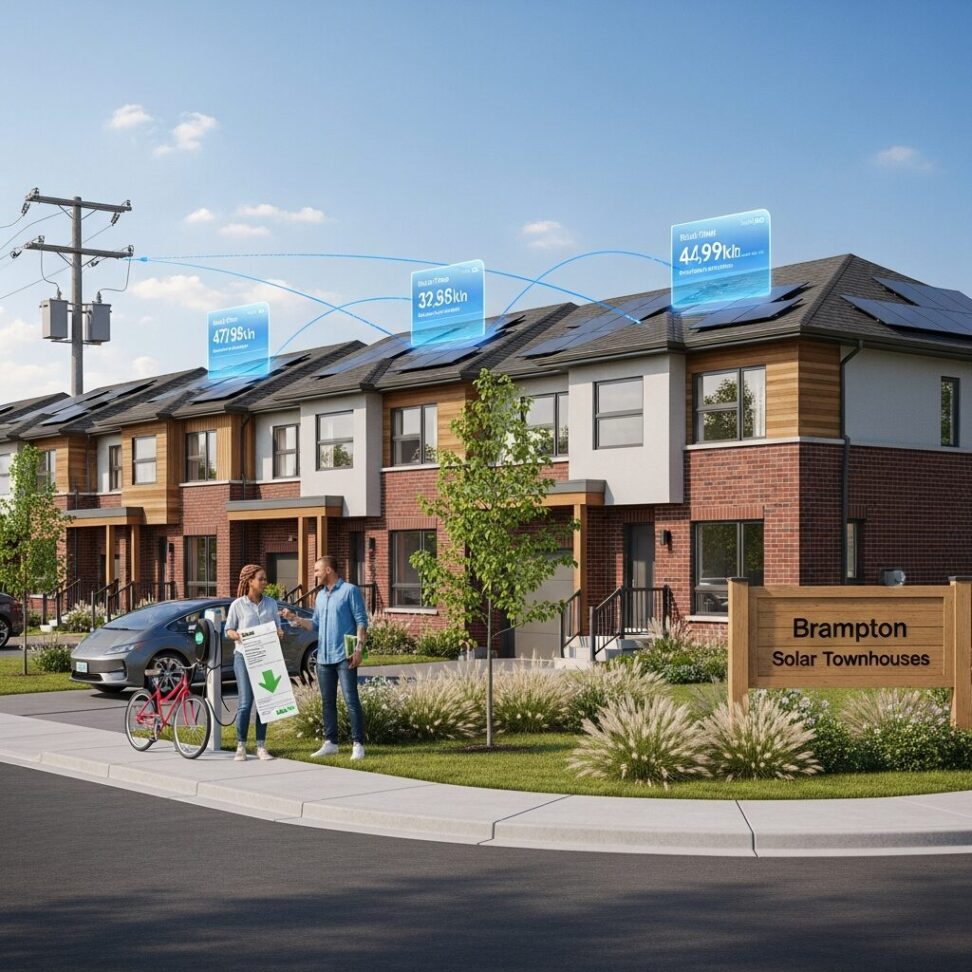
Brampton Solar Townhouses Cut Electricity Costs Sustainably
A new residential development in Brampton, Ontario is demonstrating how solar power can be integrated directly into townhouse communities, giving homeowners a practical path toward lower electricity bills and reduced reliance on the traditional grid. The project offers a glimpse into how renewable energy could gradually reshape housing developments across Canadian suburbs.
A New Model for Suburban Housing
Located in Brampton, a fast-growing city in the Greater Toronto Area, the townhouse community was built with solar panels as a standard feature rather than an optional upgrade. This approach marks a shift from how solar has traditionally been marketed to homeowners, where it’s often sold as an add-on installed after move-in. By embedding solar infrastructure into the construction process itself, developers are able to streamline installation costs and make clean energy more accessible to a broader range of buyers.
The townhouses are designed to draw a significant portion of their daily electricity needs directly from rooftop solar panels, reducing dependence on Ontario’s power grid. For residents, this translates into noticeably lower monthly utility bills, particularly during peak sunlight months.
How the System Works
Each townhouse unit is equipped with solar panels connected to the home’s electrical system, allowing generated power to be used in real time for household needs such as lighting, appliances, and heating or cooling systems. Any excess energy produced can potentially be redirected back to the grid, depending on the utility arrangements in place, offering homeowners an additional financial benefit.
This setup allows residents to see immediate reductions in their electricity costs without needing to manage complex installations or negotiate separately with solar providers. Because the systems are built directly into the homes, maintenance and performance monitoring are simplified for buyers who may not have prior experience with renewable energy technology.
Addressing Housing and Energy Costs Together
Brampton, like much of Ontario, has faced rising concerns over both housing affordability and increasing electricity rates. This development attempts to address both issues at once by lowering the long-term cost of homeownership through reduced utility expenses. While the upfront cost of a solar-equipped townhouse may be comparable to or slightly higher than a conventional unit, the projected savings on electricity over time can offset this difference.
For many buyers, particularly younger families and first-time homeowners, predictable and lower monthly costs are an important factor in housing decisions. Solar-integrated homes offer a degree of protection against fluctuating energy prices, since a portion of electricity needs are met independently of the grid.
Broader Implications for Renewable Energy Adoption
This Brampton project reflects a wider trend seen in various parts of Canada and internationally, where renewable energy is increasingly built into new housing developments from the outset rather than retrofitted later. Key advantages of this model include:
- Lower installation costs due to solar being incorporated during construction
- Reduced electricity bills for homeowners from day one of occupancy
- Decreased strain on local electricity grids during peak demand periods
- Potential for excess energy production to be shared back to the grid
- Long-term environmental benefits through decreased reliance on fossil fuel-generated electricity