
Second Life EV Battery Market Growth Forecast North America Residential
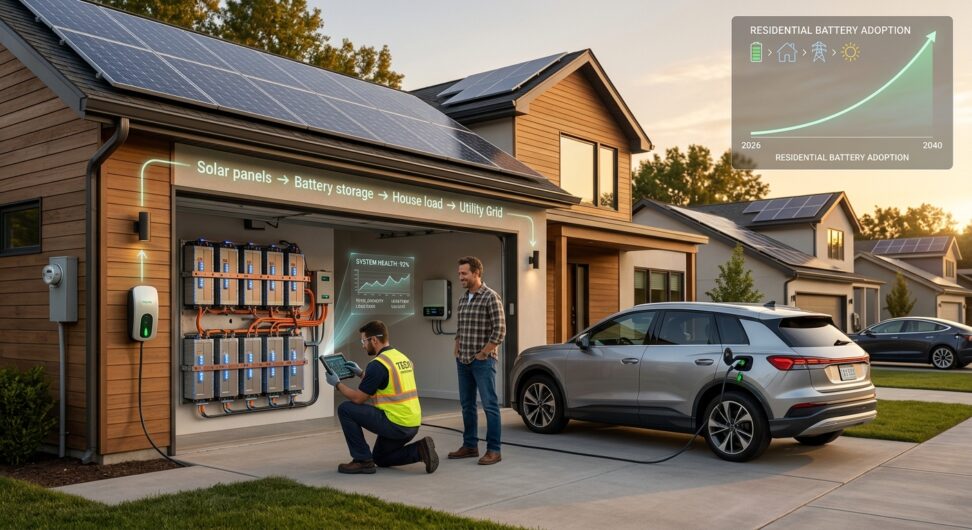
The market for repurposed electric vehicle batteries is entering a new growth phase, with North America’s residential energy storage segment emerging as a key driver. As millions of EVs reach the end of their automotive service life over the coming decade, the batteries powering them still retain significant capacity, often between 70% and 80% of their original charge. Rather than being discarded, these batteries are increasingly finding a second purpose in home energy storage systems, grid support applications, and backup power solutions.
Industry forecasts extending to 2040 point to sustained expansion in this sector, fueled by surging EV adoption rates and growing demand for grid-scale energy storage. This dual trend is reshaping how battery manufacturers, utilities, and homeowners think about the lifecycle of lithium-ion battery packs.
What Is Driving the Second Life Battery Trend
Electric vehicle batteries are typically retired from automotive use once their capacity drops below a threshold suitable for daily driving range. However, these batteries remain functional for less demanding applications. Residential energy storage is one of the most promising use cases, since home battery systems do not require the same high power density or rapid discharge rates as EVs.
Several factors are accelerating this shift in North America:
- Rising number of EVs reaching end-of-warranty or end-of-life status
- Growing homeowner interest in solar-plus-storage systems
- Utility incentives for distributed energy storage
- Cost advantages of repurposed batteries compared to new storage units
- Regulatory pressure to reduce battery waste and support circular economy practices
Residential Applications Gaining Momentum
Homeowners across the United States and Canada are increasingly pairing rooftop solar panels with battery storage to reduce reliance on the grid and manage electricity costs. Second life EV batteries offer a lower-cost entry point into this market compared to purpose-built residential storage products. These repurposed battery packs can be reconfigured into home energy storage units capable of storing solar energy during the day for use during peak evening hours or power outages.
This trend aligns with broader consumer interest in energy independence and resilience against grid disruptions, particularly in regions prone to extreme weather events or aging grid infrastructure.
Market Forecast Through 2040
According to a market report published on September 16, 2026, the global second life EV battery market is projected to see substantial growth through 2040, with North America representing a significant regional contributor. The report segments the market by battery type, application, and end-use industry, highlighting residential storage as one of the fastest-growing application categories alongside utility-scale and commercial storage.
Key growth indicators identified in the forecast include:
- Expansion of battery collection and refurbishment infrastructure
- Increased partnerships between automakers and energy storage companies
- Declining costs of battery repurposing technology
- Growing standardization in battery testing and certification processes
Challenges Facing the Second Life Battery Market
Despite favorable growth projections, the sector faces hurdles that could affect the pace of adoption. Battery degradation varies significantly depending on how the original EV was used, making standardized testing and quality assurance essential for residential customers who expect reliable performance over many years.
Safety certification is another consideration, as repurposed batteries must meet the same fire and electrical safety standards as new residential storage products. Supply chain logistics also present a challenge, since collecting, testing, and refurbishing batteries at scale requires coordinated infrastructure between automakers, recyclers, and storage manufacturers.
Battery Types and Applications Shaping the Market
The market report breaks down growth by battery chemistry, including lithium iron phosphate and nickel manganese cobalt variants, both of which are common in EV applications and suitable for repurposing. Applications extend beyond residential use into:
- Utility-scale grid storage for renewable energy integration
- Commercial and industrial backup power systems
- Electric vehicle charging infrastructure support
- Microgrid applications in remote or off-grid locations
Residential applications stand out for their potential to scale quickly given the sheer number of homeowners interested in solar and storage solutions, combined with the relatively lower technical barriers compared to utility-scale deployment.
Outlook for North America
North America’s residential second life battery segment is positioned to benefit from a mix of policy support, consumer demand for energy resilience, and the growing volume of retired EV batteries entering the market. As more EVs from the 2015-2020 model years reach the end of their automotive service life, the supply of usable battery packs is expected to increase steadily through the 2030s.
Companies involved in battery collection, testing, and repurposing are likely to play an increasingly central role in the broader energy storage ecosystem, bridging the gap between the automotive and residential energy sectors. The forecast period through 2040 suggests this market will move from a niche application into a mainstream component of home energy systems across North America.
Analyzed and outlined by Claude Sonnet 5, images by Gemini 3.1 Flash.
**Source** https://www.globenewswire.com/news-release/2026/09/16/3362875/28124/en/second-life-ev-battery-market-size-share-and-forecast-to-2040-surging-ev-adoption-and-grid-scale-energy-storage-