
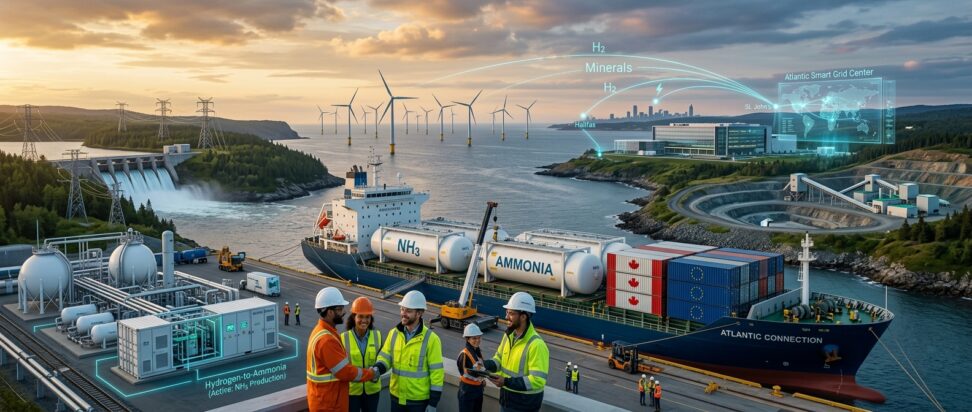
Canada EU Energy Partnership Clean Technology Collaboration Opportunities
Canada’s growing ties with the European Union are opening fresh doors for clean technology developers, energy companies, and investors on both sides of the Atlantic. As the EU works to diversify its energy sources and accelerate its transition away from fossil fuels, Canada is positioning itself as a dependable partner with abundant resources, established infrastructure, and a track record in clean energy innovation.
Why the Timing Matters
Europe’s push to reduce dependence on Russian energy supplies has reshaped its approach to sourcing power and fuel. This shift has created an opening for countries like Canada, which offers hydroelectric capacity, critical minerals for battery production, and a maturing hydrogen sector. For Canadian clean tech firms, the EU represents a large, well-funded market actively seeking new suppliers and technology partners.
Areas of Collaboration
The partnership spans several sectors where both regions see mutual benefit:
- Hydrogen production and export infrastructure, including green hydrogen generated through renewable electricity
- Critical minerals extraction and processing needed for batteries, wind turbines, and solar panels
- Carbon capture, utilization, and storage technology development
- Offshore wind expertise and equipment manufacturing
- Smart grid technology and energy storage solutions
Canadian Strengths on Display
Canada brings several advantages to the table. The country holds significant reserves of lithium, cobalt, nickel, and graphite, all essential inputs for the batteries powering electric vehicles and grid storage systems. Provinces like Quebec and British Columbia already generate the bulk of their electricity from hydro sources, giving them a head start in producing low-carbon hydrogen and attracting energy-intensive manufacturing.
Atlantic Canada, meanwhile, has emerged as a focal point for green hydrogen export projects aimed directly at European buyers. Ports in Nova Scotia and Newfoundland and Labrador are being eyed as potential shipping points for hydrogen derivatives like ammonia, which can be transported more easily than hydrogen gas itself.
What the EU Brings to the Relationship
The European Union offers Canadian companies access to a market of roughly 450 million people, along with substantial public and private financing mechanisms supporting clean technology deployment. EU member states have also developed deep expertise in offshore wind, solar manufacturing, and energy efficiency standards that could benefit Canadian firms looking to scale up their own operations.
European companies with experience in large-scale renewable project development are increasingly looking to Canada as a testing ground and long-term partner, given the country’s vast land base, supportive regulatory environment in many provinces, and proximity to the North American market.
Challenges to Address
Despite the optimism, several obstacles remain before the partnership reaches its full potential. Permitting timelines in Canada can be lengthy, particularly for large infrastructure projects that require consultation with Indigenous communities and provincial regulators. Transportation costs for exporting hydrogen or critical minerals across the Atlantic also remain a factor that companies must account for when evaluating project economics.
Additionally, both regions are competing with other jurisdictions, including the United States and Australia, that are also courting European clean energy investment. Canada will need to move efficiently to capitalize on the current window of opportunity while EU policy attention remains focused on diversifying energy partnerships.
Opportunities for Businesses
For companies operating in the clean technology space, the Canada-EU relationship offers several practical avenues:
- Joint research and development initiatives funded through bilateral programs
- Export financing support for Canadian firms entering European markets
- Technology licensing arrangements between Canadian innovators and European manufacturers
- Supply chain partnerships for critical minerals processing and battery component production
- Pilot project funding for hydrogen production facilities in coastal provinces
Small and mid-sized clean tech firms in particular stand to benefit from these arrangements, as they often lack the resources to independently establish a foothold in overseas markets. Partnership structures backed by government trade offices can lower the barriers to entry significantly.
Looking Ahead
As both Canada and the EU continue refining their climate commitments, the energy partnership is likely to expand in scope. Discussions have touched on formalizing critical minerals supply agreements and establishing clearer frameworks for hydrogen trade certification, which would help standardize how clean hydrogen is verified and traded internationally.
For clean technology companies watching this space, the coming months may bring more concrete announcements regarding funding programs, trade missions, and specific project approvals. Businesses with interests in hydrogen, critical minerals, or grid technology would benefit from monitoring these developments closely, as early movers in cross-Atlantic partnerships often secure the most favorable terms and long-term contracts.
The broader signal from this collaboration is clear: energy security and climate goals are increasingly intertwined, and partnerships between resource-rich nations like Canada and technology-and-market-rich regions like the EU are becoming a practical response to both challenges simultaneously.
Analyzed and outlined by Claude Sonnet 5, images by Gemini 3.1 Flash
**Source** https://604now.com/canada-associate-member-european-union/