
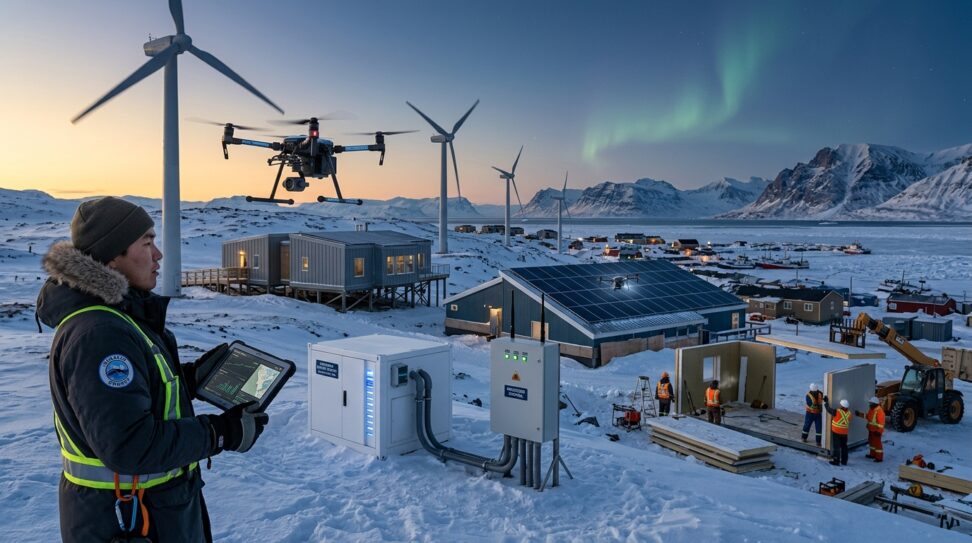
Nunavut Business Awards Recognize Renewable Energy Innovation Leadership
Nunavut’s business community gathered to celebrate achievements across the territory’s private sector, with organizations working in drone technology, construction, and electricity operations earning top honors for their contributions to the northern economy. Among the recognized categories, renewable energy and clean technology innovation stood out as a growing focus for businesses operating in one of Canada’s most remote and energy-challenged regions.
A Territory Facing Unique Energy Challenges
Nunavut’s geography presents distinct obstacles for energy delivery. With no connection to Canada’s electrical grid, most communities rely on diesel generators shipped in during short summer sealift seasons. This dependence on fossil fuels imported at high cost has pushed local utilities and entrepreneurs to explore renewable alternatives, including wind, solar, and hybrid systems designed to withstand Arctic conditions.
The businesses honored at this year’s awards reflect that shift. Recognition went to companies and organizations demonstrating measurable progress in reducing reliance on diesel while maintaining reliable service for residents spread across a vast and sparsely populated territory.
Electricity Operations Take Center Stage
A major highlight of the ceremony was the recognition given to organizations improving electricity operations across Nunavut. Utilities serving the territory have been working to integrate renewable technology into aging infrastructure, a task complicated by extreme cold, permafrost, and the logistical difficulty of transporting equipment to isolated communities.
Efforts recognized at the awards included initiatives to modernize power generation and distribution systems, with an emphasis on lowering operational costs and environmental impact. These projects matter significantly in a territory where electricity rates are among the highest in Canada due to the cost of diesel fuel transport and storage.
Drones Supporting Infrastructure and Environmental Monitoring
Drone technology also received recognition, highlighting how remote sensing tools are being applied to infrastructure inspection and environmental monitoring in the North. Companies using drones for surveying construction sites, monitoring pipelines, and assessing renewable energy installations are helping reduce the need for costly and time-consuming site visits by personnel.
For renewable energy projects specifically, drones offer a practical solution for inspecting wind turbines or solar arrays in locations that are difficult or expensive to reach by traditional means. This technology is increasingly viewed as a tool that supports the broader goal of expanding clean energy infrastructure in the Arctic.
Construction Sector Adapts to Sustainable Building Practices
The construction industry’s recognition at the awards points to a broader trend of sustainable building practices taking hold in Nunavut. Builders in the territory face extreme weather, permafrost foundations, and the need to transport nearly all materials by air or sea. Award-winning construction firms have been noted for incorporating energy-efficient designs and materials suited to reducing heating and power demands in northern buildings.
Given that heating and electricity account for a significant portion of household and municipal budgets across Nunavut, construction practices that lower energy consumption directly support the territory’s renewable energy goals.
Why These Awards Matter for the North
The Nunavut Business Awards serve as an annual recognition of private sector achievement, but this year’s honorees underscore a shift in priorities among northern businesses. Renewable energy integration, once considered a long-term aspiration for the territory, is becoming an operational reality across multiple sectors.
Key takeaways from this year’s awards include:
- Electricity providers are actively working to reduce diesel dependence through infrastructure upgrades
- Drone technology is being adopted as a cost-effective tool for monitoring energy and construction projects in remote locations
- Construction companies are incorporating energy-efficient practices suited to Arctic conditions
- Business recognition programs are increasingly highlighting sustainability as a measure of success
Looking Ahead
Nunavut’s path toward greater energy independence remains gradual, shaped by the territory’s remoteness, small population base, and reliance on external supply chains for equipment and materials. However, the recognition given to businesses working across electricity operations, drone technology, and construction suggests that renewable energy innovation is gaining traction as a practical business strategy, not simply an environmental goal.
As more communities across the North seek alternatives to diesel generation, the businesses honored at this year’s awards may serve as models for how private enterprise can support the territory’s broader energy transition. Continued investment in hybrid renewable systems, efficient building design, and remote monitoring technology will likely remain central themes in Nunavut’s business landscape in the years ahead.
Analyzed and outlined by Claude Sonnet 5, images by Gemini 3.1 Flash
**Source** https://www.therecord.com/news/canada/drones-construction-and-electricity-operations-win-at-nunavut-business-awards/article_57fe0b0e-52c6-5bcc-a4d2-6880e2b31fce.html