
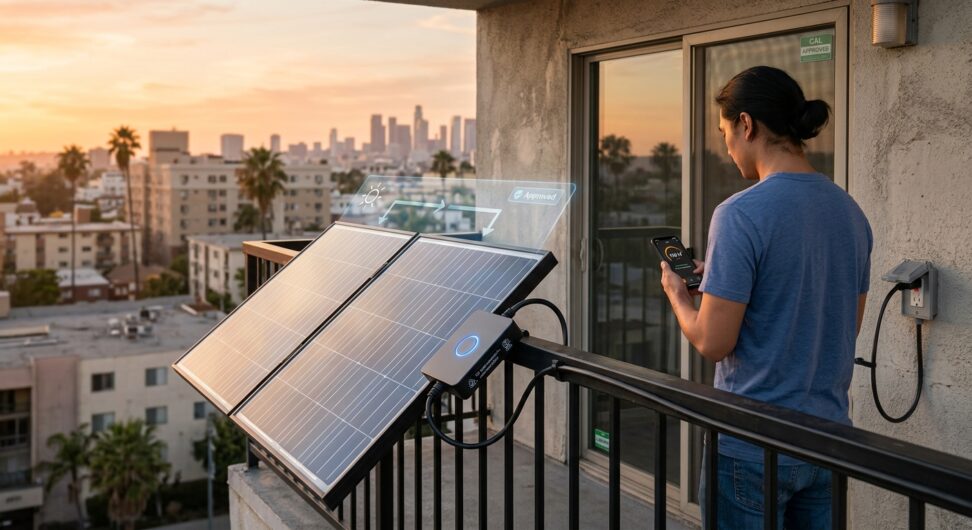
California Leads US Solar Revolution with Plug-In Technology Legalization
California has taken a significant step in residential solar adoption by legalizing plug-in solar technology, also known as balcony solar or plug-in PV systems. This policy change positions the state as the first in the nation to formally permit homeowners and renters to connect small solar devices directly into standard wall outlets, bypassing much of the complex permitting process traditionally required for solar installations.
What Is Plug-In Solar Technology
Plug-in solar systems, widely used across Germany and other parts of Europe for years, consist of one or two solar panels paired with a microinverter that converts generated electricity into a form compatible with household wiring. Unlike traditional rooftop solar arrays that require licensed electricians, structural assessments, and utility interconnection agreements, these devices can be mounted on balconies, patios, or exterior walls and plugged directly into an existing outlet.
The appeal lies in simplicity and cost. A typical plug-in solar setup costs a fraction of a full rooftop installation, often falling in the range of a few hundred dollars, making solar energy accessible to renters and apartment dwellers who previously had no pathway to generate their own electricity.
California’s Policy Shift
California regulators have moved to formally recognize and permit these devices, removing a long-standing gray area that left plug-in solar users uncertain about code compliance and utility acceptance. The decision reflects growing pressure from consumer advocates and clean energy groups who pointed to successful adoption models in Germany, where millions of plug-in units are already in use.
By establishing clear guidelines, California aims to:
- Expand solar access to renters and multi-unit dwelling residents
- Reduce barriers tied to permitting costs and installation delays
- Encourage distributed small-scale energy generation across urban areas
- Support broader state clean energy and carbon reduction targets
Why This Matters for the Broader Solar Market
California has historically served as a bellwether for energy policy across the United States, and this move is expected to influence other states considering similar legislation. Utah and other states have shown early interest in reviewing their own codes regarding plug-in solar devices, suggesting a potential ripple effect across the country.
The timing aligns with broader momentum in the North American solar sector. According to recent market coverage, solar developments across the US continue to expand through utility-scale projects, manufacturing investments, and policy initiatives aimed at strengthening domestic clean energy supply chains.
Industry and Consumer Response
Clean energy advocates have welcomed the legalization as a practical step toward democratizing solar access. Unlike traditional residential solar, which generally requires homeownership and significant upfront investment, plug-in systems lower the entry point considerably, opening the door to apartment renters, condo owners, and households with limited roof access.
Manufacturers of plug-in solar equipment, many of which originated in the European market, are expected to see increased interest from American consumers and retailers following California’s regulatory clarity. Companies in this space typically produce compact panel-inverter kits designed for safety and ease of use, including built-in mechanisms that shut off power generation if a device becomes unplugged.
Safety and Utility Considerations
One of the central discussions surrounding plug-in solar adoption involves grid safety and utility coordination. Unlike larger rooftop systems that go through formal interconnection review, plug-in units generate smaller amounts of electricity, generally enough to offset a portion of a household’s daily consumption rather than fully power a home.
California’s new framework reportedly includes safeguards such as wattage limits and technical standards aimed at preventing grid instability or safety hazards, addressing concerns previously raised by utility companies and electrical code regulators.
Looking Ahead
California’s decision marks a notable shift in how US policy approaches distributed solar energy, moving beyond the traditional homeowner-centric model to include a wider population of energy consumers. As more data emerges on real-world performance and safety, additional states may follow with similar legislative action.
For renters and urban residents who have long been excluded from direct participation in solar energy generation, this policy opens a new, lower-cost pathway to reducing electricity bills and contributing to residential clean energy adoption. The move also reflects a broader national trend toward flexible, accessible renewable energy solutions as states work to meet long-term decarbonization goals.
As California often sets precedent for environmental and energy policy nationwide, industry observers will be watching closely to see whether other states adopt comparable plug-in solar frameworks in the coming months.
Analyzed and outlined by Claude Sonnet 5, images by Gemini 3.1 Flash.
**Source** https://taiyangnews.info/markets/north-america-solar-pv-news-snippets-october-2-2026