
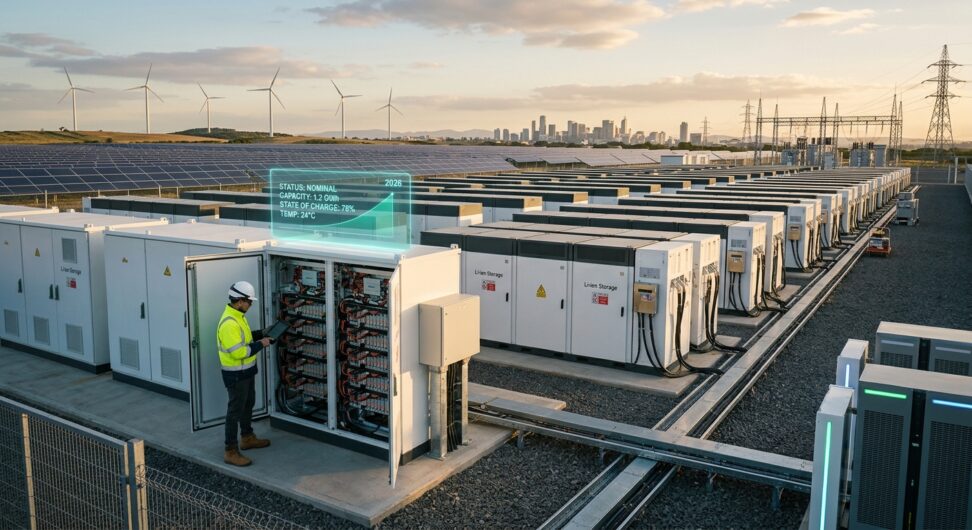
Lithium-Ion Energy Storage Battery Market Growth Trends 2026
The global lithium-ion energy storage battery market is on a steady growth path, driven by the accelerating shift toward renewable energy integration, grid modernization, and electric mobility. As countries work to meet carbon reduction targets, lithium-ion batteries have become a central technology for storing energy generated from solar and wind sources, enabling a more stable and flexible power supply.
Market Overview
Lithium-ion energy storage batteries are used across residential, commercial, industrial, and utility-scale applications. Their ability to store surplus electricity and release it during peak demand periods makes them indispensable for balancing supply and demand on modern power grids. The market is projected to continue expanding through 2026, supported by falling production costs, improved energy density, and longer battery life cycles.
Analysts attribute this growth to several converging factors, including government incentives for clean energy adoption, increased investment in grid infrastructure, and the rising deployment of solar and wind power plants that require reliable storage solutions to manage intermittent generation.
Key Growth Drivers
- Expansion of renewable energy projects requiring storage to manage variable output
- Declining costs of lithium-ion cell manufacturing due to economies of scale
- Government policies and subsidies supporting clean energy storage infrastructure
- Growing demand for backup power systems in both residential and commercial sectors
- Technological improvements in battery chemistry, safety, and charging efficiency
These drivers are reshaping how utilities and private businesses approach energy management, with many turning to battery storage as a cost-effective alternative to traditional peaker plants and diesel generators.
Regional Market Insights
North America, Europe, and Asia-Pacific represent the largest markets for lithium-ion energy storage batteries. Asia-Pacific, led by China, Japan, and South Korea, holds a significant share due to its strong manufacturing base and early adoption of battery technology for both electric vehicles and stationary storage.
Europe continues to invest heavily in storage systems to support its renewable energy transition, particularly in Germany, the United Kingdom, and the Nordic countries. Meanwhile, North America is seeing increased deployment of utility-scale storage projects, particularly in the United States, where state-level clean energy mandates are pushing utilities to integrate storage alongside solar and wind installations.
Industry Segmentation
The market can be segmented by application, including:
- Residential energy storage systems for home solar setups
- Commercial and industrial storage for businesses seeking energy cost reduction
- Utility-scale storage for grid stabilization and renewable integration
- Portable and backup power systems for emergency use
Each segment is experiencing distinct growth patterns, with utility-scale storage expected to account for the largest share of new installations through 2026 due to large infrastructure investments by national grid operators.
Competitive Landscape
The lithium-ion energy storage battery market features a mix of established battery manufacturers and emerging technology firms. Companies in this space typically focus on improving battery performance, reducing costs, and scaling production capacity to meet rising global demand.
Major players include companies such as Contemporary Amperex Technology Co. Limited (CATL), a China-based battery manufacturer known for producing lithium-ion batteries for both electric vehicles and stationary energy storage applications, and LG Energy Solution, a South Korean company specializing in battery cells for automotive and grid storage use.
Other notable participants include Panasonic Corporation, a Japanese electronics firm with a long history in battery manufacturing, Samsung SDI, which produces energy storage systems alongside its consumer electronics battery lines, and Tesla, known for its Megapack and Powerwall storage products designed for both utility and residential applications.
These companies continue to invest in research and development to enhance battery safety, extend lifespan, and lower the cost per kilowatt-hour, which remains a key factor in wider market adoption.
Challenges Facing the Market
Despite positive growth projections, the market faces several challenges. Raw material sourcing, particularly for lithium, cobalt, and nickel, remains a concern due to supply chain constraints and price volatility. Environmental and ethical concerns surrounding mineral extraction have also prompted calls for more sustainable sourcing practices and recycling initiatives.
Additionally, safety concerns related to thermal runaway and fire risks in large-scale battery installations continue to be an area of focus for manufacturers and regulators alike. Companies are investing in improved battery management systems and alternative chemistries, such as lithium iron phosphate (LFP), to address these concerns while maintaining performance standards.
Outlook Through 2026
The lithium-ion energy storage battery market is expected to maintain its growth trajectory through 2026, supported by continued investment in renewable energy infrastructure and advancements in battery technology. As costs decline and performance improves, adoption is likely to expand across both developed and emerging economies.
Stakeholders across the energy sector, from utility providers to private investors, are closely monitoring this market as it plays an increasingly central role in the global transition toward cleaner, more resilient energy systems.
With ongoing policy support and technological innovation, lithium-ion storage solutions are positioned to remain a key component of the renewable