
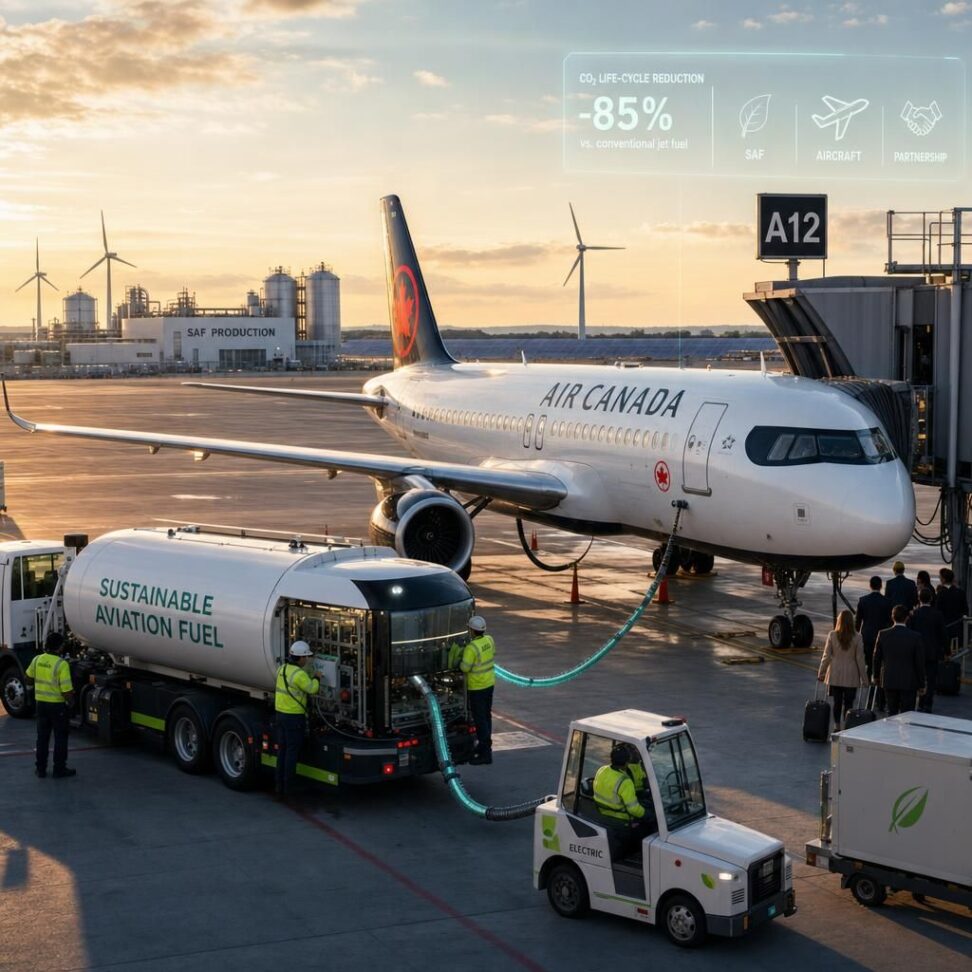
Air Canada and Airbus Scale Sustainable Aviation Fuel Expansion
Air Canada and Airbus have announced a new partnership aimed at expanding the use of Sustainable Aviation Fuel (SAF) within Canada, marking a step forward in efforts to reduce the life-cycle carbon emissions associated with corporate air travel. The collaboration is designed to help scale domestic SAF adoption while supporting emissions reduction goals across the aviation sector.
Details of the Partnership
Under the agreement, Airbus will purchase SAF from Air Canada to cover a portion of the emissions generated by its business travel on Air Canada flights. The fuel will be sourced domestically, reinforcing Canada’s growing SAF supply chain and helping build momentum for wider industry adoption. By allocating SAF to corporate travel routes, both companies aim to demonstrate a practical model that other organizations can replicate.
SAF can reduce life-cycle greenhouse gas emissions by up to 80 percent compared to conventional jet fuel, depending on the feedstock and production method. It is considered one of the most immediate solutions for lowering aviation’s carbon footprint, as it can be used in existing aircraft engines without major modifications.
Why This Matters for Canadian Aviation
Canada’s SAF market is still in its early stages, with limited domestic production capacity. Partnerships like this one help send strong demand signals to fuel producers, investors, and policymakers, encouraging the development of local SAF infrastructure. Scaling domestic supply is considered essential to meeting long-term decarbonization targets in the aviation industry.
The agreement also aligns with broader commitments across the sector to achieve net-zero carbon emissions by 2050, a goal endorsed by the International Air Transport Association (IATA) and supported by major carriers and manufacturers worldwide.
About Air Canada
Air Canada is the country’s largest airline and flag carrier, headquartered in Montreal, Quebec. It operates scheduled passenger service to more than 180 destinations across six continents. The airline has set a goal to achieve net-zero greenhouse gas emissions from all global operations by 2050 and has committed significant investments toward sustainable fuels, fleet renewal, and emissions reduction initiatives.
About Airbus
Airbus is a European multinational aerospace corporation headquartered in Leiden, Netherlands, with major operations in Toulouse, France. The company designs and manufactures commercial aircraft, helicopters, defense systems, and space equipment. Airbus has been a longstanding advocate for SAF and is developing hydrogen-powered aircraft technology through its ZEROe program, with a target entry into service by 2035.
Corporate Travel as a Catalyst
By focusing on corporate travel, the initiative highlights an area where companies can take direct action to lower Scope 3 emissions, which include indirect emissions from business activities such as employee flights. Book-and-claim SAF programs allow organizations to purchase SAF even when it is not physically available at their departure airport, giving them flexibility in how they contribute to emissions reductions.
This approach is gaining traction among corporations seeking measurable ways to align travel practices with sustainability targets. As more companies participate, demand for SAF is expected to grow, helping bring down