
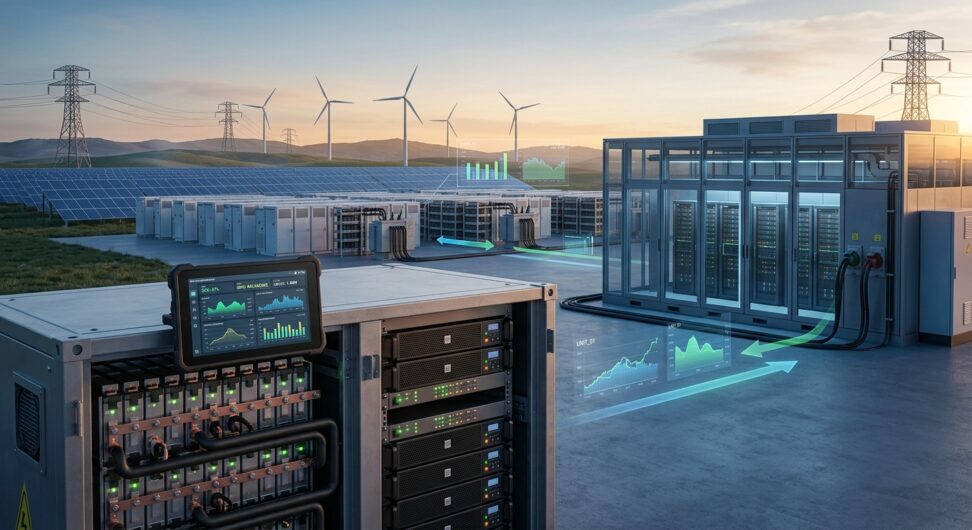
Battery Backup Power Units Market Growth Through 2035: Renewable Energy Drives Demand
The battery backup power units market is positioned for sustained expansion through 2035, propelled by two major forces reshaping the global energy landscape: the rapid buildout of data centers and the accelerating integration of renewable energy sources into power grids. As businesses and utilities seek reliable ways to store and deploy electricity, backup power systems have moved from a niche safety measure to a core infrastructure component.
What Is Driving the Market
Battery backup power units serve as a bridge between intermittent power generation and consistent electricity demand. With solar and wind installations growing worldwide, these systems play a critical role in storing excess energy during peak generation periods and releasing it when production dips or demand spikes.
The data center sector has emerged as a particularly significant growth driver. As cloud computing, artificial intelligence workloads, and digital services expand, data centers require uninterrupted power to avoid costly downtime. Battery backup systems provide the reliability these facilities need, especially during grid disturbances or transitions to backup generators.
Key Market Segments
The battery backup power units market spans several technology types and applications, including:
- Lithium-ion based systems, valued for energy density and declining costs
- Lead-acid batteries, still used in cost-sensitive applications
- Residential backup units for homes seeking energy independence
- Commercial and industrial systems supporting business continuity
- Utility-scale storage supporting grid stability and renewable integration
Regional Trends Shaping Growth
Different regions are advancing at varying paces based on infrastructure needs and policy support. North America continues to see strong demand tied to data center expansion and grid modernization efforts. Europe’s push toward renewable energy targets and energy security following recent geopolitical disruptions has accelerated adoption of storage technologies. Asia-Pacific markets, particularly China and India, are investing heavily in renewable capacity, creating parallel demand for storage solutions that can smooth out supply fluctuations.
Technology Advancements
Improvements in battery chemistry and manufacturing efficiency continue to lower costs and improve performance. Lithium-ion technology remains dominant due to its favorable balance of energy density, lifespan, and declining production costs. Manufacturers are also exploring alternative chemistries, including solid-state batteries and sodium-ion technology, which could offer additional benefits in safety and resource availability over the coming decade.
Smart battery management systems are becoming standard features, allowing for better monitoring, longer battery life, and improved integration with renewable energy sources and smart grids. This software layer helps optimize when batteries charge and discharge, maximizing both cost savings and grid reliability.
Data Centers as a Growth Catalyst
The expansion of digital infrastructure has created substantial demand for reliable backup power. As artificial intelligence applications require significantly more computing power, data center operators are investing in robust energy storage and backup solutions to prevent service interruptions. This has led to increased partnerships between battery manufacturers and data center operators, with some companies developing specialized products tailored to the high-density power requirements of modern server facilities.
Renewable Energy Integration Challenges
While renewable energy sources like solar and wind offer environmental benefits, their intermittent nature creates challenges for grid operators. Battery backup systems address this gap by storing energy when generation exceeds demand and releasing it during shortfalls. This capability supports grid stability and reduces reliance on fossil fuel peaker plants, which have traditionally filled gaps in renewable supply.
Utility companies and grid operators are increasingly incorporating large-scale battery storage projects into their infrastructure planning, recognizing that these systems can defer costly grid upgrades while improving overall reliability.
Market Outlook Through 2035
Industry analysts project continued growth for the battery backup power units market as costs decline and technology matures. Government incentives supporting renewable energy adoption, combined with corporate sustainability commitments, are expected to sustain demand across residential, commercial, and utility-scale applications.
The convergence of digital infrastructure growth and renewable energy transition creates a favorable environment for battery backup manufacturers and technology developers. Companies that can offer scalable, cost-effective, and reliable solutions are likely to capture significant market share as this trend unfolds over the next decade.
Challenges Ahead
Despite positive growth projections, the market faces obstacles including supply chain constraints for critical raw materials such as lithium and cobalt, regulatory complexities across different regions, and the need for continued cost reductions to make battery storage accessible to a broader range of consumers and businesses.
Addressing these challenges will require continued investment in research and development, diversification of supply chains, and collaboration between manufacturers, utilities, and policymakers to create supportive frameworks for battery storage deployment.
Analyzed and outlined by Claude Sonnet 5, images by Gemini 3.1 Flash.
**Source** https://www.indexbox.io/blog/battery-backup-power-units-market-to-accelerate-through-2035-driven-by-data-center-and-renewable-integration-demand/