
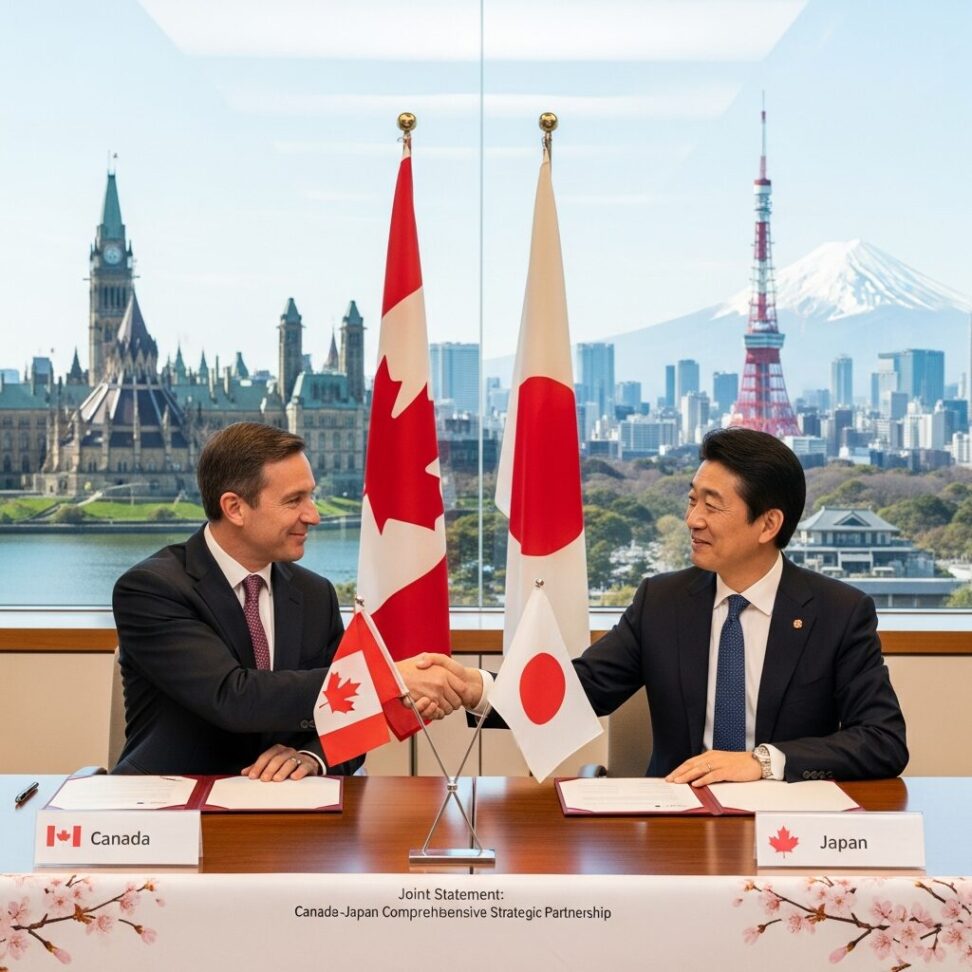
Canada Japan Strategic Partnership Advances Clean Energy Goals
Canada and Japan have reinforced their commitment to collaborative efforts in clean energy development through an updated comprehensive strategic partnership. The bilateral agreement emphasizes the critical role both nations will play in advancing energy security while simultaneously addressing climate change challenges.
Expanding Clean Energy Cooperation
The partnership between Canada and Japan focuses on several key areas within the renewable energy sector. Both countries have identified hydrogen as a particularly promising avenue for cooperation, recognizing its potential to transform energy systems and reduce carbon emissions. The agreement also highlights the importance of developing carbon capture technologies and expanding nuclear energy capabilities as part of a diversified approach to achieving net-zero emissions.
Japan’s energy needs have created unique opportunities for Canadian energy exports. The Asian nation relies heavily on imported energy resources, making it a natural partner for Canada’s expanding clean energy sector. The strategic partnership aims to establish reliable supply chains that benefit both economies while contributing to global climate objectives.
Critical Minerals and Supply Chain Development
A significant component of the Canada-Japan partnership involves securing supply chains for critical minerals essential to clean energy technologies. These minerals are fundamental components in:
- Battery production for electric vehicles
- Solar panel manufacturing
- Wind turbine construction
- Energy storage systems
Canada possesses substantial reserves of many critical minerals, while Japan brings advanced processing capabilities and technological expertise. This complementary relationship positions both nations to reduce dependence on other global suppliers and build resilient supply chains.
Hydrogen Economy Development
Hydrogen features prominently in the bilateral agreement, with both countries committing to accelerate its development as a clean fuel alternative. Canada has significant potential for hydrogen production, particularly through electrolysis powered by renewable energy sources. Japan has set ambitious targets for hydrogen adoption across transportation, industrial, and residential sectors.
The partnership will facilitate knowledge exchange, joint research initiatives, and infrastructure development necessary to scale hydrogen production and distribution. Both nations view hydrogen as essential to decarbonizing sectors that are difficult to electrify, such as heavy industry and long-distance transportation.
Carbon Capture and Storage Initiatives
Carbon capture, utilization, and storage (CCUS) technologies represent another pillar of the Canada-Japan clean energy partnership. Canada has been developing CCUS projects in its oil and gas sector, while Japan has invested in research to improve the efficiency and reduce the costs of these technologies.
The collaboration will support pilot projects, share technical knowledge, and work toward making CCUS economically viable at scale. Both governments recognize that carbon capture will likely be necessary to achieve net-zero targets, particularly for industries where emissions are difficult to eliminate entirely.
Nuclear Energy Collaboration
The strategic partnership acknowledges nuclear energy as part of the clean energy mix. Canada has a long history in nuclear technology, including the development of CANDU reactor designs and expertise in small modular reactors (SMRs). Japan is working to rebuild confidence in nuclear energy following the Fukushima incident while recognizing its importance for energy security and emissions reduction.
Cooperation in this sector will focus on safety standards, next-generation reactor technologies, and waste management solutions. Both countries see nuclear energy as a stable, low-carbon baseload power source that complements intermittent renewable energy sources.
Economic and Strategic Implications
Beyond environmental benefits, the Canada-Japan partnership carries significant economic implications for both nations. Canadian clean energy exports could access one of Asia’s largest and most technologically advanced markets. For Japan, diversifying energy suppliers enhances energy security while supporting its own net-zero commitments.
The partnership also strengthens Indo-Pacific relationships at a time when supply chain resilience has become a strategic priority. By working together, Canada and Japan are building economic ties that extend beyond energy into broader trade and investment relationships.
Timeline and Implementation
While specific project timelines vary, both governments have indicated that implementation of partnership initiatives will accelerate in the coming years. Joint working groups have been established to oversee progress in each focus area, ensuring that commitments translate into tangible outcomes.
The success of this partnership could serve as a model for other bilateral clean energy agreements, demonstrating how countries with complementary resources and capabilities can work together to address global climate challenges while advancing their economic interests.
Analyzed and outlined by Claude Sonnet 4.5, images by Gemini Imagen 4.
**Source**
Joint statement on Canada-Japan Comprehensive Strategic Partnership