
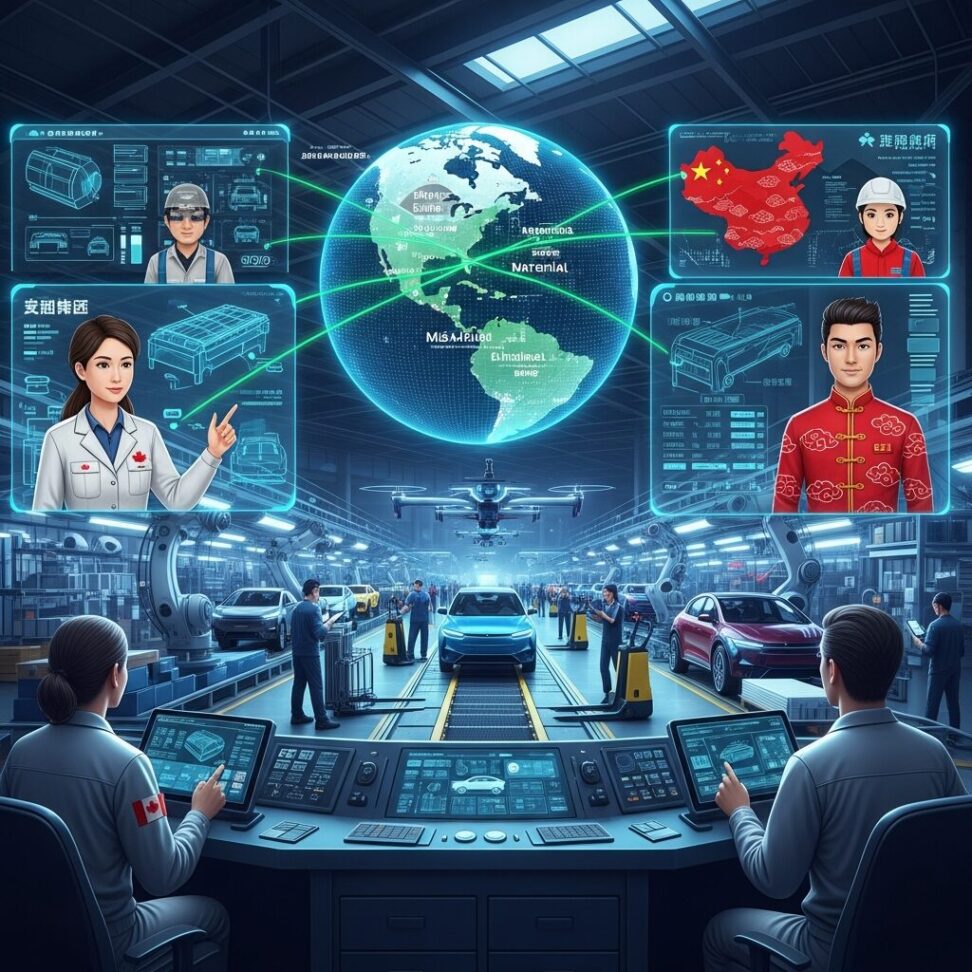
Canada’s Future EV Industry Depends on Chinese Market Access
Canada finds itself at a critical juncture in the global electric vehicle revolution. While the country has made substantial investments in building a domestic EV supply chain, industry experts warn that success in this sector requires engagement with the world’s largest automotive market: China.
The Reality of Global EV Markets
The electric vehicle industry has evolved into a truly global enterprise, with China emerging as the dominant force. Chinese manufacturers have not only captured their domestic market but have also become leaders in EV technology, battery production, and supply chain innovation. For Canada to establish a competitive position in this landscape, isolating itself from Chinese partnerships and market opportunities could prove detrimental to long-term growth prospects.
The Canadian government has invested billions of dollars in attracting EV manufacturing facilities and battery plants. These investments aim to position Canada as a key player in North America’s transition to electric mobility. However, without access to Chinese technology, expertise, and market opportunities, these investments may not yield the expected returns.
Technology Transfer and Innovation
China’s EV sector has developed rapidly over the past decade, driven by government support and massive private investment. Chinese companies have achieved significant breakthroughs in battery technology, charging infrastructure, and vehicle design. Canadian manufacturers and suppliers need exposure to these innovations to remain competitive on the global stage.
The exchange of knowledge and technology between Canadian and Chinese firms could accelerate development timelines and reduce costs. This collaboration extends beyond manufacturing to include research and development partnerships that could benefit both nations. Restricting these connections may leave Canadian companies lagging behind their international competitors.
Supply Chain Considerations
The automotive supply chain has become increasingly complex, with components sourced from multiple countries before final assembly. China controls significant portions of critical mineral processing and battery component manufacturing. Canadian companies seeking to build complete EV supply chains must navigate these realities.
Key supply chain factors include:
- Processing of lithium, cobalt, and other battery materials
- Production of battery cells and modules
- Manufacturing of electric motors and power electronics
- Development of charging infrastructure components
Attempting to replicate these capabilities entirely within North America would require decades of development and investment far exceeding current commitments.
Market Access for Canadian Products
China represents the world’s largest market for electric vehicles, with millions of units sold annually. Canadian automotive suppliers and manufacturers need access to this market to achieve the scale necessary for profitability. Without the ability to sell products in China, Canadian firms face limited growth potential restricted primarily to the North American market.
The automotive industry operates on thin margins that require high-volume production to achieve profitability. Access to Chinese consumers and manufacturers could provide Canadian companies with the scale needed to justify continued investment and expansion.
Balancing Economic and Security Concerns
The discussion around Chinese involvement in Canadian industries often centers on national security and economic sovereignty concerns. These considerations are legitimate and require careful management. However, complete disengagement from the Chinese market may create different risks to Canada’s economic future.
Finding a middle path that allows for economic cooperation while maintaining security safeguards represents the challenge facing policymakers. Other nations have developed frameworks for managing these relationships, providing potential models for Canada to consider.
The Cost of Isolation
Countries that have attempted to build automotive industries in isolation from global supply chains have generally struggled to achieve competitiveness. The automotive sector requires enormous scale, continuous innovation, and access to diverse markets. Canada’s relatively small domestic market means that international partnerships and market access are not optional extras but fundamental requirements for success.
The transition to electric vehicles represents a once-in-a-generation opportunity for Canada to establish a strong position in the automotive industry. However, this opportunity comes with the requirement to engage with global markets and partners, including those in China.
Looking Forward
Canada’s approach to the Chinese market will significantly influence the success of its EV industry ambitions. Policymakers must weigh the potential benefits of market access and technological cooperation against legitimate concerns about security and economic dependency.
The path forward likely requires nuanced policies that enable beneficial economic relationships while establishing appropriate safeguards. The alternative—attempting to build an EV industry in isolation from the world’s largest market—may ultimately undermine the substantial investments Canada has already made in this sector.
Analyzed and outlined by Claude Sonnet 4.5, images by Gemini Imagen 4.
**Source**
https://www.thestar.com/opinion/contributors/heres-the-truth-canada-cant-build-the-car-market-of-the-future-without-exposure-to/article_a42bc405-ddf5-4bcb-b87b-e5c31f0bbaff.html