
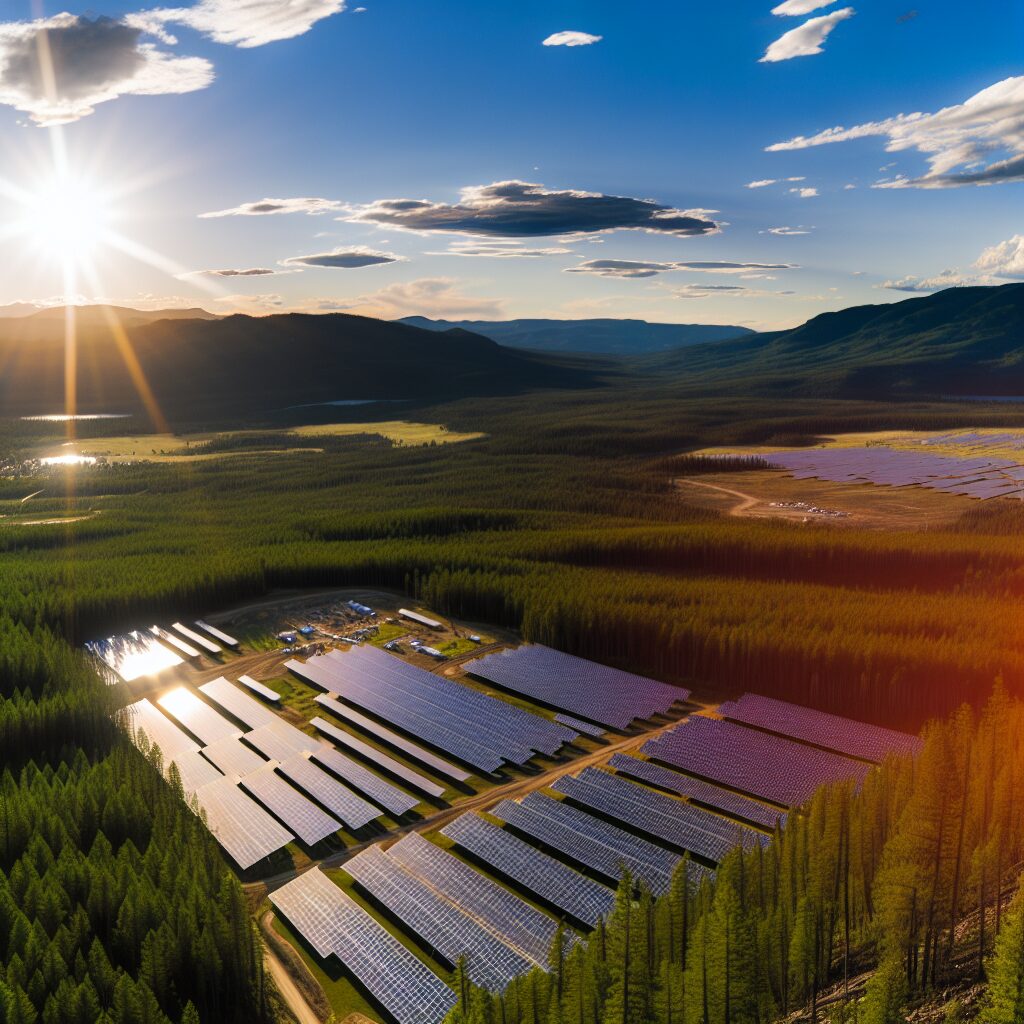
Canada’s Largest Off-Grid Solar Project in BC’s Chilcotin Region
British Columbia’s Chilcotin region will soon be home to the largest off-grid solar project in Canada. This development marks a significant step forward for sustainable energy in remote communities, particularly in areas where access to the main power grid is limited or nonexistent.
Project Overview
The solar project will be located near Tatlayoko Lake, a remote area in west-central British Columbia known for its pristine natural environment and limited infrastructure. The facility aims to reduce reliance on diesel fuel and provide clean, renewable energy to nearby communities that are not connected to the provincial power grid.
This initiative is spearheaded by the Xeni Gwet’in First Nations Government, in partnership with various levels of government and sustainable energy organizations. The project underscores a growing commitment to energy independence and environmental stewardship within Indigenous communities across Canada.
Key Features of the Solar Installation
- Capacity: 2.6 megawatts (MW) of solar-generated electricity
- Battery Storage: Integrated battery systems to store excess power and ensure continuous supply during low sunlight periods
- Coverage: Designed to meet virtually all the electricity needs of the Xeni Gwet’in community and surrounding homes
- Carbon Reduction: Expected to significantly cut carbon emissions by replacing diesel generators
Community-Led Sustainability
The Xeni Gwet’in have long advocated for sustainability and self-sufficiency. This solar project aligns with their vision of reducing environmental impact while enhancing energy security. It also creates opportunities for local employment and skills development through construction, maintenance, and technical roles related to the operation of the solar array.
Chief Jimmy Lulua of the Xeni Gwet’in emphasized the importance of this initiative, noting that it allows the community to take control of its energy future in a way that respects both cultural values and environmental concerns.
Funding and Collaboration
The establishment of this off-grid solar system is made possible through a combination of federal and provincial funding, along with support from non-profit clean energy groups. Financial backing includes contributions from:
- Natural Resources Canada
- BC Ministry of Energy, Mines and Low Carbon Innovation
- EcoSmart Foundation
- Private sector partners specializing in renewable technology
These collaborations aim to demonstrate that remote communities can achieve reliable energy solutions without relying on fossil fuels.
Implications for Remote Communities
Remote and Indigenous communities in Canada often rely heavily on diesel fuel for electricity generation due to lack of grid access. This dependency comes with high costs, logistical challenges, and environmental risks. Projects like the one in the Chilcotin region offer a model that can be replicated elsewhere.
By investing in localized renewable energy systems, communities gain autonomy over their energy supply, reduce pollution, and lower operational expenses in the long term. The success of this solar installation could encourage similar projects across other off-grid regions in Canada.
Environmental and Cultural Significance
The Chilcotin region is ecologically sensitive and culturally important to the Xeni Gwet’in people. Building an off-grid solar project here minimizes land disruption compared to traditional fuel-based infrastructure. It also symbolizes a merging of modern technology with traditional knowledge and stewardship of the land.
Energy production from this site is expected to align with seasonal consumption patterns, allowing for more efficient use and management of resources. The battery storage integration ensures that even during winter or cloudy days, the community maintains access to stable power.
Looking Ahead
Construction on the solar project is already underway and is expected to be completed in stages. Once fully operational, it will stand as Canada’s most extensive off-grid solar-powered system—a landmark achievement for green energy in rural and Indigenous territories.
This endeavor signals a broader shift toward decentralized energy models and highlights the potential role of Indigenous leadership in shaping Canada’s renewable energy landscape.
Analyzed and outlined by ChatGPT-4o, images by DALL·E 3.
Source
https://www.kelownanow.com/watercooler/news/news/Provincial/Canada_s_biggest_off_grid_solar_project_coming_to_BC_s_Chilcotin_region/