
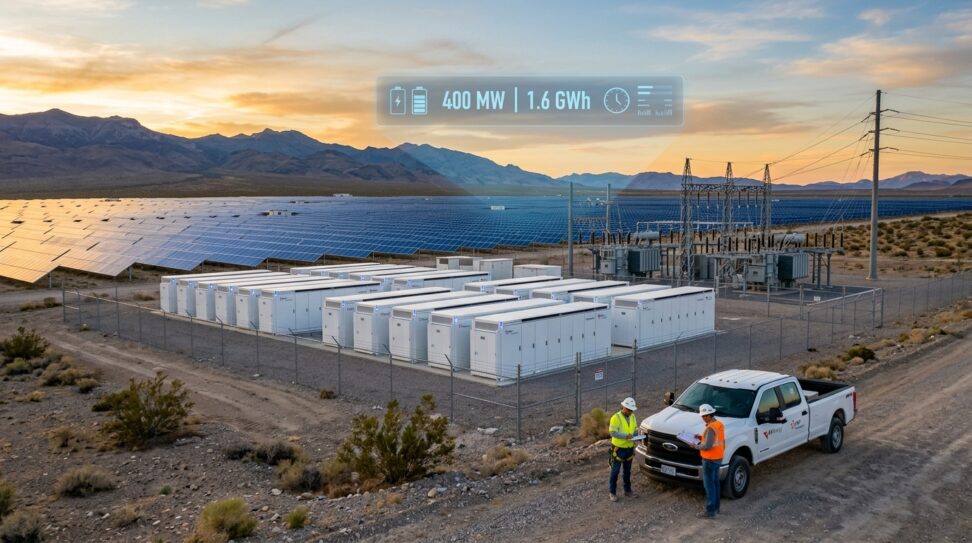
EDF Launches 400MW Nevada Solar Storage Project with NV Energy PPAs
EDF Renewables has moved forward with a large-scale solar and battery storage development in Nevada, securing power purchase agreements (PPAs) with utility NV Energy for a 400MW project. The development marks another step in Nevada’s growing pipeline of utility-scale renewable energy projects designed to support the state’s clean energy targets while providing grid stability through paired battery storage.
Project Overview and Location
The solar and storage facility is being developed in Nevada, a state that has become an increasingly attractive location for utility-scale solar due to its high solar irradiance and available land. The project combines 400MW of solar generation capacity with battery storage, allowing energy captured during peak sunlight hours to be dispatched later in the day when demand rises but solar output declines.
This combination of generation and storage addresses one of the persistent challenges of solar power: its intermittency. By pairing the solar array with battery storage, the project can supply electricity beyond daylight hours, improving its value to the grid and reducing reliance on fossil fuel peaker plants during evening demand spikes.
Power Purchase Agreements with NV Energy
Central to the project’s development are the long-term power purchase agreements signed with NV Energy, the primary electric utility serving Nevada. These PPAs provide the financial certainty needed for EDF Renewables to move the project through construction and into commercial operation, as the agreements guarantee a buyer for the electricity generated over an extended contract period.
NV Energy is the largest electric utility in Nevada, serving the majority of the state’s residential, commercial and industrial customers, including the Las Vegas and Reno metropolitan areas. The utility has been expanding its renewable energy portfolio in recent years to meet Nevada’s renewable portfolio standard, which requires a growing percentage of electricity sold in the state to come from renewable sources.
About EDF Renewables
EDF Renewables is a developer, owner and operator of renewable energy projects, operating across solar, wind, and energy storage sectors. The company is a subsidiary of EDF Group, the France-based multinational electric utility company. EDF Renewables has an active presence in the United States, with a portfolio spanning multiple states and technologies, including large-scale solar farms, wind installations, and battery storage systems designed to support grid reliability as more variable renewable resources come online.
Why Solar Plus Storage Matters for Nevada
Nevada has set ambitious renewable energy goals, aiming to source a significant share of its electricity from renewable sources over the coming decades. Solar plus storage projects like this one play a direct role in meeting those targets while also addressing operational needs on the grid.
- Storage allows solar energy to be shifted to evening hours when demand typically peaks
- Battery systems help smooth out fluctuations caused by cloud cover or rapid changes in solar output
- Combined projects reduce the need for new natural gas peaking plants
- Long-term PPAs provide price stability for utilities and their customers
The 400MW scale of this project places it among the larger solar developments in the state, reflecting the broader trend of utility-scale solar plus storage projects becoming a standard model for new renewable capacity across the southwestern United States.
Broader Context for Nevada’s Energy Transition
Nevada has emerged as one of the more active states for utility-scale solar development in recent years, driven by strong solar resources and supportive state policy. NV Energy has entered into multiple PPAs with various developers as it works toward compliance with state renewable energy mandates and prepares for a future grid that includes a higher share of variable generation sources.
The addition of battery storage to these projects is becoming standard practice rather than an exception, as utilities and developers recognize the operational and financial benefits of dispatchable renewable energy. Storage-paired solar projects allow utilities to better manage load curves and reduce curtailment, where excess solar generation would otherwise go unused during periods of low demand.
What Comes Next
With the PPAs in place, EDF Renewables can proceed with the remaining steps toward construction, including finalizing permitting, securing financing, and coordinating interconnection with the regional transmission grid. Projects of this scale typically involve multi-year development timelines before reaching commercial operation.
Once operational, the facility will contribute to NV Energy’s renewable energy supply and support the utility’s efforts to meet Nevada’s clean energy requirements. The project also reflects the continued investment by EDF Renewables in the U.S. solar and storage market, as the company expands its footprint across multiple states with similar generation and storage combinations.
As more utilities across the country pursue similar solar plus storage agreements, projects like this one in Nevada may serve as a model for how utility-scale renewable development can pair generation with flexibility, helping grids adapt to both rising demand and the increasing share of variable renewable resources.
Analyzed and outlined by Claude Sonnet 5, images by Gemini 3.1 Flash.
**Source** https://www.pv-tech.org/edf-ppas-nv-energy-solar-plus-storage-project-nevada/