
EU Battery Storage Capacity Surges 45% Through Utility-Scale Expansion
The European Union’s battery storage infrastructure has experienced substantial growth, with capacity increasing by 45% in 2025. This expansion signals a significant shift in the region’s energy landscape as countries work to integrate renewable energy sources and stabilize their power grids.
Utility-Scale Projects Drive Growth
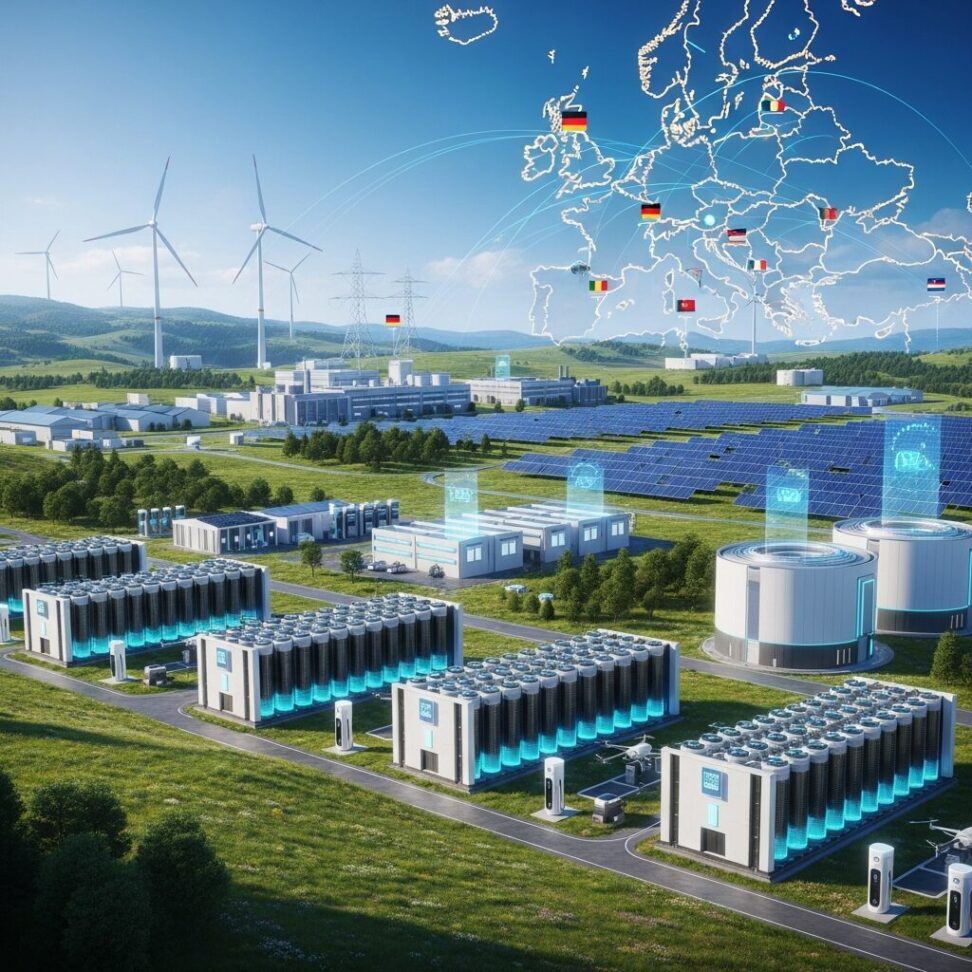
The primary catalyst behind this surge has been the development of utility-scale battery storage projects across the continent. These large-scale installations are designed to store excess electricity generated during periods of high renewable energy production, particularly from solar and wind sources, and release it when demand peaks or generation drops.
Utility-scale battery systems typically range from several megawatts to hundreds of megawatts in capacity. They serve as critical infrastructure for grid operators managing the intermittent nature of renewable energy sources. The 45% increase demonstrates that EU member states are making substantial investments in energy storage technology to support their clean energy transitions.
Meeting Renewable Energy Integration Challenges
The expansion of battery storage capacity addresses one of the most pressing challenges facing Europe’s energy sector: the integration of variable renewable energy sources. As countries move away from fossil fuels and increase their reliance on solar and wind power, the need for reliable energy storage solutions becomes increasingly important.
Battery storage systems provide several key benefits:
- Grid stabilization during periods of fluctuating renewable energy generation
- Peak demand management by storing energy during low-demand periods
- Frequency regulation to maintain grid stability
- Backup power during outages or supply disruptions
- Reduced need for traditional peaking power plants
Geographic Distribution and Market Leaders
The growth in battery storage capacity has not been uniform across the EU. Several countries have emerged as leaders in this sector, driven by their ambitious renewable energy targets and supportive policy frameworks. Nations with high penetration of wind and solar power have been particularly active in deploying battery storage infrastructure.
The distribution of new capacity reflects both the maturity of individual markets and the varying levels of government support for energy storage projects. Countries with established renewable energy sectors have been able to leverage existing infrastructure and expertise to accelerate battery storage deployment.
Technology Advances and Cost Reductions
The rapid expansion of battery storage capacity has been facilitated by significant improvements in battery technology and declining costs. Lithium-ion batteries, which dominate the utility-scale storage market, have become increasingly affordable and efficient over the past several years.
These technological advances have made large-scale battery projects economically viable without requiring extensive subsidies. The improved economics have attracted investment from both traditional energy companies and new market entrants seeking to capitalize on the energy transition.
Policy Support and Regulatory Framework
European policymakers have created a favorable environment for battery storage development through various mechanisms. Regulatory reforms have clarified the role of energy storage in electricity markets, allowing these systems to participate in multiple revenue streams including capacity markets, frequency response services, and energy arbitrage.
The EU’s broader climate goals, including the target of climate neutrality by 2050, have provided additional impetus for battery storage deployment. Member states recognize that achieving these objectives will require substantial energy storage capacity to complement renewable energy generation.
Future Outlook
The 45% increase in battery storage capacity during 2025 represents a significant milestone, but industry analysts expect continued growth in coming years. Several factors support this outlook:
- Ongoing expansion of renewable energy capacity across the EU
- Further cost reductions in battery technology
- Increased focus on energy security following recent geopolitical events
- Growing recognition of storage as essential infrastructure
- Continued policy support at both EU and national levels
The trajectory of battery storage deployment will play a crucial role in determining how quickly the EU can transition to a low-carbon energy system. As storage capacity continues to expand, it will enable higher penetration rates of renewable energy while maintaining grid reliability and reducing dependence on fossil fuel-based generation.
The 45% growth figure underscores the momentum behind energy storage adoption in Europe and suggests that battery systems are transitioning from niche applications to mainstream energy infrastructure. This transformation will be essential for achieving the region’s climate objectives while ensuring energy security and affordability for consumers.
Analyzed and outlined by Claude Sonnet 4.5, images by Gemini Imagen 4.
**Source**
https://www.indexbox.io/blog/eu-battery-storage-capacity-grows-45-in-2025-driven-by-utility-scale-projects/