
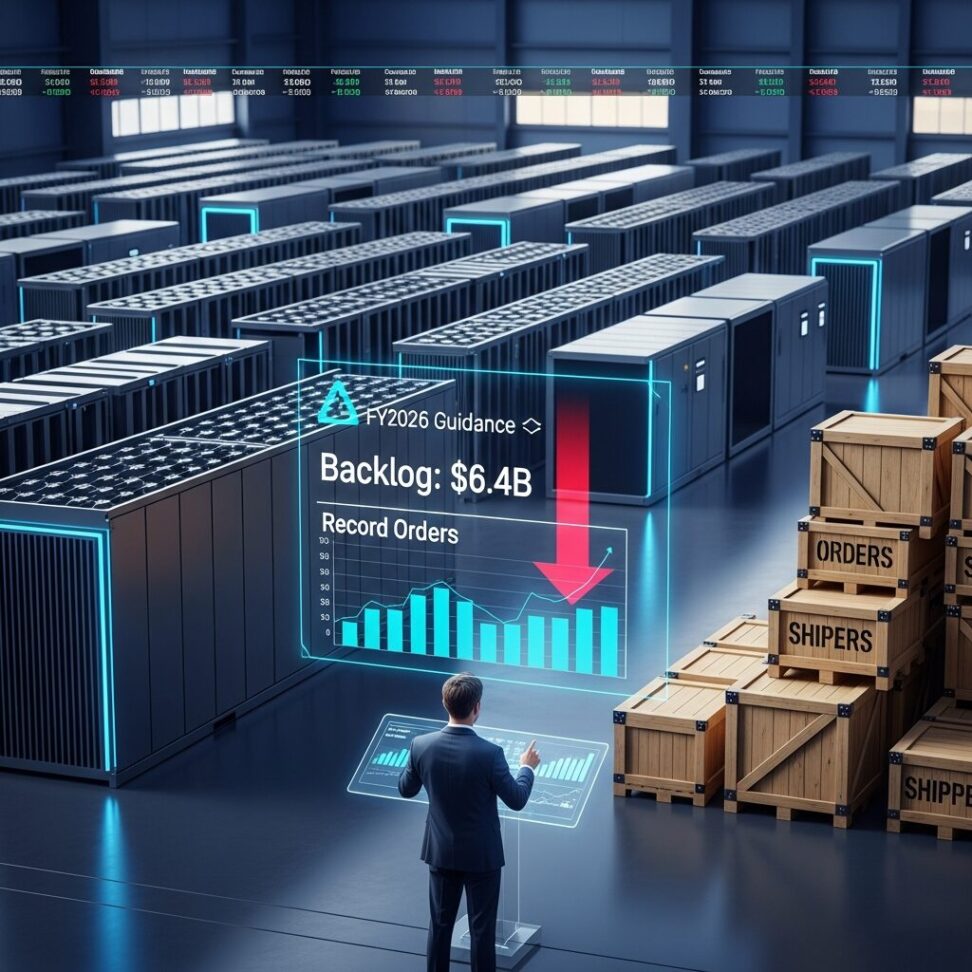
Fluence Energy Storage Cuts 2026 Forecast Despite Record Orders
Fluence Energy has trimmed its fiscal 2026 outlook even as the company reports an unprecedented order backlog, highlighting the complex dynamics shaping the global battery storage market. The announcement reflects both the strength of underlying demand and the operational headwinds facing energy storage providers navigating supply chain shifts, tariffs, and project timing.
About Fluence Energy
Fluence Energy is a global provider of energy storage products, services, and digital applications for renewables and storage. Originally formed as a joint venture between Siemens and AES Corporation, the company is headquartered in Arlington, Virginia, and operates across more than 40 markets worldwide. Fluence designs and delivers grid-scale battery storage systems that help utilities, developers, and commercial customers integrate renewable energy and stabilize power grids.
Record Backlog Signals Strong Market Demand
Fluence has built up a backlog of approximately $6.4 billion, underscoring the surging appetite for grid-scale energy storage as utilities and independent power producers accelerate the deployment of renewables. The record order intake reflects continuing investment in storage infrastructure to support solar and wind capacity, manage peak demand, and improve grid reliability.
Despite this momentum, the company has moderated its expectations for fiscal 2026, citing timing issues and shifting market conditions that are influencing when revenue can be recognized from these signed contracts.
Why the Guidance Was Cut
Several factors have contributed to the revised outlook:
- Project deployment schedules are being pushed further into future fiscal periods, delaying revenue conversion from the backlog
- Tariff uncertainty and changing trade policies, particularly involving Chinese battery components, are affecting procurement strategies
- Supply chain adjustments as Fluence works to diversify sourcing away from tariff-exposed regions
- Longer sales cycles and permitting timelines for utility-scale storage projects
These pressures illustrate a broader trend across the energy storage sector, where strong demand fundamentals are colliding with near-term execution challenges tied to geopolitics and evolving regulatory frameworks.
The Broader Energy Storage Market Context
The global battery energy storage market continues to expand rapidly, driven by declining lithium-ion costs, ambitious clean energy targets, and the increasing need to balance intermittent renewable generation. Analysts project sustained double-digit annual growth for grid-scale storage deployments through the end of the decade, with the United States, Europe, and Australia leading demand.
Fluence’s record backlog is consistent with this trajectory. However, the guidance cut demonstrates that translating orders into recognized revenue depends on factors beyond demand alone, including component availability, interconnection queues, and customer readiness.
Tariff Pressures Reshape Supply Strategies
US tariffs on imported batteries and related components have prompted storage providers to reevaluate their sourcing. Fluence has been working to expand domestic content and diversify its supply base, including partnerships with non-Chinese battery cell manufacturers. While these strategic shifts are expected to strengthen the company’s long