
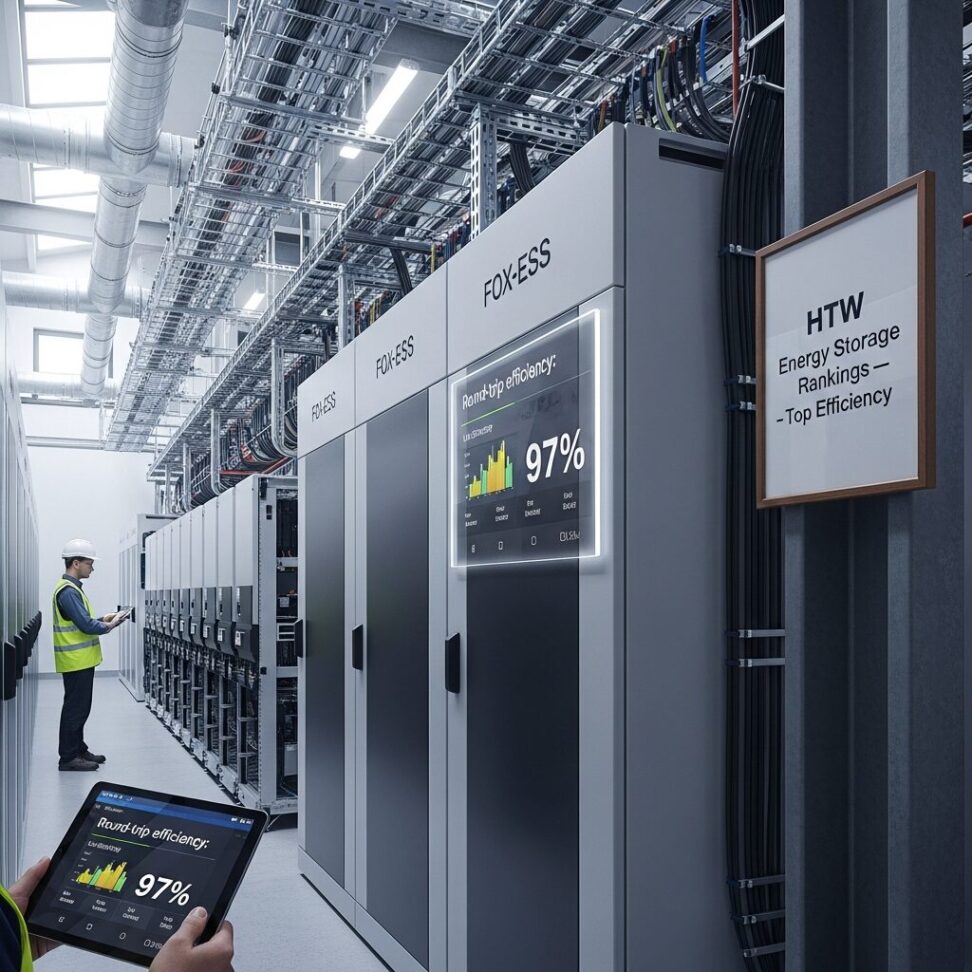
Fox ESS Achieves 97% Energy Storage Efficiency Rating
The renewable energy sector has received notable validation with Fox ESS securing a 97% efficiency rating in the latest HTW Berlin rankings. This performance metric positions the company among the top performers in residential energy storage systems, demonstrating the continued advancement of battery technology for home applications.
Understanding the HTW Berlin Assessment
The HTW Berlin University of Applied Sciences conducts independent testing of energy storage systems, providing consumers and industry professionals with objective performance data. The institution evaluates various parameters including round-trip efficiency, which measures how much energy can be retrieved from a battery system compared to what was initially stored.
Fox ESS achieved the 97% efficiency rating through rigorous testing protocols that simulate real-world operating conditions. This figure represents the system’s ability to minimize energy loss during charging and discharging cycles, a critical factor for homeowners seeking to maximize their solar investment returns.
About Fox ESS
Fox ESS operates as a global energy storage solution provider specializing in residential and commercial battery systems. The company develops and manufactures inverters, battery storage units, and energy management platforms designed to integrate with solar photovoltaic installations. With operations spanning multiple continents, Fox ESS focuses on delivering scalable energy storage solutions for the growing distributed energy market.
Technical Implications of High Efficiency Ratings
The 97% efficiency threshold carries practical significance for end users. For every kilowatt-hour stored in the battery system, approximately 0.97 kWh becomes available for household consumption. The remaining 3% dissipates as heat through conversion losses and internal resistance.
This level of performance impacts several aspects of system economics:
- Reduced energy waste translates to lower electricity costs over the system’s lifespan
- Higher efficiency enables smaller battery capacity requirements for equivalent usable storage
- Improved round-trip efficiency enhances return on investment calculations for solar-plus-storage installations
- Lower thermal losses can contribute to extended battery longevity by reducing heat stress on components
Market Context and Competition
The energy storage market has witnessed steady efficiency improvements as manufacturers refine battery chemistries, power electronics, and thermal management systems. Leading residential storage products typically achieve efficiency ratings between 90% and 97%, with variations depending on testing conditions and power levels.
HTW Berlin’s rankings provide transparency in a market where manufacturer specifications may use different testing methodologies. Independent verification helps consumers compare products on equivalent terms and make informed purchasing decisions.
Industry Trends Driving Efficiency Gains
Several technological developments contribute to the upward trend in energy storage efficiency:
- Lithium iron phosphate (LFP) battery chemistry improvements that reduce internal resistance
- Advanced power conversion systems with optimized switching frequencies
- Sophisticated battery management algorithms that minimize parasitic losses
- Enhanced thermal regulation to maintain optimal operating temperatures
The pursuit of higher efficiency aligns with broader sustainability objectives in the renewable energy sector. Even marginal improvements in round-trip efficiency can yield meaningful energy savings when multiplied across thousands of deployed systems.
Residential Energy Storage Adoption Patterns
Consumer interest in home battery storage continues to expand alongside solar panel installations. Factors driving adoption include electricity rate structures, grid reliability concerns, and incentive programs in various markets. High-efficiency systems appeal particularly to cost-conscious buyers seeking to maximize energy independence while minimizing total system costs.
Geographic markets with high electricity prices or time-of-use rate structures benefit most from efficient storage systems, as the economic value of each stored kilowatt-hour increases. Regions with feed-in tariff reductions or export limitations also see stronger demand for storage solutions that retain solar generation for on-site consumption.
Looking Ahead
The achievement of 97% efficiency ratings by multiple manufacturers suggests the technology is approaching practical performance limits for lithium-based systems. Future improvements may come incrementally through refinements rather than breakthrough gains. Industry attention is likely to shift toward other performance parameters including cycle life, power output capabilities, and system integration features.
As residential energy storage moves toward mainstream adoption, standardized efficiency metrics and independent testing will remain valuable tools for market transparency. The HTW Berlin rankings contribute to this ecosystem by providing verified performance data that supports informed decision-making across the solar and storage industry.
Analyzed and outlined by Claude Sonnet 4.5, images by Gemini Imagen 4.
**Source**
https://www.bastillepost.com/global/article/5669724-fox-ess-achieves-record-97-energy-storage-efficiency-under-htw-rankings