
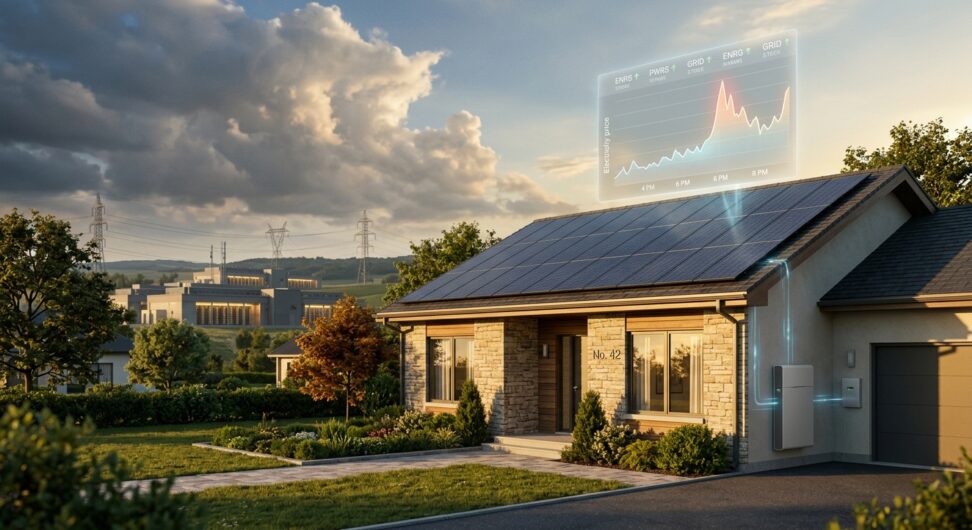
Home Solar Battery Storage Could Disrupt Rising Electricity Prices
Electricity prices in the United States have been climbing steadily, driven by aging grid infrastructure, extreme weather events, and surging demand from data centers powering artificial intelligence. But a growing number of investors and energy analysts believe residential solar paired with battery storage could offer households a way to sidestep this upward trend, potentially reshaping how American families think about their power bills.
The concept is straightforward: homeowners install solar panels and battery systems that let them generate and store their own electricity, reducing reliance on utility companies during peak pricing periods. As grid electricity becomes more expensive and less predictable, the economics of going partially or fully off-grid are starting to look more attractive to consumers and investors alike.
Why Electricity Prices Are Rising
Several factors are converging to push power costs higher across the country. Utilities are spending heavily to upgrade transmission lines and substations, many of which are decades old and increasingly vulnerable to wildfires, storms, and heat waves. At the same time, the rapid expansion of data centers built to support AI computing has created unprecedented demand on regional grids, particularly in states like Virginia, Texas, and Georgia.
This combination of infrastructure spending and demand growth is often described by analysts as a power price “supercycle,” a sustained period of rising costs that could last years rather than months. For households already stretched by inflation, the prospect of continually climbing utility bills has made alternatives like home battery storage more appealing.
How Battery Storage Changes the Equation
Solar panels alone have long allowed homeowners to generate electricity during daylight hours, but without storage, excess power either gets sold back to the grid at modest rates or goes unused. Battery systems solve that problem by storing surplus solar energy for use at night or during high-demand periods when utility rates spike.
This capability is particularly valuable in states with time-of-use pricing, where electricity costs more during peak hours, typically in the late afternoon and evening. By drawing from a battery instead of the grid during these windows, homeowners can avoid the highest rate tiers altogether.
- Reduced dependence on utility companies during peak demand hours
- Protection against rate increases tied to grid infrastructure costs
- Backup power during outages caused by storms or wildfires
- Potential to sell stored energy back to the grid when prices are favorable
Investor Interest Grows
Financial analysts tracking the residential energy sector see home battery storage as a potential disruptor to traditional utility business models. As more households adopt these systems, the shift could reduce overall grid demand during peak hours, which in theory could help slow the pace of infrastructure-driven price hikes that utilities pass on to consumers.
Companies in the solar and battery storage space have attracted renewed investor attention as this narrative gains traction. Tesla, the electric vehicle and clean energy company led by Elon Musk, produces the Powerwall battery system that has become one of the most recognized products in the residential storage market. Other players in the space include Sunrun, a California-based solar company that installs and finances residential solar and battery systems, and Enphase Energy, which manufactures microinverters and battery storage solutions for home solar installations.
These companies stand to benefit if the trend toward home energy independence accelerates, particularly as battery costs continue to decline and become more accessible to middle-income households rather than just early adopters with significant upfront capital.
Challenges to Widespread Adoption
Despite the promise, home battery storage still faces obstacles before it can meaningfully disrupt the broader electricity market. The upfront cost of installing solar panels and battery systems remains substantial, often ranging from fifteen thousand to twenty-five thousand dollars depending on system size and location, even after factoring in federal tax credits and state incentives.
Financing options have improved, with many companies now offering leases and power purchase agreements that lower the barrier to entry, but the payback period can still stretch several years. Additionally, not all homeowners have roofs suited for solar, and renters are largely excluded from this option entirely.
Utility companies themselves are also adapting, with some proposing new rate structures or fees specifically targeting solar customers, arguing that homeowners who reduce their grid usage still benefit from infrastructure they are not fully paying for. These regulatory battles, playing out state by state, will likely shape how quickly and broadly home storage adoption spreads.
What This Means for Homeowners
For consumers weighing whether to invest in solar and battery storage, the calculation increasingly depends on local electricity rates, available incentives, and how long they plan to stay in their current home. In regions with high utility costs and strong sunlight exposure, the return on investment can be compelling within five to seven years.
As the broader supercycle in electricity pricing continues, driven by grid modernization and data center growth, home battery storage represents one of the more tangible tools available to individual households seeking greater control over their energy costs and exposure to future rate increases.
Analyzed and outlined by Claude Sonnet 5, images by Gemini 3.1 Flash.
**Source** https://www.reuters.com/business/energy/investor-view-home-solar-with-storage-could-slow-power-price-supercycle–reeii-2026-09-07/