
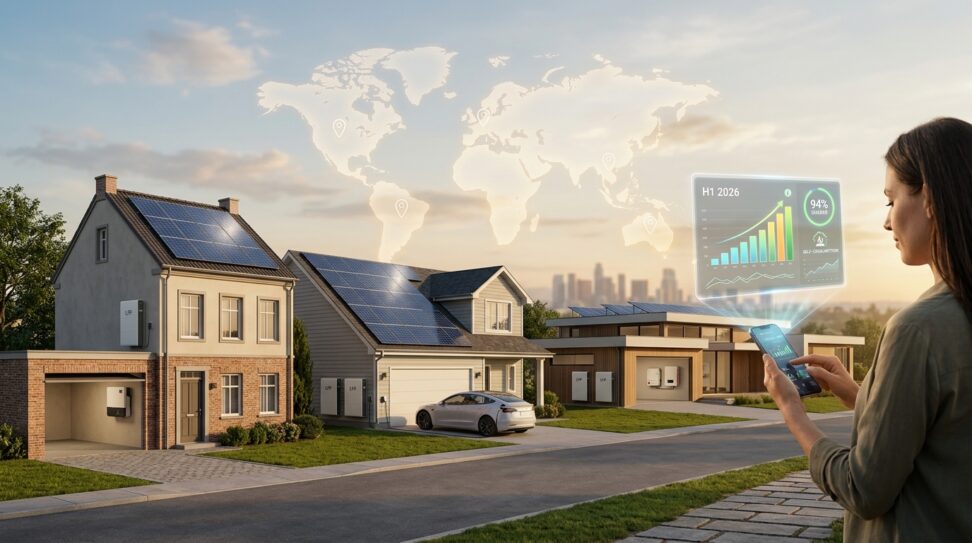
JA Solar, Canadian Solar, and GoodWe H1 Reports Highlight Residential Energy Storage Growth
The first half of 2026 has delivered a clear signal to the solar and energy storage industry: residential battery storage is no longer a niche add-on but a core growth driver for major manufacturers. Recent H1 financial disclosures from JA Solar, Canadian Solar, and GoodWe point to a shared trend—homeowners around the world are increasingly pairing solar panels with battery storage systems, and these companies are positioning themselves to capture that demand.
JA Solar Sees Storage as a Strategic Pillar
JA Solar, one of the largest photovoltaic module manufacturers globally, has been expanding its footprint beyond panel production into integrated energy storage solutions. The company, headquartered in China, is known for its high-efficiency solar cells and modules used in both utility-scale and residential installations. In its H1 2026 report, JA Solar highlighted growing revenue contributions from its energy storage division, particularly systems designed for residential use in Europe and parts of Asia.
The company attributed this growth to rising electricity costs and greater consumer awareness of energy independence. As grid reliability concerns persist in various regions, homeowners are turning to battery storage to store excess solar energy generated during the day for use during peak evening hours or outages.
Canadian Solar Expands Residential Storage Portfolio
Canadian Solar, a global solar technology company with headquarters in Ontario, Canada, and major manufacturing operations in China, has similarly reported strengthening performance in its storage segment. The company designs and manufactures solar modules, but has increasingly diversified into battery energy storage systems through its subsidiary e-STORAGE, which primarily serves utility-scale markets, while also expanding residential offerings.
In its first-half 2026 results, Canadian Solar noted that residential storage shipments increased compared to the same period last year, driven by demand in markets such as Germany, the United States, and Australia. These regions have seen a mix of supportive government incentives and rising retail electricity prices, both of which make home battery systems more financially appealing to consumers.
The company also pointed to improved battery cell costs and more efficient supply chains as factors helping to make residential storage systems more accessible to a broader range of homeowners, not just early adopters with higher disposable income.
GoodWe Reports Strong Residential Storage Momentum
GoodWe, a China-based inverter and energy storage solutions provider, has built its brand largely around distributed solar and residential energy management systems. Unlike JA Solar and Canadian Solar, GoodWe’s core business centers on power conversion technology—inverters and storage systems designed specifically for homes and small commercial properties.
In its H1 2026 report, GoodWe emphasized substantial growth in its residential energy storage segment, citing increased shipments across European markets and a growing presence in Southeast Asia and Latin America. The company noted that customers are increasingly requesting integrated systems that combine solar inverters, battery storage, and smart home energy management software into a single package.
This shift toward integrated systems reflects a broader industry trend: homeowners want simplicity. Rather than purchasing separate components from multiple vendors, many are opting for all-in-one solutions that are easier to install, monitor, and maintain.
What’s Driving the Residential Storage Boom
Several factors are converging to fuel this growth across all three companies’ reports:
- Rising electricity prices in key markets, making self-consumption of solar power more economically attractive
- Declining battery cell costs, particularly lithium iron phosphate (LFP) chemistry, which has become the dominant choice for residential storage
- Government incentives and rebate programs in regions like the EU, US, and Australia encouraging storage adoption
- Growing consumer interest in energy independence and backup power amid grid instability concerns
- Technological improvements that have made storage systems smaller, safer, and easier to install alongside existing solar arrays
Regional Market Dynamics
Europe remains a standout market for residential storage, with Germany continuing to lead in both solar installations and battery attach rates. High retail electricity prices across the continent, combined with a cultural emphasis on energy self-sufficiency following recent years of energy market volatility, have made storage systems a near-standard addition to new residential solar installations in several countries.
The United States has also shown steady growth, particularly in states with time-of-use electricity rates and net metering policy changes that make self-consumption more valuable than exporting excess solar power to the grid. Australia, long a leader in residential solar penetration, continues to see rising battery attachment rates as well.
Emerging markets in Southeast Asia and Latin America, while smaller in absolute volume, are showing some of the fastest percentage growth rates, according to GoodWe’s regional breakdown, as electrification and grid reliability challenges push more households toward solar-plus-storage solutions.
Looking Ahead
The H1 2026 reports from JA Solar, Canadian Solar, and GoodWe collectively suggest that residential energy storage has moved from an optional upgrade to an increasingly standard component of home solar installations. As battery costs continue to decline and consumer awareness grows, industry analysts expect this trend to accelerate through the remainder of 2026 and into 2027.
For homeowners considering solar installations, the growing competition among manufacturers in the storage segment may also translate into more competitive pricing and a wider range of product options in the co