
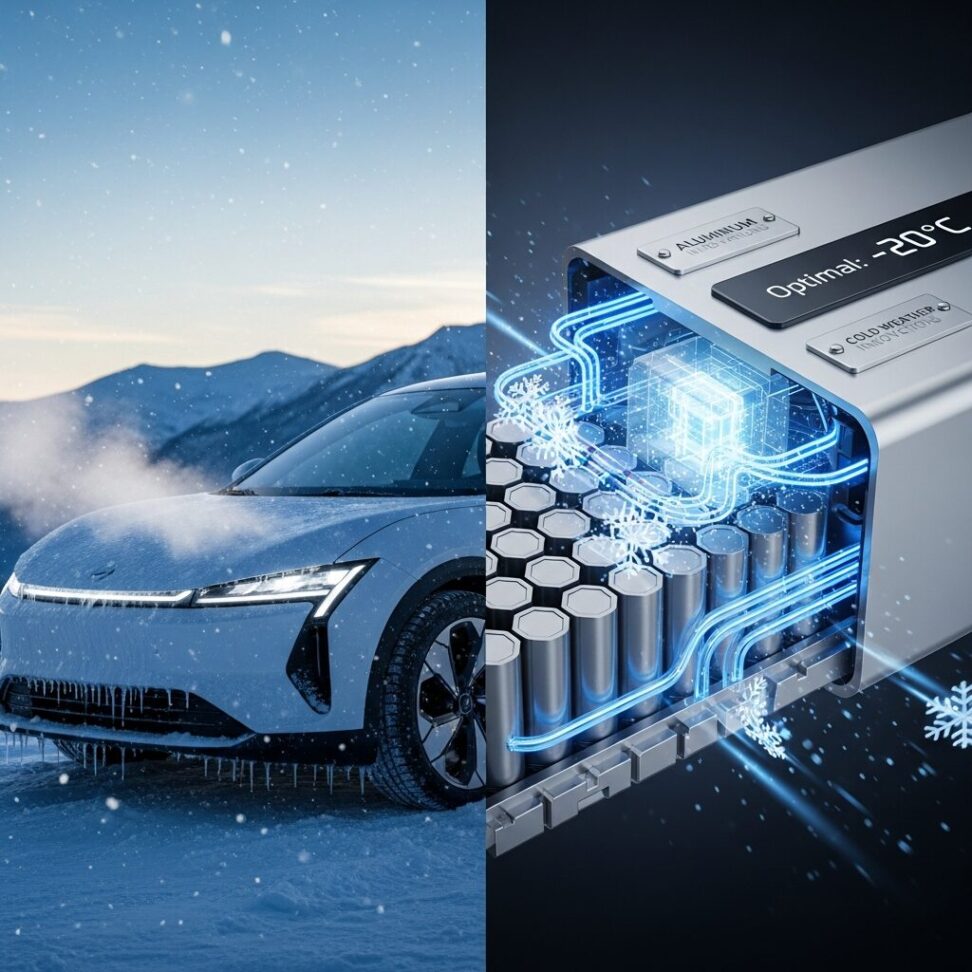
New Aluminum Battery Technology Solves EV Cold Weather Performance
Electric vehicle owners have long struggled with a persistent challenge: reduced battery performance in cold weather. When temperatures drop, lithium-ion batteries lose efficiency, resulting in decreased range and longer charging times. A new development in aluminum battery technology may finally address this longstanding issue.
The Cold Weather Problem for EVs
Traditional lithium-ion batteries face significant obstacles in winter conditions. Cold temperatures slow down the chemical reactions within battery cells, reducing their ability to hold and deliver charge. EV drivers in northern climates regularly experience range reductions of 20-40% during winter months, making long-distance travel more difficult and requiring more frequent charging stops.
Aluminum Batteries Enter the Scene
Researchers have been developing aluminum-ion batteries as an alternative to conventional lithium-ion technology. These batteries use aluminum as the anode material, which offers several potential advantages over lithium-based systems. The technology has been in development for years, but recent breakthroughs have brought it closer to practical application in electric vehicles.
How Aluminum Batteries Handle Cold Weather
The key advantage of aluminum battery technology lies in its chemical properties. Unlike lithium-ion batteries, aluminum-ion batteries maintain their performance characteristics across a wider temperature range. The ionic movement within aluminum batteries remains stable even when temperatures drop significantly below freezing.
This stability means that EVs equipped with aluminum batteries could potentially maintain their range and charging capabilities throughout winter months without the dramatic performance drops seen in current vehicles. The technology operates effectively in temperatures where lithium-ion batteries struggle, making it particularly valuable for drivers in cold climate regions.
Additional Benefits Beyond Cold Weather
The advantages of aluminum battery technology extend beyond temperature resilience:
- Aluminum is more abundant and less expensive than lithium, potentially reducing battery costs
- The technology offers improved safety characteristics with lower fire risk
- Aluminum batteries can be recycled more easily than lithium-ion alternatives
- Higher charge rates may be possible, reducing overall charging time
Current Development Stage
While the technology shows promise, aluminum batteries still face hurdles before widespread commercial adoption. Energy density remains a challenge, as current aluminum-ion batteries store less energy per unit of weight compared to modern lithium-ion batteries. Researchers continue working to improve this metric while maintaining the cold weather advantages.
Several companies and research institutions are actively developing aluminum battery technology. The focus has shifted from laboratory testing to creating prototypes suitable for real-world applications. The timeline for commercial availability in consumer vehicles remains uncertain, but progress continues at multiple research facilities.
Impact on the EV Market
If aluminum batteries can match or exceed the energy density of lithium-ion technology while maintaining superior cold weather performance, they could reshape the electric vehicle market. Northern regions with harsh winters have shown slower EV adoption rates partly due to cold weather performance concerns. Solving this problem could open new markets and accelerate the transition to electric transportation.
The technology could also influence vehicle design. Current EVs often include battery heating systems to maintain performance in cold weather, adding weight and complexity. Aluminum batteries might eliminate the need for such systems, potentially reducing vehicle weight and cost.
Challenges Ahead
Despite the positive developments, several obstacles remain before aluminum batteries become mainstream:
- Scaling production from laboratory to manufacturing facilities
- Achieving competitive energy density with current lithium-ion technology
- Developing supply chains for aluminum battery components
- Conducting long-term durability and reliability testing
- Integrating the technology with existing vehicle platforms
Looking Forward
The development of aluminum battery technology represents a significant step toward addressing one of the electric vehicle industry’s most persistent challenges. Cold weather performance has been a legitimate concern for potential EV buyers, particularly in regions with severe winters.
While commercial availability may still be years away, the progress in aluminum battery research offers hope for a future where electric vehicles perform consistently regardless of temperature. As development continues and challenges are addressed, this technology could become an important tool in expanding electric vehicle adoption to all climate zones.
The success of aluminum batteries will depend on continued research, investment, and collaboration between academic institutions, battery manufacturers, and automotive companies. The potential benefits for cold weather performance alone make it a technology worth watching as the electric vehicle market continues to grow.
Analyzed and outlined by Claude Sonnet 4.5, images by Gemini Imagen 4.
**Source**
https://www.msn.com/en-us/news/technology/did-this-new-aluminium-battery-tech-for-evs-just-solve-cold-weather-battery-life-issues/ar-AA1WvIm7