
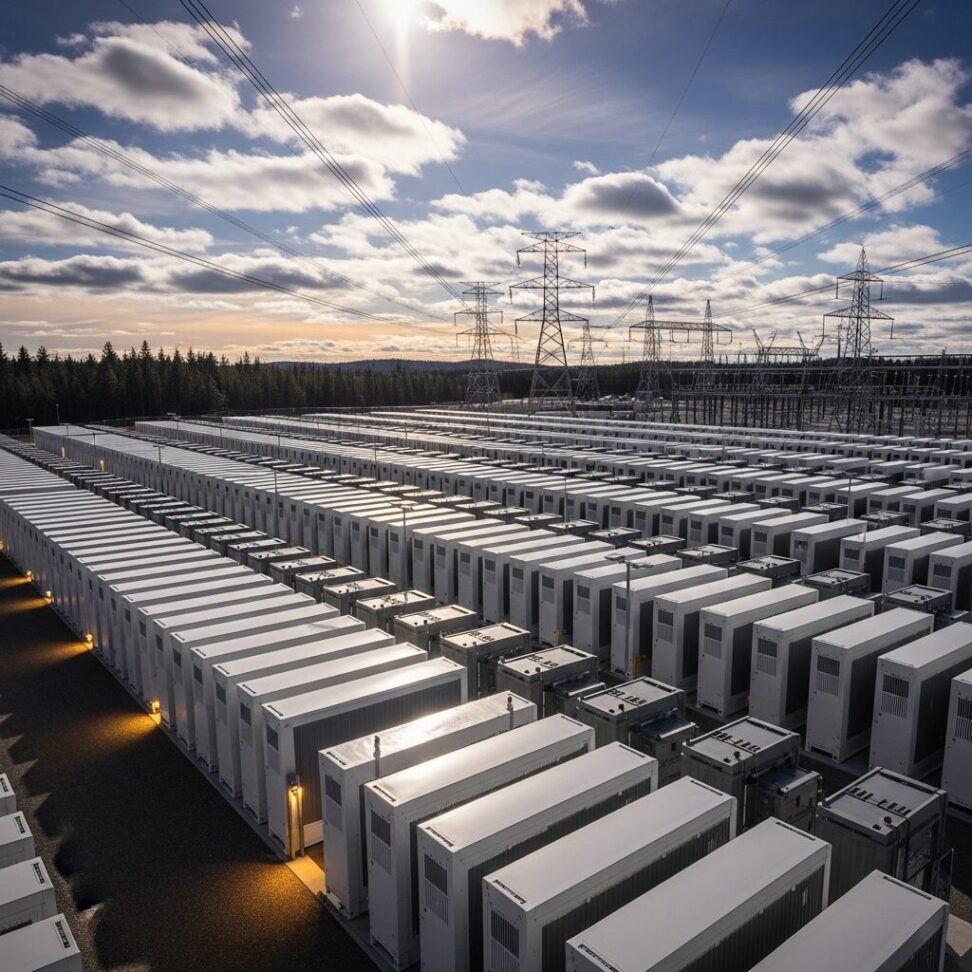
Nova Scotia Grid Scale Battery Facilities Begin Operations
Nova Scotia Power has brought two large-scale battery energy storage systems online, marking a significant step in the province’s transition toward renewable energy infrastructure. The facilities, located in Ellershouse and Harrowsmith, represent the utility’s first major investment in grid-scale battery technology.
Facility Details and Capacity
The two battery storage facilities collectively provide 10 megawatts of power capacity, with the ability to store 20 megawatt-hours of energy. This storage capacity is sufficient to power approximately 10,000 homes for one hour during peak demand periods.
The Ellershouse facility operates with a 5-megawatt capacity and 10-megawatt-hour storage capability, while the Harrowsmith location matches these specifications. Both sites utilize lithium-ion battery technology, which has become the industry standard for grid-scale energy storage due to its efficiency and declining costs.
About Nova Scotia Power
Nova Scotia Power is the primary electric utility serving the province of Nova Scotia, providing electricity to approximately 500,000 residential, commercial, and industrial customers. The company operates as a regulated monopoly and is a subsidiary of Emera Inc., an energy and services company with investments throughout North America and the Caribbean.
Operational Benefits
The battery facilities serve multiple functions within the provincial power grid:
- Storing excess energy generated during periods of low demand for use during peak consumption times
- Providing rapid response to fluctuations in electricity supply and demand
- Supporting integration of intermittent renewable energy sources like wind and solar
- Enhancing grid reliability and reducing the need for fossil fuel-based peaking power plants
Renewable Energy Integration
The battery storage systems play a crucial role in Nova Scotia’s renewable energy goals. The province has set targets to achieve 80 percent renewable electricity by 2030. Wind and solar power generation naturally fluctuates based on weather conditions, creating challenges for grid operators who must balance supply and demand in real time.
Battery storage addresses this intermittency issue by capturing energy when production exceeds demand and releasing it when needed. This capability allows the grid to accommodate higher percentages of renewable energy without compromising reliability.
Investment and Timeline
The project represents a multi-million dollar investment in energy infrastructure, though specific cost figures were not disclosed. Planning and construction took place over several years, with both facilities now entering commercial operation in 2024.
The utility indicated that these initial installations may serve as pilot projects to evaluate the technology’s performance and economic benefits before potential expansion to additional sites across the province.
Technology and Safety Measures
Both facilities incorporate advanced battery management systems that monitor temperature, voltage, and other critical parameters to ensure safe and efficient operation. Fire suppression systems and thermal management equipment provide additional layers of protection.
The battery enclosures are designed to withstand Nova Scotia’s climate conditions, including cold winters and humid summers. Remote monitoring capabilities allow operators to track performance and respond to any issues from the utility’s central control center.
Environmental Impact
By enabling greater renewable energy utilization, the battery facilities contribute to reducing greenhouse gas emissions from the electricity sector. The storage systems allow the grid to rely less on fossil fuel generators that traditionally serve peak demand periods.
Each megawatt-hour of energy stored and discharged from batteries instead of generated from natural gas or diesel can prevent the release of significant carbon dioxide emissions over the facilities’ expected 20-year operational lifespan.
Future Expansion Plans
Nova Scotia Power has indicated that the performance of these initial battery installations will inform decisions about future energy storage investments. The utility is evaluating additional locations where battery storage could provide grid support and integrate renewable generation.
Industry trends suggest that battery storage costs will continue to decline while performance improves, potentially making larger-scale deployments economically attractive in the coming years. The province’s commitment to increasing renewable energy penetration will likely require substantial additional storage capacity beyond these first two facilities.
The successful commissioning of the Ellershouse and Harrowsmith battery storage systems positions Nova Scotia among Canadian provinces actively deploying grid-scale energy storage technology as part of their electricity infrastructure modernization efforts.
Analyzed and outlined by Claude Sonnet 4.5, images by Gemini Imagen 4.
**Source**
https://www.ctvnews.ca/atlantic/nova-scotia/article/two-nova-scotia-power-grid-scale-battery-facilities-now-operational/