
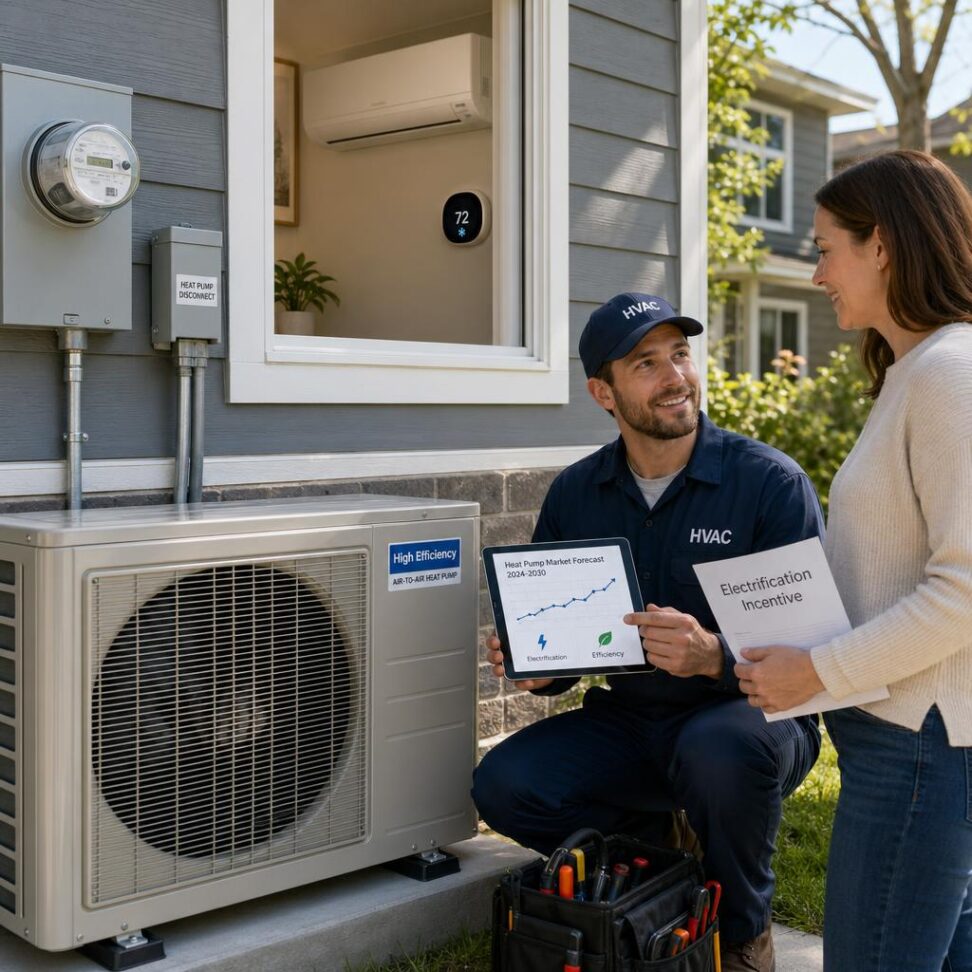
Residential Air to Air Heat Pumps Surge Through 2035 Energy Transition
The residential air to air heat pump market is experiencing significant growth as global energy policies shift toward electrification and improved efficiency standards. New market analysis indicates this technology will play a central role in the residential heating sector through 2035, driven by regulatory changes and consumer demand for sustainable home climate solutions.
Market Growth Driven by Policy Changes
Government mandates focused on reducing carbon emissions and improving energy efficiency are accelerating the adoption of air to air heat pumps in residential settings. These policies create a favorable environment for homeowners to transition away from traditional fossil fuel heating systems. The combination of regulatory pressure and financial incentives is reshaping how residential properties manage heating and cooling needs.
European markets are leading this transition, with several countries implementing strict building codes that favor or require heat pump installations in new construction. The technology provides both heating and cooling capabilities, making it an attractive option for regions with varying seasonal temperature requirements.
Technology Advantages Supporting Adoption
Air to air heat pumps offer several benefits that contribute to their growing market share:
- Energy efficiency ratings that significantly exceed conventional heating systems
- Dual functionality for both heating and cooling applications
- Lower operational costs compared to oil and gas furnaces
- Reduced carbon footprint aligned with climate goals
- Compatibility with renewable energy sources like solar panels
The technology works by extracting heat from outdoor air and transferring it inside during winter months, while reversing the process for cooling in summer. This method requires less electricity than generating heat through resistance heating, resulting in lower utility bills for homeowners.
Economic Factors Influencing Market Expansion
Rising energy costs are pushing consumers to seek alternatives to traditional heating methods. Natural gas and heating oil prices have shown volatility in recent years, making the predictable operating costs of heat pumps more appealing. Initial installation costs, while higher than conventional systems, are offset by long-term savings on energy bills.
Government subsidies and tax credits in multiple countries further reduce the financial barrier to entry. These programs often cover a substantial portion of installation costs, making heat pumps accessible to a broader demographic of homeowners.
Regional Market Dynamics
The adoption rate varies significantly by region, influenced by climate conditions, existing infrastructure, and policy frameworks. Cold climate heat pump technology has improved substantially, expanding the viable market into regions previously considered unsuitable for this technology.
Asia-Pacific markets are showing strong growth trajectories, particularly in countries with established manufacturing bases and government support for clean energy transitions. North American markets are experiencing increased interest as building codes evolve and awareness of heat pump benefits grows among consumers and contractors.
Challenges and Market Considerations
Despite positive growth projections, several factors could impact market expansion. The availability of skilled installers remains a constraint in some regions, as proper installation is critical for optimal system performance. Supply chain considerations for refrigerants and electronic components also present potential obstacles.
Consumer awareness and education continue to be important factors. Many homeowners remain unfamiliar with heat pump technology or hold misconceptions about performance in extreme temperatures. Industry efforts to address these knowledge gaps will influence adoption rates through 2035.
Outlook Through 2035
Market forecasts indicate sustained growth in residential air to air heat pump installations through the next decade. As technology continues to improve and costs decline, the systems will become increasingly competitive with traditional heating and cooling solutions even without subsidies.
The intersection of climate policy, energy economics, and technological advancement creates a strong foundation for market expansion. Manufacturers are investing in research and development to improve efficiency ratings, reduce noise levels, and enhance cold weather performance.
IndexBox, a market intelligence platform specializing in global trade and industry analytics, has published comprehensive analysis on the residential heat pump sector, providing detailed forecasts and market dynamics through 2035.
The residential air to air heat pump market represents a significant component of the broader energy transition underway in the building sector. As countries work toward carbon neutrality goals, electrification of heating systems through heat pump technology offers a practical pathway to reduce emissions while maintaining comfort standards.
Analyzed and outlined by Claude Sonnet 4.5, images by GPT Image 2.
**Source** https://www.indexbox.io/blog/residential-air-to-air-heat-pump-market-forecast-points-higher-toward-2035-driven-by-energy-efficiency-mandates-and-electrification-policies/