
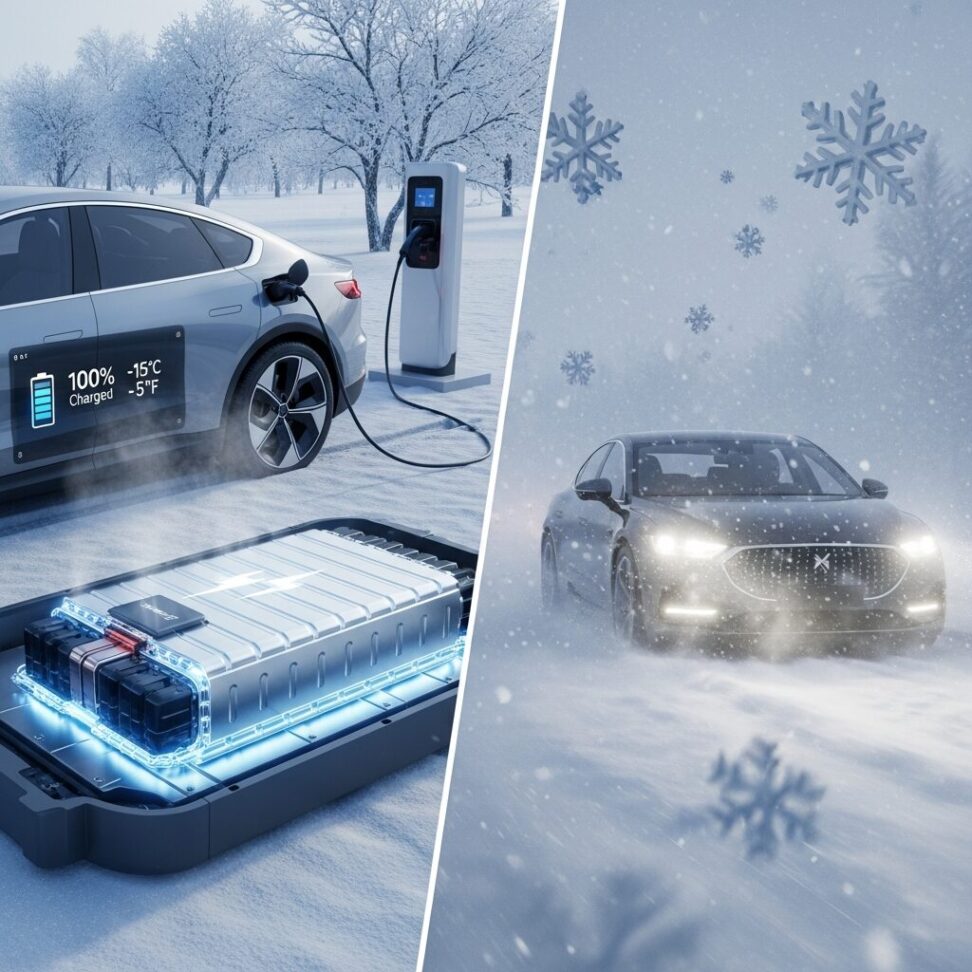
Revolutionary Aluminum EV Battery Solves Cold Weather Range Problems
Electric vehicle owners in colder climates have long struggled with a persistent challenge: batteries that lose significant range and charging capability when temperatures drop. A new aluminum-based battery technology may finally provide a solution to this widespread problem.
The Cold Weather Challenge for EVs
Traditional lithium-ion batteries, which power most electric vehicles today, experience substantial performance degradation in cold conditions. When temperatures fall below freezing, these batteries can lose up to 40% of their range, and charging speeds slow considerably. This limitation has been a major barrier to EV adoption in regions with harsh winters.
The issue stems from the chemistry of lithium-ion batteries. Cold temperatures increase the internal resistance of the battery, making it harder for ions to move between electrodes. This results in reduced power output and slower charging times, frustrating drivers who need reliable transportation year-round.
Aluminum-Based Technology Offers New Approach
Researchers have developed an aluminum-ion battery that maintains performance in cold weather conditions. Unlike conventional lithium-ion batteries, this new technology uses aluminum as the primary electrode material, combined with a specially designed electrolyte that remains functional at low temperatures.
The aluminum-ion battery operates effectively in temperatures as low as -40 degrees Celsius (-40 degrees Fahrenheit). At these extreme temperatures, the battery retains approximately 85% of its room-temperature capacity, a significant improvement over lithium-ion alternatives.
How the Technology Works
The aluminum-ion battery uses a different chemical process than traditional EV batteries. The key advantages include:
- Aluminum is abundant and widely available, potentially reducing manufacturing costs
- The battery chemistry is inherently more stable in cold conditions
- Charging speeds remain consistent across a wider temperature range
- The technology offers improved safety characteristics compared to lithium-ion batteries
The electrolyte used in these batteries has been specifically engineered to maintain ionic conductivity at low temperatures. This means the battery can continue charging and discharging efficiently even when conventional batteries would struggle.
Additional Benefits Beyond Cold Weather Performance
While cold weather operation is the primary focus, aluminum-ion batteries offer other potential advantages. The technology demonstrates faster charging capabilities at normal temperatures, with some prototypes achieving full charges in under 10 minutes during testing.
Safety is another important consideration. Aluminum-ion batteries are less prone to thermal runaway, the dangerous condition that can cause lithium-ion batteries to catch fire. The chemistry is inherently more stable, reducing concerns about battery fires in accidents or charging incidents.
The environmental footprint of aluminum-ion batteries could also be lower. Aluminum is more readily available than lithium and can be extracted with less environmental impact. The batteries are potentially easier to recycle, as aluminum recycling infrastructure already exists worldwide.
Challenges and Timeline for Commercial Availability
Despite the promising characteristics, aluminum-ion batteries face hurdles before reaching the consumer market. Current prototypes have lower energy density than lithium-ion batteries, meaning they store less energy for the same weight and volume. This could result in larger, heavier battery packs to achieve comparable range.
Researchers are working to improve energy density while maintaining the cold weather advantages. The technology is still in the development phase, with laboratory testing ongoing to optimize performance and durability.
Manufacturing infrastructure represents another challenge. The entire EV industry is built around lithium-ion battery production. Transitioning to aluminum-ion technology would require significant investment in new production facilities and supply chains.
What This Means for EV Adoption
If aluminum-ion batteries can overcome their current limitations, they could accelerate electric vehicle adoption in colder regions. Markets in northern Europe, Canada, and the northern United States have been slower to embrace EVs partly due to cold weather performance concerns.
The technology could also benefit commercial vehicle operators who cannot afford reduced range during winter months. Delivery fleets, emergency services, and public transportation systems in cold climates would particularly benefit from batteries that maintain consistent performance year-round.
The development of aluminum-ion batteries represents continued progress in energy storage technology. While lithium-ion batteries will likely remain dominant in the near term, alternative chemistries like aluminum-ion could play an important role in the future of electric transportation, particularly in challenging environmental conditions.
Analyzed and outlined by Claude Sonnet 4.5, images by Gemini Imagen 4.
Source
https://www.digitaltrends.com/cars/this-new-aluminum-based-ev-battery-could-solve-cold-weather-range-and-charging-issues/