
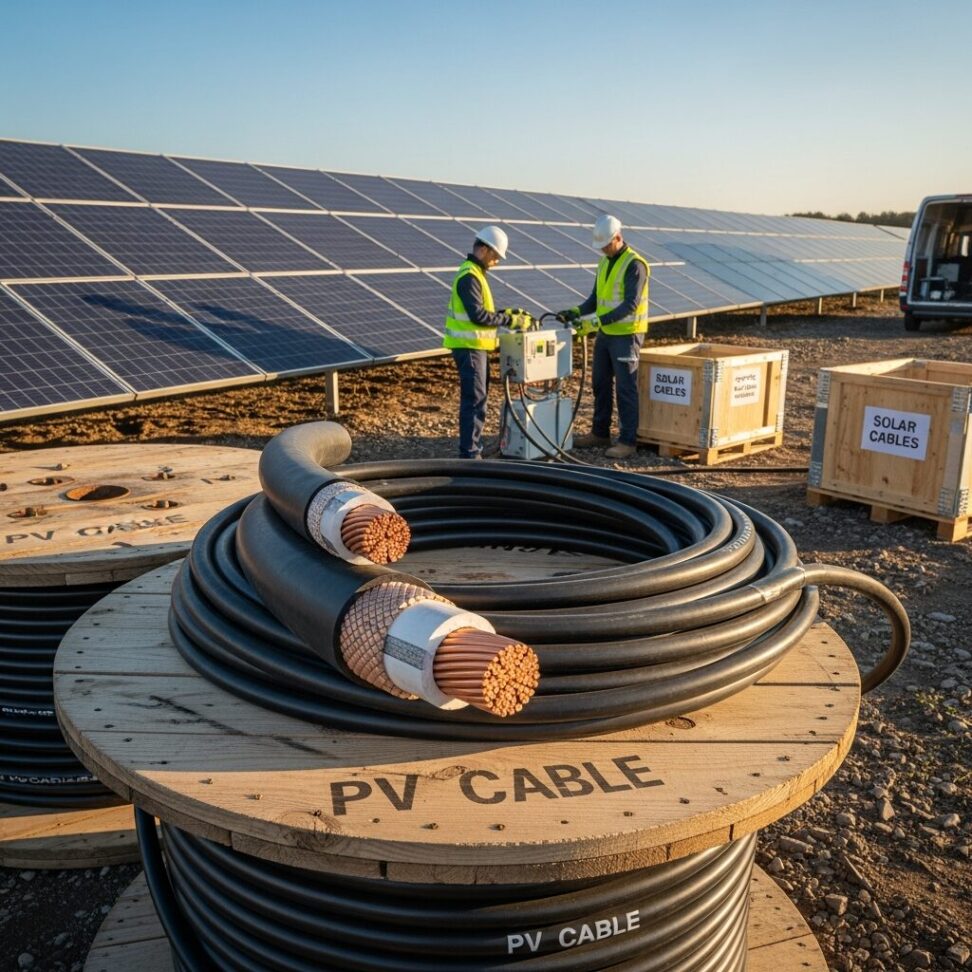
Solar Cables Market Growth Accelerates Toward 2035 With Residential Expansion
The global solar cables market is experiencing significant momentum as the world transitions toward renewable energy sources. Market projections indicate substantial growth through 2035, driven primarily by expanding residential solar installations and supportive government policies across multiple regions.
Market Dynamics and Growth Trajectory
Solar cables serve as essential components in photovoltaic systems, connecting solar panels to inverters and electrical grids. The increasing adoption of solar energy worldwide has created heightened demand for specialized cables designed to withstand outdoor conditions and deliver efficient power transmission.
The residential sector has emerged as a key growth driver for solar cable demand. Homeowners are increasingly investing in rooftop solar installations to reduce electricity costs and minimize their carbon footprint. This trend is particularly pronounced in regions where governments offer incentives such as tax credits, rebates, and net metering programs.
Regional Market Development
Different geographical markets are contributing to the overall expansion at varying rates. North America and Europe continue to show steady growth, supported by established solar energy policies and growing environmental awareness among consumers. The United States has seen particular acceleration in residential solar adoption, with several states implementing aggressive renewable energy targets.
Asia-Pacific regions are demonstrating rapid market development, with countries investing heavily in solar infrastructure. The combination of government mandates, declining solar panel costs, and rising energy demands is creating favorable conditions for solar cable market expansion in these territories.
Technical Requirements and Product Evolution
Solar cables must meet specific technical standards to ensure safe and efficient operation. Key requirements include:
- UV resistance for prolonged sun exposure
- Temperature tolerance ranging from extreme cold to high heat
- Weather resistance against moisture, ozone, and other environmental factors
- Durability to maintain performance over 25-30 year lifespans
- Compliance with international safety and quality certifications
Manufacturers are developing advanced cable technologies with improved insulation materials and enhanced conductor designs. These innovations aim to reduce energy losses during transmission and extend product lifespans, which helps lower the overall cost of solar energy systems.
Factors Supporting Market Growth
Several interconnected factors are propelling the solar cables market forward through 2035:
The declining cost of solar panel systems has made residential installations more accessible to average consumers. As system prices decrease, more homeowners view solar energy as a practical investment rather than a premium option.
Government policies worldwide are establishing renewable energy targets that require significant solar capacity additions. These mandates create predictable demand for solar infrastructure components, including specialized cables.
Growing awareness of climate change is influencing consumer behavior and corporate responsibility initiatives. Many organizations are setting carbon neutrality goals that include transitioning to renewable energy sources.
Commercial and Utility-Scale Contributions
While residential expansion drives much of the growth narrative, commercial and utility-scale projects also contribute substantially to solar cable demand. Large solar farms require extensive cable networks to connect thousands of panels and transmit power to grid connections.
Commercial installations on warehouses, office buildings, and retail centers are becoming more common as businesses seek to reduce operating costs and demonstrate environmental leadership. These projects typically require larger cable volumes and higher specifications compared to residential systems.
Challenges and Market Considerations
Despite positive growth projections, the solar cables market faces certain challenges. Raw material price fluctuations, particularly for copper and specialized polymers, can impact manufacturing costs and profit margins. Supply chain disruptions have also created periodic availability concerns.
Quality control remains critical as market expansion attracts new manufacturers. Substandard cables can compromise system performance and safety, potentially damaging the reputation of solar technology overall. Industry standards and certification requirements help maintain product quality across the market.
Outlook Through 2035
The solar cables market appears positioned for sustained growth through 2035 as the global energy transition continues. Residential solar adoption is expected to remain a primary growth engine, complemented by ongoing commercial and utility-scale development.
Technological advancements in cable materials and designs will likely continue, improving performance characteristics while potentially reducing costs. As solar energy becomes increasingly cost-competitive with conventional power sources, the associated cable infrastructure market should benefit from expanded installation volumes across all segments.
Analyzed and outlined by Claude Sonnet 4.5, images by Gemini Imagen 4.
**Source**
https://www.indexbox.io/blog/solar-cables-market-demand-to-accelerate-through-2035-amid-global-energy-transition/