
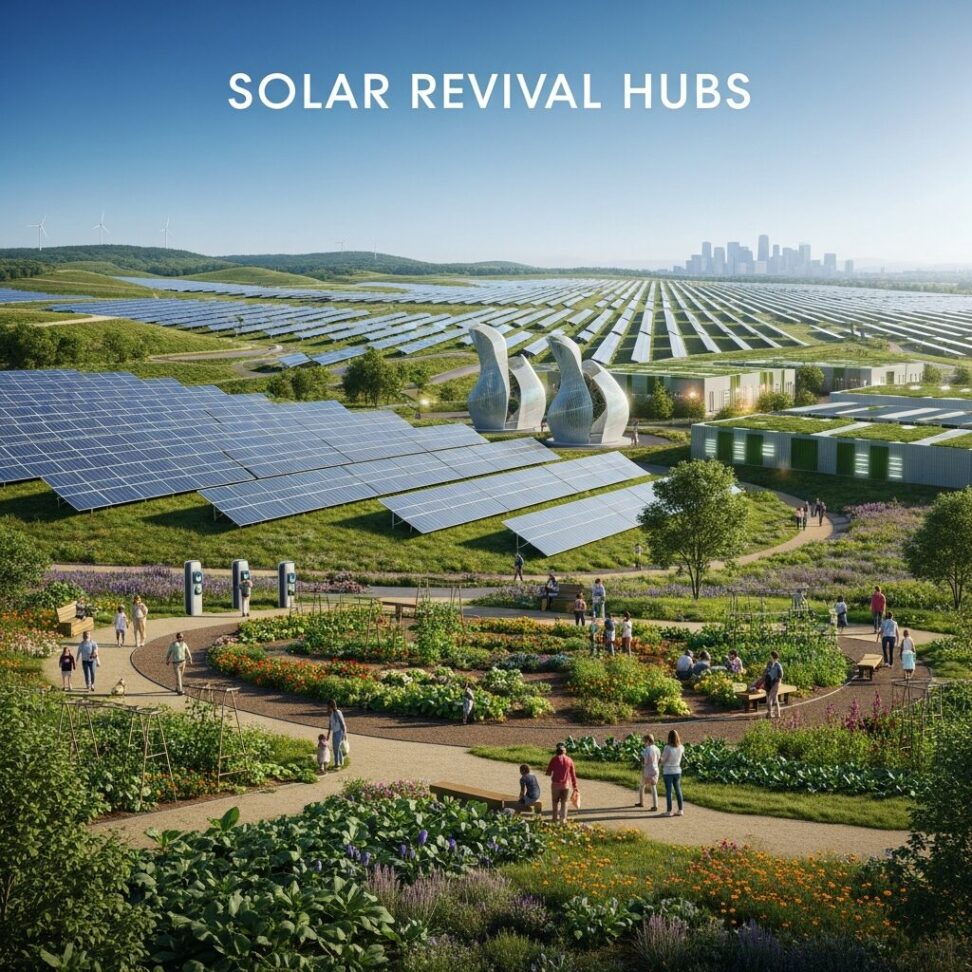
Transforming Former Landfills into Community Solar Power Hubs
The renewable energy sector continues to find innovative ways to repurpose underutilized land, and one of the most promising approaches involves converting closed landfills into productive solar energy facilities. A recent partnership aims to bring this concept to life on a significant scale across the United States.
A Partnership to Repurpose 50 Landfill Sites
Reactivate and WM have announced plans to develop 50 former landfill locations into community and utility-scale solar projects with integrated energy storage systems. This collaboration represents a practical approach to land use, taking sites that have limited alternative development options and transforming them into clean energy generators.
Reactivate specializes in developing renewable energy projects on challenging or contaminated properties. The company focuses on sites that require specialized expertise due to environmental considerations, making closed landfills an ideal fit for their capabilities.
WM, formerly known as Waste Management, operates as one of North America’s leading providers of comprehensive environmental solutions. The company manages waste collection, recycling services, and landfill operations across the continent.
Economic Benefits for Local Communities
The initiative extends beyond environmental benefits to create tangible economic advantages for surrounding communities. These solar installations are expected to generate local job opportunities during both construction and operational phases. The projects will also contribute to municipal tax revenues, providing financial resources for public services and infrastructure.
Community solar programs allow residents and businesses to access solar energy without installing panels on their own property. This model makes renewable energy more accessible to renters, homeowners with unsuitable roofs, and organizations looking to reduce their carbon footprint without major capital investments.
Addressing Land Use Challenges
Closed landfills present unique land use challenges. These sites often face restrictions on certain types of development due to concerns about ground stability, methane emissions, and soil contamination. Solar installations are particularly well-suited for these locations because they:
- Require minimal ground disturbance
- Don’t involve structures meant for human occupancy
- Can incorporate monitoring systems for environmental safety
- Generate revenue from otherwise dormant property
The Federal Energy Regulatory Commission and various state agencies have supported similar landfill-to-solar conversions, recognizing them as beneficial reuse strategies that address both energy and environmental goals.
Energy Storage Integration
The inclusion of battery storage systems in these projects represents an important component of modern solar development. Energy storage allows electricity generated during peak sunlight hours to be stored and dispatched when demand is highest or when the sun isn’t shining. This capability enhances grid stability and increases the overall value of the solar installations.
Battery systems paired with solar arrays help utilities manage supply and demand fluctuations more effectively. They also provide backup power capacity during outages and reduce the need for fossil fuel-based peaker plants that traditionally fill gaps in electricity supply.
Scaling Renewable Energy Development
The 50-site target for this partnership reflects the growing recognition that renewable energy development needs to accelerate to meet climate goals. Repurposing existing disturbed land for solar projects addresses concerns about converting agricultural land or natural habitats to energy production.
Thousands of closed landfills exist across the United States, representing a substantial opportunity for similar development. While not all sites are suitable for solar installations due to factors like shading, grid connection limitations, or ongoing environmental management needs, many have the potential for conversion.
Timeline and Implementation
While specific timelines for individual projects will vary based on permitting requirements, grid interconnection processes, and site preparation needs, the partnership positions both companies to move forward with development activities. Each location will require site assessments, environmental reviews, and coordination with local authorities before construction begins.
The collaboration between Reactivate and WM brings together complementary expertise—Reactivate’s experience with brownfield renewable development and WM’s knowledge of landfill properties and environmental management systems.
This initiative demonstrates how creative approaches to land use can support renewable energy expansion while providing community benefits and addressing environmental legacy issues. As the energy transition continues, such partnerships may become increasingly common in the push toward cleaner electricity generation.
Analyzed and outlined by Claude Sonnet 4.5, images by Gemini Imagen 4.
**Source**