
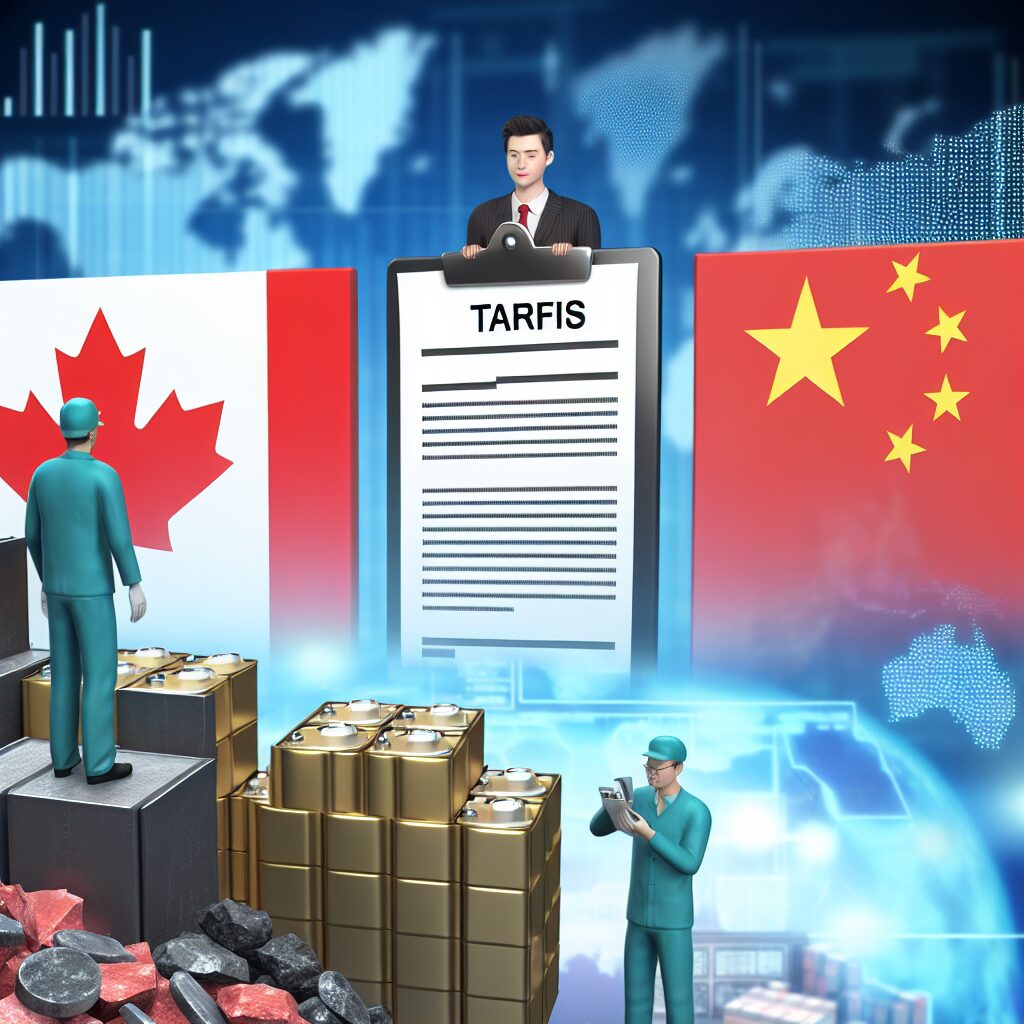
Canada Implements Tariffs on Chinese Batteries and Minerals
In a bold move aimed at redefining trade relationships and boosting domestic production, Canada has announced the imposition of tariffs on Chinese batteries and critical minerals. This decision marks a significant shift in the country’s trade policy and has far-reaching implications for various industries, from electric vehicles to renewable energy sectors.
Why Tariffs on Chinese Batteries and Minerals?
The primary motivation behind Canada’s decision stems from the need to reduce dependency on foreign sources for critical components. With the increasing global demand for electric vehicles (EVs) and renewable energy solutions, the supply chain for batteries and minerals has become a strategic focal point. Canada seeks to secure its position in this burgeoning market by encouraging local production and ensuring a more stable supply of these critical materials.
Chinese batteries and minerals have long dominated the global market due to their competitive pricing and high production capacity. However, this dominance also poses risks, including supply chain disruptions and over-reliance on a single supplier. By imposing tariffs, Canada aims to mitigate these risks and foster a more resilient and diversified supply chain.
The Broader Implications
The introduction of tariffs is expected to have several significant effects:
1. **Boosting Domestic Production**: The tariffs are likely to incentivize Canadian companies to increase their production capabilities, thereby reducing reliance on imported Chinese products. This shift could lead to job creation and economic growth within the country.
2. **Innovation and Investment**: As companies adapt to the new tariffs, there may be a surge in research and development efforts aimed at creating more efficient and cost-effective batteries and mining techniques. This innovation can lead to advancements that benefit the global market.
3. **Trade Relations**: While the tariffs are designed to protect and bolster the Canadian economy, they may also strain trade relations with China. As both countries navigate this new landscape, diplomatic efforts will be essential in maintaining a balanced and mutually beneficial relationship.
Impact on the EV and Renewable Energy Sectors
The electric vehicle and renewable energy sectors are poised to be directly impacted by these tariffs. Both industries rely heavily on batteries and critical minerals, making them particularly sensitive to changes in pricing and availability.
Electric Vehicles
The EV market is on an upward trajectory, with increasing consumer demand and a growing focus on sustainable transportation solutions. The tariffs may initially lead to higher production costs for Canadian EV manufacturers who rely on Chinese components. However, in the long term, the push for local production could result in a more robust and self-sufficient supply chain, ultimately benefiting the industry.
Renewable Energy
Renewable energy projects, such as solar and wind power installations, also require significant amounts of critical minerals for their construction and operation. The tariffs could drive up costs in the short term, but the anticipated increase in local production and innovation could offset these expenses over time. By investing in domestic capabilities, Canada can enhance its renewable energy infrastructure and reduce its carbon footprint.
Challenges and Considerations
While the decision to impose tariffs brings numerous potential benefits, it is not without its challenges. The immediate impact on prices and supply chains could pose difficulties for businesses and consumers alike. Companies may need to navigate increased costs and potential disruptions as they adjust to the new tariffs.
Moreover, the effectiveness of the tariffs will depend on the ability of Canadian industries to ramp up production and meet the growing demand. Continuous support from the government in the form of subsidies, grants, and policy frameworks will be crucial in facilitating this transition.
The Road Ahead
Canada’s implementation of tariffs on Chinese batteries and critical minerals marks a pivotal moment in the country’s economic strategy. By prioritizing domestic production and reducing reliance on foreign sources, Canada is positioning itself to become a key player in the global market for electric vehicles and renewable energy solutions.
As the world moves towards a greener and more sustainable future, the importance of secure and resilient supply chains cannot be overstated. Canada’s proactive approach serves as a model for other nations facing similar challenges and underscores the need for strategic planning in an increasingly interconnected global economy.
In conclusion, while the road ahead may be fraught with challenges, Canada’s decision to impose tariffs on Chinese batteries and minerals represents a bold step towards a more self-sufficient and innovative future. The long-term benefits of this move have the potential to reshape industries, create jobs, and contribute to a more sustainable world.
Source https://barrie360.com/canada-china-tariffs-batteries-critical-minerals/