
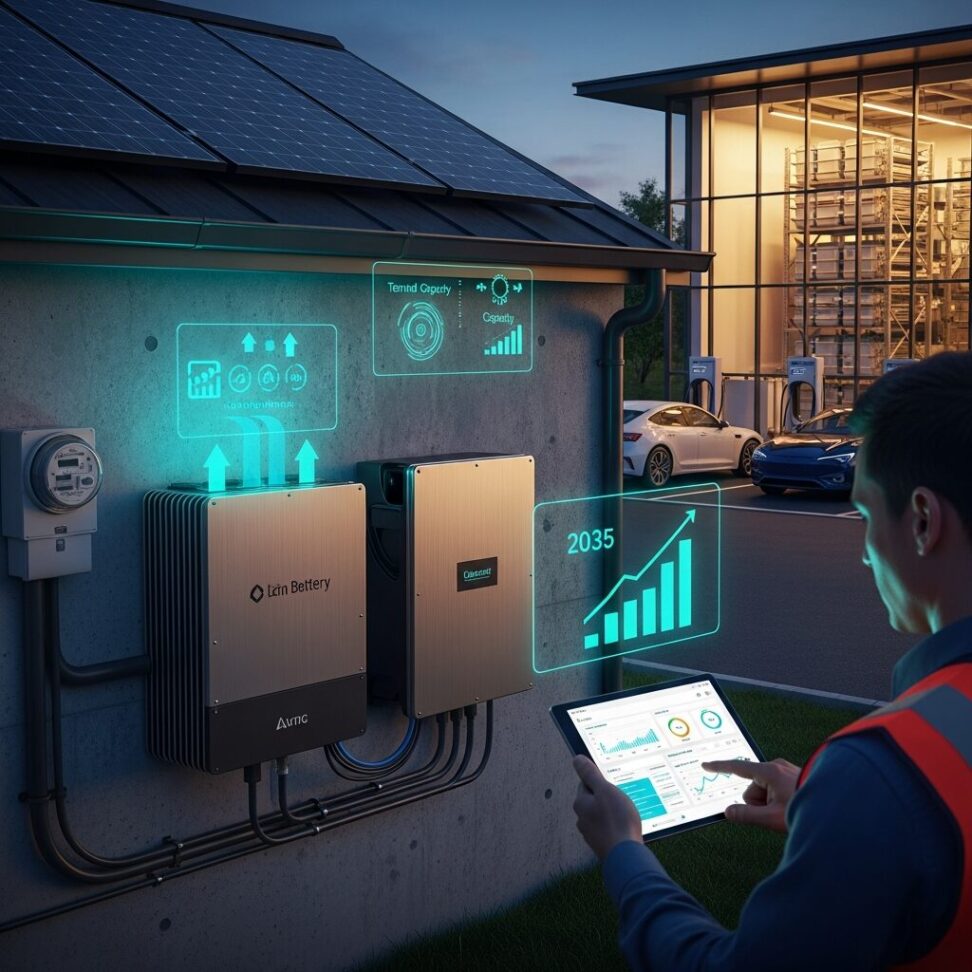
Behind-the-Meter Energy Storage Market Growth Projections Through 2035
The behind-the-meter energy storage sector is positioned for substantial expansion over the next decade, driven by increasing adoption across both commercial and residential applications. Market analysts predict this segment will experience significant growth as businesses and homeowners seek greater energy independence and cost savings.
Understanding Behind-the-Meter Storage
Behind-the-meter energy storage refers to battery systems installed on the customer’s side of the utility meter. These systems allow users to store electricity for later use, whether generated from renewable sources like solar panels or drawn from the grid during off-peak hours. This technology offers users control over their energy consumption patterns and provides backup power during outages.
Market Drivers and Growth Factors
Several factors are contributing to the projected market expansion through 2035. The declining costs of battery technology, particularly lithium-ion systems, have made energy storage more accessible to average consumers and small businesses. Government incentives and policies supporting renewable energy integration continue to encourage adoption.
The push for grid resilience has become increasingly important as extreme weather events and power disruptions become more frequent. Commercial facilities, in particular, are investing in storage solutions to avoid costly downtime and maintain operations during grid failures.
Commercial Sector Demand
Commercial and industrial facilities represent a significant portion of the behind-the-meter storage market. These users benefit from demand charge reduction, where storing energy during low-cost periods and using it during peak hours can result in substantial utility bill savings. Retail stores, manufacturing plants, and data centers are among the facilities implementing these systems.
Large commercial users also leverage energy storage for power quality management, ensuring sensitive equipment receives clean, consistent power. This application is particularly valuable for facilities that cannot tolerate even brief power interruptions.
Residential Market Expansion
The residential segment is experiencing rapid growth as homeowners pair solar panel installations with battery storage systems. This combination allows households to maximize their use of self-generated renewable energy and reduces reliance on grid electricity. Areas with high electricity rates or unreliable grid service show particularly strong adoption rates.
Net metering policy changes in various regions have also influenced residential storage adoption. As utilities modify compensation structures for excess solar generation, homeowners find greater value in storing their solar production rather than sending it back to the grid.
Regional Market Variations
Geographic factors play a significant role in market development. Regions with supportive regulatory frameworks and renewable energy mandates tend to show accelerated growth. Areas prone to natural disasters or grid instability often see higher adoption rates as users prioritize backup power capabilities.
Markets with time-of-use electricity pricing create strong economic incentives for storage adoption, as users can shift their consumption away from expensive peak hours. This pricing structure makes the return on investment for battery systems more attractive.
Technology Developments
Battery technology continues to evolve, with improvements in energy density, cycle life, and safety features. While lithium-ion batteries currently dominate the market, alternative chemistries are emerging that may offer advantages for specific applications. These technological advances contribute to better performance and longer system lifespans.
Smart energy management software is becoming increasingly sophisticated, allowing users to optimize their storage systems automatically. These platforms can respond to grid signals, weather forecasts, and electricity price fluctuations to maximize economic and environmental benefits.
Challenges and Considerations
Despite positive growth projections, the market faces certain obstacles. Initial installation costs remain a barrier for some potential adopters, even with declining battery prices. Permitting processes and interconnection requirements can vary significantly by location, creating complexity for installers and customers.
Battery recycling and end-of-life management present environmental considerations that the industry must address as deployment scales. Developing sustainable processes for battery disposal and material recovery will be essential for long-term market health.
Future Outlook
The trajectory through 2035 suggests behind-the-meter energy storage will transition from a niche technology to a mainstream energy solution. As costs continue to decline and technology improves, adoption is expected to accelerate across multiple market segments. The integration of storage with renewable energy sources and electric vehicle charging infrastructure will create new use cases and value streams.
The market’s evolution will likely be shaped by ongoing policy developments, utility rate structures, and grid modernization efforts. Users who adopt these systems early may gain advantages in energy cost management and resilience as the energy landscape continues to transform.
Analyzed and outlined by Claude Sonnet 4.5, images by Imagen 4.0 Ultra.
**Source**
https://www.indexbox.io/blog/behind-meter-energy-storage-market-to-surpass-xx-billion-by-2035-as-commercial-and-residential-demand-accelerates/