
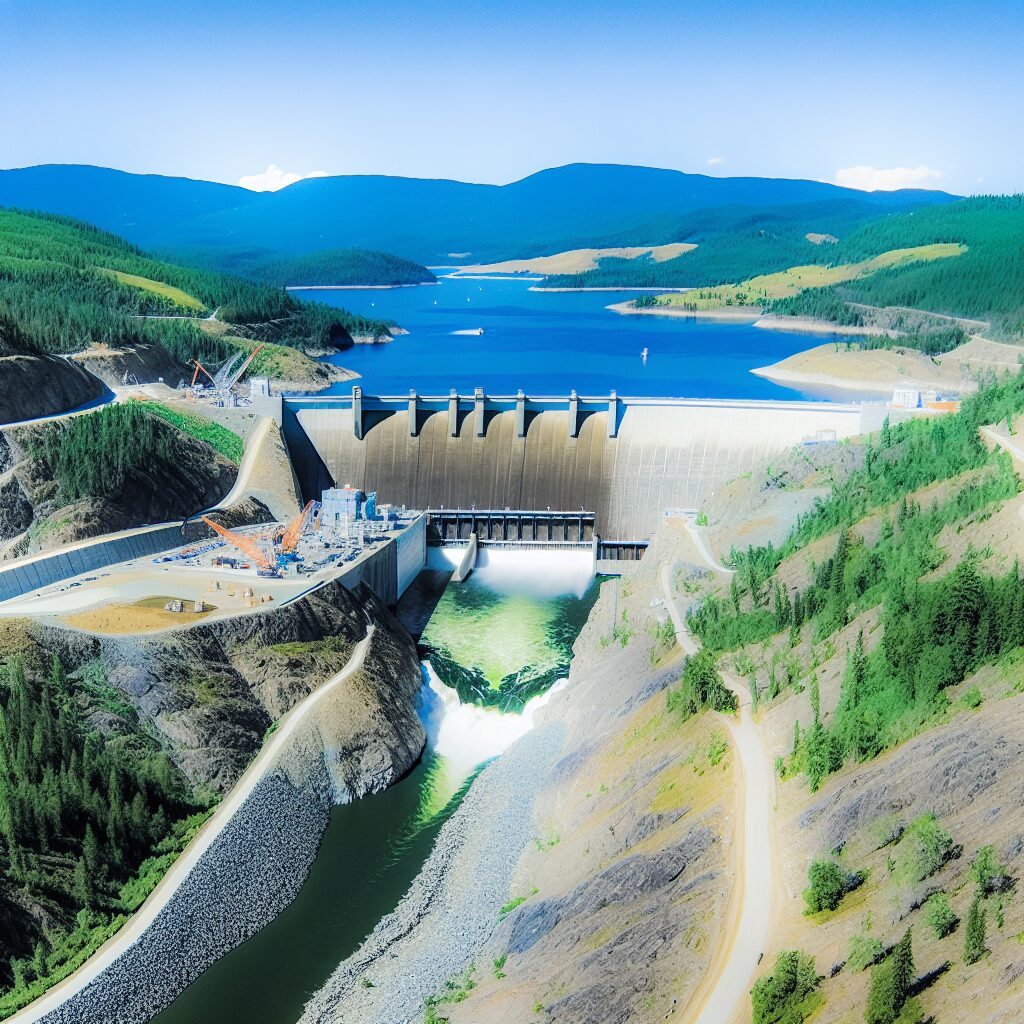
Site C Dam Energy Project Completes Construction, B.C. Hydro Announces
The long-anticipated Site C dam, a major hydroelectric project in British Columbia, has officially completed construction, according to B.C. Hydro. The announcement marks a significant milestone for the province’s energy infrastructure and signals a new chapter for clean electricity production in Canada.
About B.C. Hydro
B.C. Hydro is a Canadian electric utility company owned by the government of British Columbia. It provides electricity to 95% of the population in the province, serving over five million people. The company operates an extensive network of hydroelectric generating stations and transmission lines to deliver reliable and sustainable power.
What Is the Site C Dam?
The Site C Clean Energy Project is a large-scale hydroelectric dam built on the Peace River in northeastern British Columbia. Located near Fort St. John, this project is the third dam on the Peace River and is designed to provide clean, renewable power to meet the growing energy demands of the province.
Construction first began in 2015, making the project nearly a decade in the making. With its completion, Site C will add approximately 1,100 megawatts of capacity to the provincial grid and produce about 5,100 gigawatt hours of electricity annually — enough to power around 450,000 homes per year.
Key Features of the Site C Dam
- Location: Peace River, northeastern British Columbia
- Capacity: 1,100 megawatts
- Annual Generation: Approximately 5,100 GWh
- Homes Powered: Equivalent to 450,000 homes per year
- Project Start Date: 2015
- Estimated Lifespan: Over 100 years
Why Site C Matters
This project is part of British Columbia’s broader plan to transition to low-carbon energy sources and reduce greenhouse gas emissions. With the completion of Site C, B.C. Hydro now has additional resources to support electrification initiatives across sectors such as transportation, housing, and industry.
Hydropower is widely recognized as one of the cleanest and most stable forms of renewable energy. By increasing its hydroelectric output, B.C. Hydro aims to help the province shift away from fossil fuels while maintaining stable electricity rates and enhancing grid reliability.
Environmental and Indigenous Considerations
Despite its benefits, the Site C project has not been without controversy. Several environmental groups and Indigenous communities raised concerns throughout its development regarding impacts on land, wildlife habitats, and treaty rights. B.C. Hydro has worked with stakeholders to address these issues through mitigation measures and ongoing consultation efforts.
According to B.C. Hydro, environmental monitoring will continue post-construction to ensure long-term sustainability and compliance with regulatory guidelines. Agreements have also been made with some First Nations communities affected by the project, though concerns remain among other groups.
Next Steps Following Completion
With construction wrapped, Site C will now move into its commissioning phase. This includes testing of mechanical and electrical systems, filling the reservoir, and synchronizing the six generating units with the provincial grid. Full operation is expected to begin within the next several months, as each unit comes online in stages.
Impact on B.C.’s Energy Future
The successful completion of the Site C dam strengthens British Columbia’s ability to meet future energy needs through clean power. It supports the province’s CleanBC goals and positions B.C. Hydro to play a central role in Canada’s national climate strategy.
As energy demand grows alongside population and industrial expansion, having a stable source of renewable power like Site C could help mitigate reliance on imported or carbon-intensive energy sources.
Final Thoughts
The conclusion of the Site C dam construction brings both technical achievement and policy implications. While challenges around environmental impact and community engagement remain topics of discussion, the addition of substantial renewable energy capacity is a step forward in the province’s commitment to sustainable development.
Analyzed and outlined by ChatGPT-4o, images by DALL·E 3.
Source
https://www.cbc.ca/lite/story/1.7605255?feature=random