
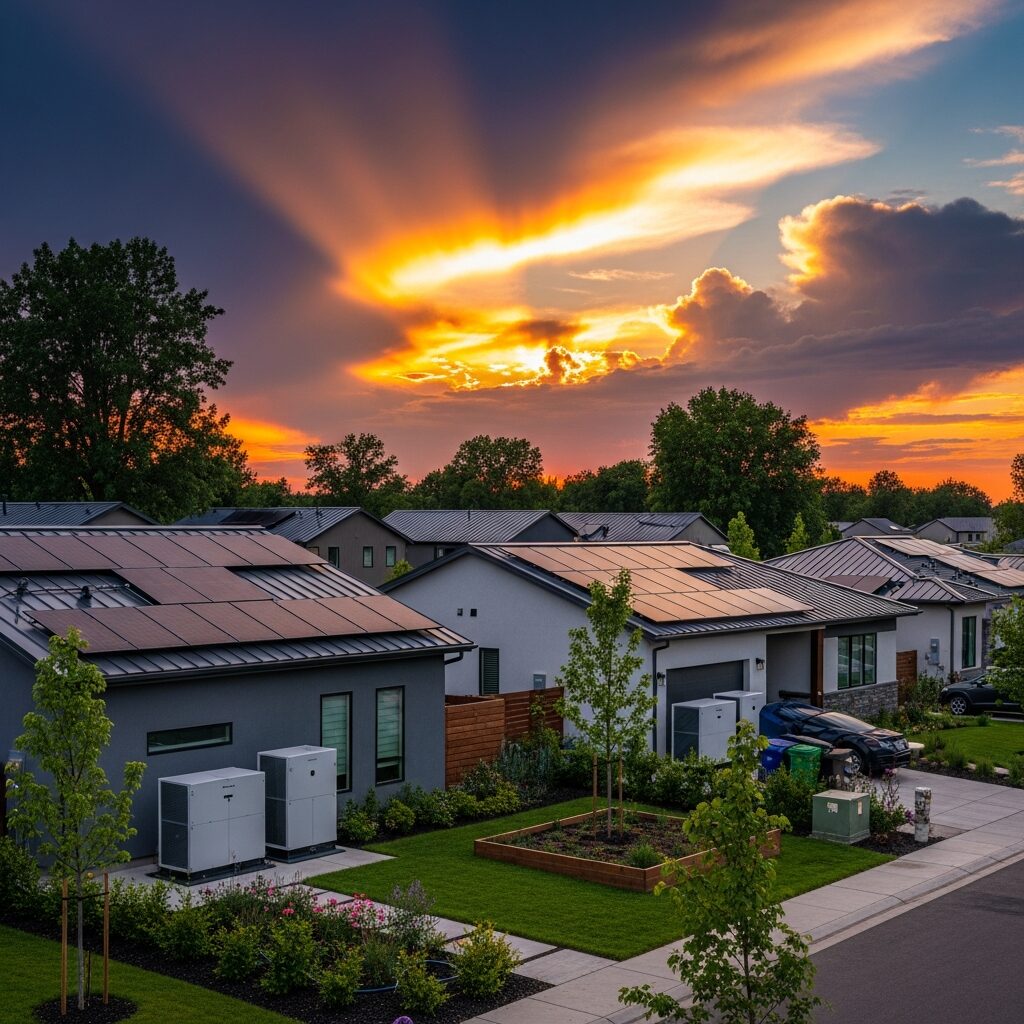
The Home Battery Revolution: Why Energy Storage Is About to Transform Residential Power
The residential energy storage sector is entering a period of rapid expansion, driven by multiple converging factors that are reshaping how homeowners think about electricity consumption and energy independence. Market analysts project substantial growth over the coming years as technological advances, policy support, and shifting consumer preferences align to create favorable conditions for widespread adoption.
Market Dynamics Driving Adoption
Several key forces are propelling the residential energy storage market forward. The declining cost of battery technology has made home energy storage systems increasingly accessible to average consumers. At the same time, electricity rates continue to climb in many regions, creating stronger economic incentives for households to store power during off-peak hours and use it when rates are highest.
The integration of renewable energy sources, particularly rooftop solar panels, has created natural demand for storage solutions. Homeowners with solar installations want to maximize their investment by storing excess energy generated during the day for use during evening hours when the sun isn’t shining. This combination of solar generation and battery storage offers a path toward greater energy self-sufficiency.
Technological Improvements Fueling Growth
Battery technology has advanced considerably in recent years, with lithium-ion systems becoming more efficient, longer-lasting, and safer. Modern residential storage systems offer:
- Higher energy density, allowing more storage capacity in smaller footprints
- Improved cycle life, with many systems rated for thousands of charge-discharge cycles
- Enhanced safety features and thermal management systems
- Smart energy management software that optimizes charging and discharging patterns
- Seamless integration with home automation and monitoring systems
These improvements have made home batteries practical and appealing for a broader range of applications beyond just solar energy storage.
Regional Market Variations
Adoption patterns vary significantly by geography, influenced by local electricity costs, regulatory frameworks, and climate conditions. Regions experiencing frequent power outages or extreme weather events show heightened interest in backup power capabilities. Areas with time-of-use electricity pricing structures provide clearer economic benefits for storage systems that can shift consumption patterns.
California, Germany, Australia, and Japan have emerged as leading markets due to combinations of supportive policies, high electricity costs, and strong renewable energy adoption. However, other regions are quickly catching up as awareness grows and technology costs continue to fall.
Policy and Incentive Landscape
Government policies play a significant role in market development. Many jurisdictions offer tax credits, rebates, or other financial incentives for residential energy storage installations. Some utilities have introduced programs that compensate homeowners for allowing their batteries to provide grid services during peak demand periods, creating additional revenue streams for system owners.
Net metering policies, which determine how homeowners are compensated for excess solar energy, also influence storage adoption decisions. In areas where net metering rates have declined, batteries become more economically attractive by allowing homeowners to consume more of their self-generated power directly.
Grid Resilience and Energy Security
The increasing frequency of extreme weather events and grid disruptions has heightened awareness of energy security. Home battery systems provide backup power during outages, ensuring critical loads remain operational. This resilience factor has become a compelling selling point, particularly in regions prone to hurricanes, wildfires, or winter storms.
Beyond individual benefits, distributed residential storage can provide valuable services to the broader electric grid. When aggregated, home batteries can help balance supply and demand, reduce strain during peak periods, and facilitate higher penetration of variable renewable energy sources.
Market Outlook and Projections
Industry forecasts indicate strong growth trajectories for the residential energy storage sector. As manufacturing scales up and competition intensifies, prices are expected to continue declining, further accelerating adoption. The convergence of electric vehicles, home batteries, and smart home technology is creating integrated energy ecosystems that optimize power use across multiple applications.
The next few years will likely see continued innovation in battery chemistry, software capabilities, and system integration. As the technology matures and becomes more mainstream, residential energy storage is positioned to become a standard component of home energy infrastructure rather than a specialty product for early adopters.
The transformation of how homes generate, store, and consume electricity represents a significant shift in the energy landscape, with residential storage systems playing a central role in this evolution.
Analyzed and outlined by Claude Sonnet 4.5