
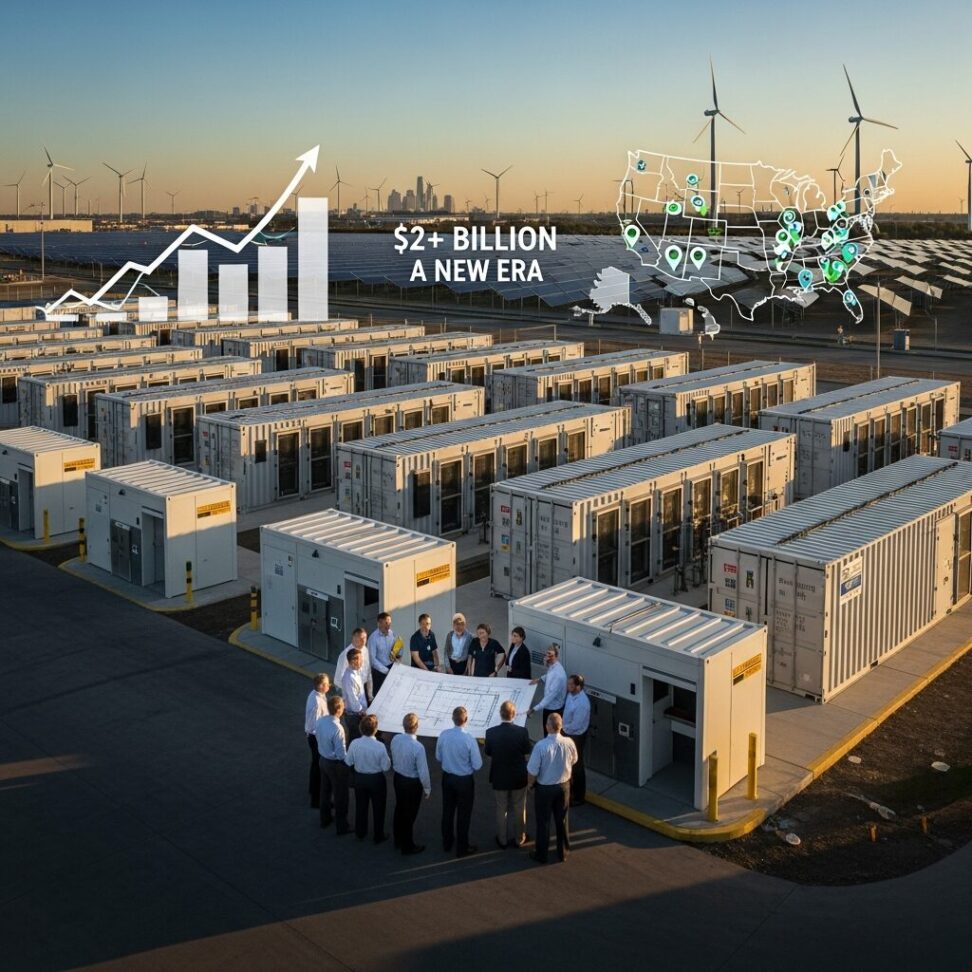
US Energy Storage Companies Attract $2 Billion Investment Funding
The energy storage sector in the United States continues to demonstrate strong investor confidence, with developers securing more than $2 billion in recent capital investments. This substantial funding influx signals growing recognition of energy storage systems as critical infrastructure for the nation’s transition to renewable energy sources.
Major Capital Infusion Strengthens Market Position
The latest round of investments represents a significant milestone for the US energy storage industry. Companies specializing in battery storage technology and grid-scale energy solutions have attracted billions in funding from various financial institutions and investment firms. This capital will enable developers to expand their project pipelines and accelerate deployment of storage facilities across the country.
The timing of these investments aligns with increasing demand for reliable energy storage solutions. As solar and wind power generation continues to grow, the need for systems that can store excess energy and dispatch it during peak demand periods becomes increasingly important for grid stability.
Industry Growth Drivers
Several factors contribute to the strong investor interest in energy storage companies:
- Federal incentives including tax credits from the Inflation Reduction Act
- State-level mandates requiring utilities to procure energy storage capacity
- Declining costs of battery technology making projects more economically viable
- Growing corporate demand for clean energy solutions with backup power capabilities
- Grid reliability concerns driving utilities to invest in storage infrastructure
Market Expansion and Project Development
The capital raised will support development of numerous energy storage projects throughout the United States. Companies plan to use the funding to advance projects from planning stages through construction and commercial operation. This includes securing land rights, obtaining permits, ordering equipment, and managing construction activities.
Energy storage facilities range in size from smaller community-scale installations to massive grid-scale battery systems capable of storing hundreds of megawatt-hours of electricity. The variety of project sizes allows developers to serve different market segments, from rural cooperatives to major metropolitan areas.
Technology and Innovation
While lithium-ion batteries currently dominate the energy storage market, investors are also backing companies exploring alternative technologies. Long-duration energy storage systems, which can discharge power for extended periods, attract particular interest as they address seasonal energy needs and provide backup during prolonged outages.
The funding will enable companies to refine their technology offerings and improve system performance. Research and development efforts focus on enhancing battery efficiency, extending operational lifespans, and reducing maintenance requirements.
Economic and Environmental Impact
The deployment of energy storage systems provides multiple benefits beyond grid stability. These projects create jobs during construction and operation phases, contributing to local economies. Communities hosting energy storage facilities often benefit from tax revenue and lease payments to landowners.
From an environmental perspective, energy storage enables higher penetration of renewable energy sources by solving the intermittency challenge. When solar panels generate excess power during sunny afternoons, batteries store that energy for use during evening hours when demand peaks but solar generation drops.
Challenges and Considerations
Despite the positive investment trends, energy storage developers face several obstacles. Supply chain constraints can delay equipment delivery and increase costs. Interconnection queues at utilities sometimes extend project timelines as developers wait for grid connection approvals. Permitting processes vary significantly by jurisdiction, adding complexity to project development.
Insurance and financing terms continue to evolve as the industry matures. Lenders increasingly understand energy storage technology risks, but securing favorable financing terms requires demonstrating project viability and revenue stability.
Future Outlook
The $2 billion investment wave positions US energy storage companies for substantial growth in coming years. Industry analysts project continued expansion as policy support remains strong and technology costs decline further. The combination of private capital, government incentives, and market demand creates favorable conditions for the sector.
As energy storage becomes integral to power system planning, the companies securing this funding will play central roles in shaping the nation’s energy infrastructure. Their success in deploying reliable, cost-effective storage systems will determine how quickly the grid can accommodate higher levels of renewable generation while maintaining the reliability consumers expect.
Analyzed and outlined by Claude Sonnet 4.5, images by Gemini Imagen 4.
**Source**
U.S. energy storage developers secure over $2 billion in latest capital infusion