
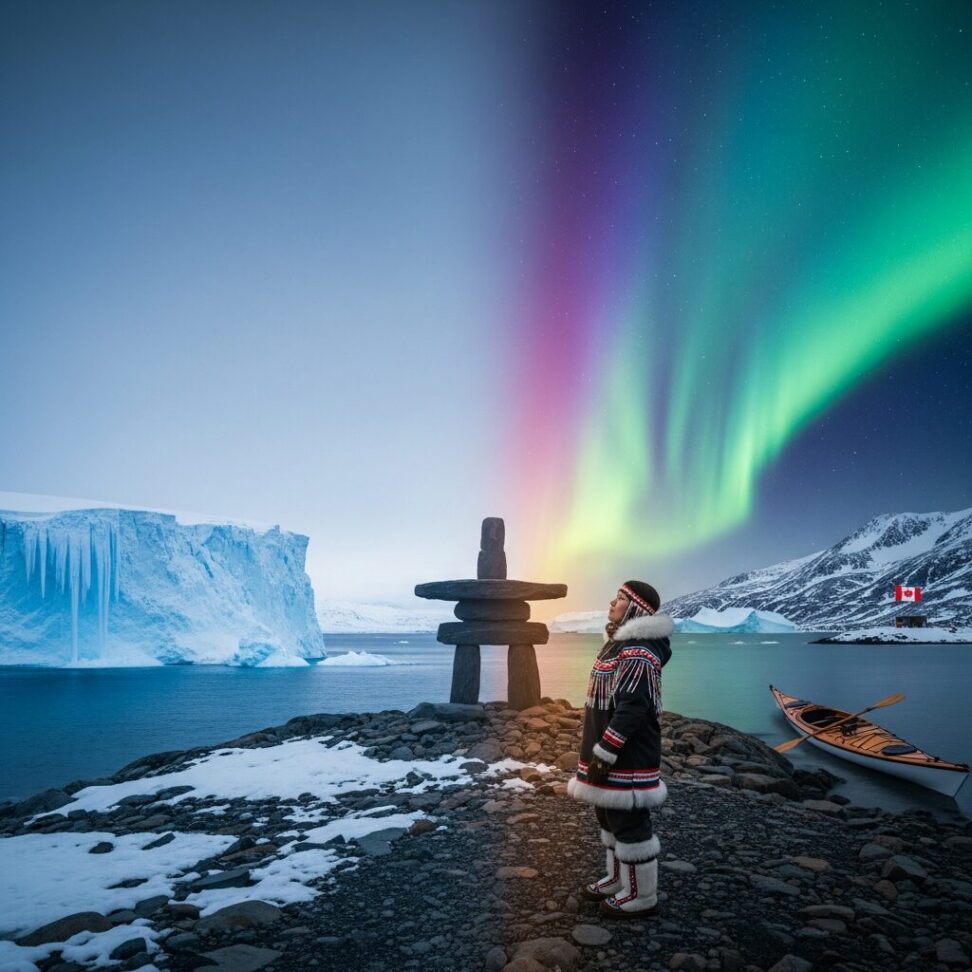
Greenland and Canada: Climate, Renewable Energy, Indigenous Culture Connections
The Arctic neighbors of Greenland and Canada share far more than geographic proximity. These two northern territories face similar environmental challenges and opportunities while maintaining deep cultural connections through their Indigenous populations. Understanding these shared experiences offers insight into the future of Arctic development and climate adaptation.
Arctic Climate Challenges
Both regions experience the effects of climate change at an accelerated rate compared to lower latitudes. Rising temperatures in the Arctic occur at twice the global average, creating dramatic shifts in ice coverage, wildlife patterns, and traditional ways of life. Coastal communities in both Greenland and Canada contend with eroding shorelines and changing sea ice conditions that affect transportation and food security.
The warming climate presents immediate threats to infrastructure built on permafrost. Roads, buildings, and essential services face increasing instability as ground temperatures rise and the frozen subsurface thaws. This common challenge requires both nations to develop innovative engineering solutions and adapt long-term planning strategies.
Renewable Energy Potential
The transition away from fossil fuels represents a significant opportunity for both territories. Greenland currently generates a substantial portion of its electricity from hydroelectric power, with several large-scale projects already operational. Canada’s northern regions are exploring similar renewable energy sources to reduce dependence on diesel generators that currently power many remote communities.
Wind energy development shows promise across both regions, particularly in coastal areas where strong and consistent winds provide reliable generation capacity. Solar power, while limited by the extended darkness of Arctic winters, contributes to energy diversity during summer months when daylight extends nearly around the clock.
Tidal and wave energy research continues to advance, with both nations investigating how to harness the power of Arctic waters. These emerging technologies could provide consistent baseload power to supplement other renewable sources.
Indigenous Cultural Ties
The Inuit people form the strongest cultural bridge between Greenland and Canada. Kalaallit, the Greenlandic Inuit, and Canadian Inuit share linguistic roots, traditional practices, and contemporary challenges. The Inuit Circumpolar Council represents these populations across national boundaries, advocating for Indigenous rights and environmental protection.
Traditional knowledge systems from both regions offer valuable guidance for climate adaptation. Inuit observations of wildlife behavior, ice conditions, and weather patterns complement scientific data and often provide early warnings of environmental changes. Incorporating this knowledge into policy decisions strengthens both cultural preservation and practical planning.
Language revitalization efforts in both territories work to preserve Inuit dialects and ensure younger generations maintain connections to their heritage. Educational programs increasingly incorporate traditional practices alongside modern curricula, creating bridges between ancestral wisdom and contemporary needs.
Resource Development Debates
Both Greenland and Canada grapple with balancing economic development against environmental protection. Mining operations, oil exploration, and resource extraction offer employment and revenue but raise concerns about ecological impact and Indigenous land rights.
Greenland’s government evaluates proposals for rare earth mineral extraction, which could provide materials essential for renewable energy technologies while potentially disrupting fragile ecosystems. Canadian Arctic territories face similar decisions regarding resource projects that promise economic benefits but require careful environmental assessment.
Indigenous communities in both regions increasingly assert authority over development decisions affecting their traditional territories. Free, prior, and informed consent principles guide negotiations between companies, governments, and Indigenous nations, though implementation remains inconsistent.
Collaborative Research and Policy
Scientific cooperation between Greenland and Canada advances understanding of Arctic systems. Joint research projects study ice sheet dynamics, marine ecosystems, and atmospheric conditions. This collaboration produces data essential for climate modeling and adaptation planning.
Cross-border Indigenous organizations facilitate cultural exchange and political coordination. These networks enable communities to share successful strategies for language preservation, education, and economic development. Youth exchange programs build relationships between younger generations who will shape future Arctic policy.
The shared experiences of these northern neighbors demonstrate that Arctic challenges require coordinated responses. Climate adaptation, renewable energy development, and cultural preservation transcend national boundaries, calling for partnerships that respect sovereignty while enabling collaboration. As the Arctic continues to change, the connections between Greenland and Canada will likely deepen, offering models for sustainable northern development that honors both environment and culture.
Analyzed and outlined by Claude Sonnet 4.5, images by Gemini Imagen 4.
**Source**
https://www.sudbury.com/national/from-climate-change-to-inuit-culture-five-things-shared-by-greenland-and-canada-11844920