
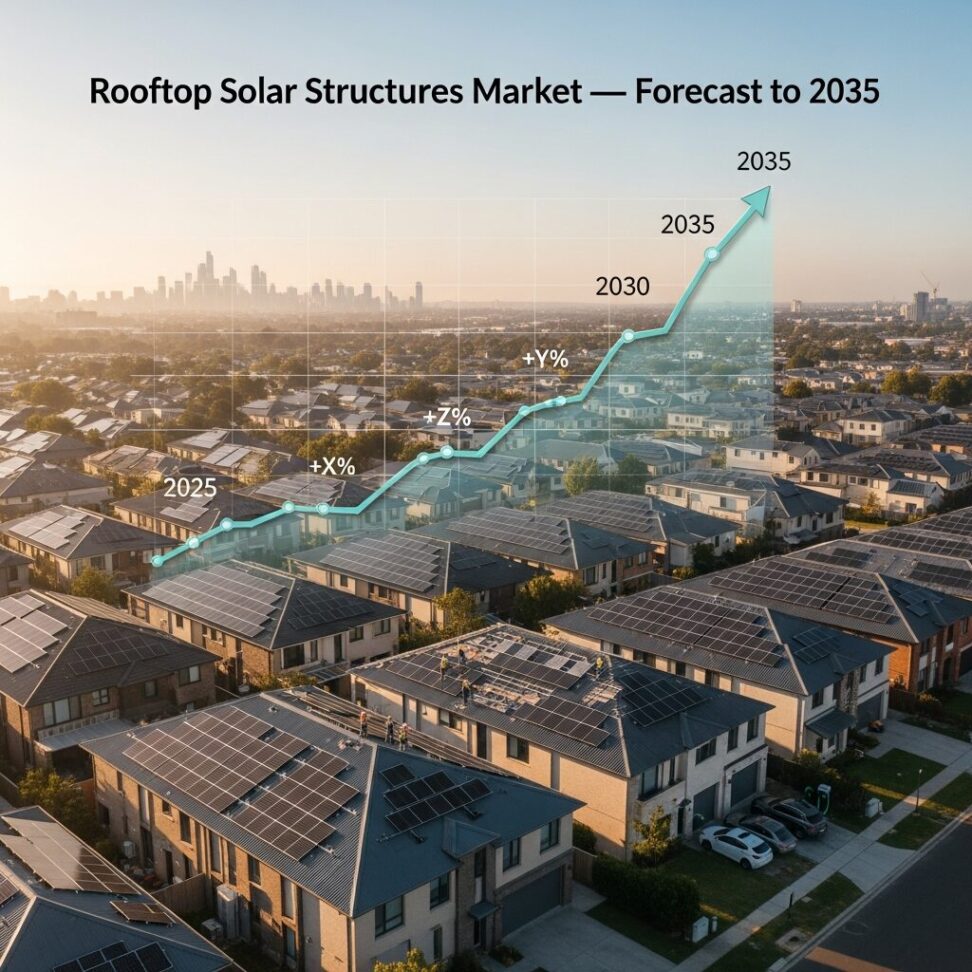
Rooftop Solar Structures Market Growth Through 2035 Accelerates
The global market for rooftop solar structures is positioned for significant expansion over the next decade, driven by increasing adoption of distributed solar energy systems and supportive government policies worldwide. Industry forecasts indicate robust growth trajectories as both residential and commercial sectors embrace solar power infrastructure.
Market Dynamics and Projections
The rooftop solar structures sector encompasses mounting systems, racking solutions, and support frameworks essential for photovoltaic panel installations on building surfaces. Current market analysis suggests this segment will experience accelerated demand through 2035, reflecting broader trends in renewable energy adoption and decentralized power generation.
Several factors contribute to this upward trajectory. Urban areas are increasingly recognizing the dual benefits of rooftop solar installations, which generate clean energy while utilizing existing infrastructure without requiring additional land resources. This approach addresses space constraints in densely populated regions while supporting sustainability objectives.
Distributed Solar Demand Surge
The shift toward distributed solar systems represents a fundamental change in energy infrastructure planning. Unlike large-scale solar farms that require extensive land parcels, distributed rooftop installations allow property owners to generate electricity at the point of consumption. This model reduces transmission losses and grid dependency while providing energy security for individual buildings.
Commercial and industrial facilities are particularly active in adopting rooftop solar structures. These entities benefit from reduced operational costs, improved corporate sustainability profiles, and potential energy independence. The economic case for rooftop solar continues strengthening as panel efficiency improves and installation costs decline.
Regional Growth Patterns
Geographic variations in market growth reflect diverse policy environments and economic conditions. Regions with established solar incentive programs demonstrate higher installation rates, while emerging markets show accelerating adoption as technology costs decrease and financing options expand.
Developing economies are experiencing rapid growth in rooftop solar deployment as governments prioritize energy access and climate commitments. These markets often benefit from leapfrogging traditional grid expansion models, moving directly to distributed generation solutions that offer faster deployment and lower infrastructure investment requirements.
Technological Advancements
Innovation in mounting and racking systems continues enhancing the viability of rooftop solar installations. Modern structures accommodate various roof types, angles, and load capacities while optimizing panel positioning for maximum energy capture. Advances include:
- Lightweight materials that reduce structural load requirements
- Modular designs enabling faster installation and maintenance
- Integrated waterproofing solutions protecting building envelopes
- Adjustable mounting systems optimizing solar exposure
- Enhanced wind resistance specifications for diverse climates
These improvements lower installation barriers and expand the range of suitable buildings, broadening the potential market base.
Policy and Regulatory Influences
Government initiatives play a central role in market development. Feed-in tariffs, tax credits, net metering policies, and renewable energy mandates create favorable conditions for rooftop solar investments. Many jurisdictions now require solar-ready design standards in new construction, establishing future demand pipelines.
Building codes and permitting processes are evolving to accommodate solar installations more efficiently. Streamlined approval procedures reduce project timelines and costs, making rooftop solar more attractive to property owners and developers.
Economic Considerations
The financial equation for rooftop solar continues improving. Declining equipment costs combined with rising electricity rates shorten payback periods for system investments. Third-party ownership models, including leases and power purchase agreements, eliminate upfront capital requirements, expanding accessibility to residential and small business customers.
Energy storage integration presents additional opportunities for the rooftop solar structures market. Battery systems paired with solar installations enable greater energy independence and grid flexibility, driving demand for comprehensive rooftop energy solutions.
Market Outlook
Industry observers anticipate sustained growth momentum through 2035 as climate targets drive renewable energy deployment globally. The rooftop solar structures market benefits from converging trends in urbanization, electrification, and decarbonization efforts across residential, commercial, and industrial sectors.
Supply chain development, workforce training, and quality standardization will be critical factors supporting market expansion. As the industry matures, established standards and best practices will enhance system reliability and consumer confidence, further accelerating adoption rates.
The path forward for rooftop solar structures appears increasingly favorable as technology, economics, and policy align to support distributed renewable energy generation at scale.
Analyzed and outlined by Claude Sonnet 4.5, images by Gemini Imagen 4.
**Source**
https://www.indexbox.io/blog/rooftop-solar-structures-market-forecast-points-higher-toward-2035-on-surging-distributed-solar-demand/