
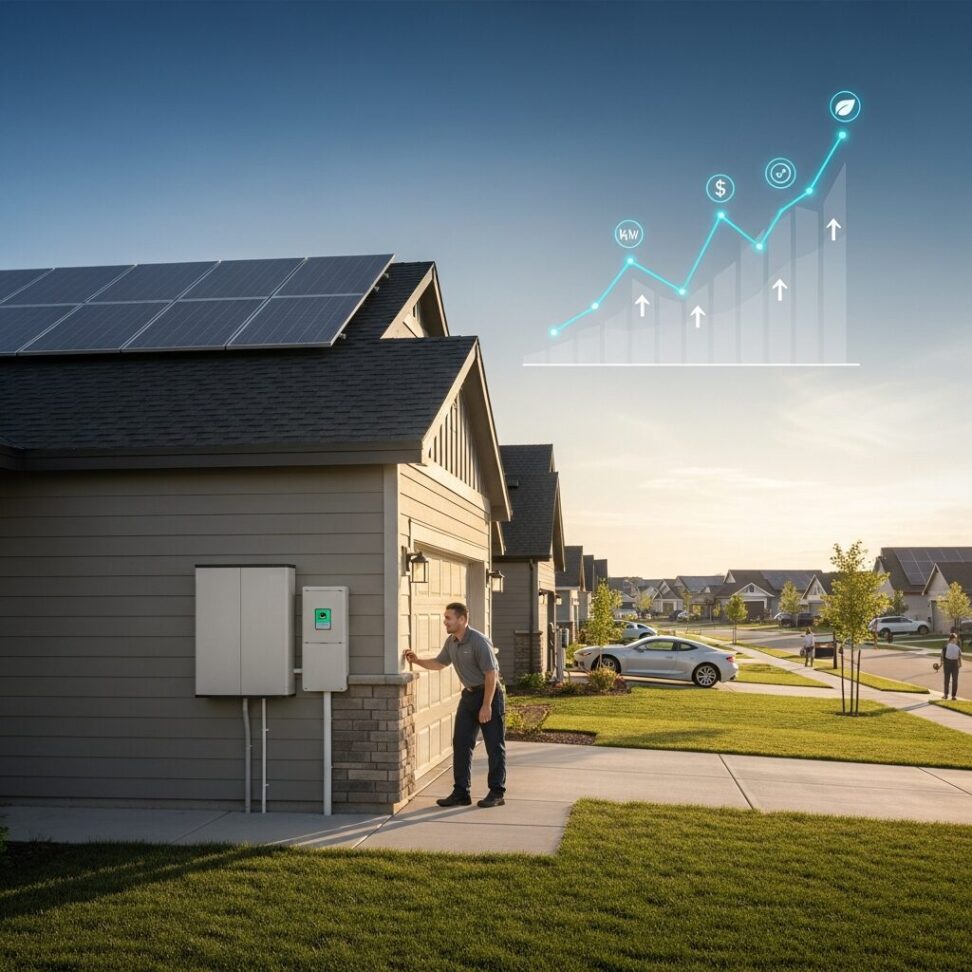
Residential Battery Storage Market Explodes With Massive Growth Potential
The residential battery storage sector is experiencing unprecedented expansion, driven by increasing energy costs, growing environmental awareness, and technological advancements that make home energy storage more accessible than ever before. This surge represents a fundamental shift in how households approach energy consumption and independence.
Market Dynamics Driving Growth
The residential battery storage market has entered a period of rapid development as homeowners seek greater control over their energy usage. Rising electricity prices combined with the declining costs of battery technology have created favorable conditions for market expansion. The integration of renewable energy sources, particularly solar panels, has become a primary catalyst for battery adoption as households look to maximize their investment in clean energy.
Government incentives and policy support across various regions have accelerated this trend. Tax credits, rebates, and favorable net metering policies encourage homeowners to install battery systems alongside solar installations. This regulatory environment has transformed residential energy storage from a niche product into a mainstream solution.
Technology Advancements Fuel Adoption
Battery technology has evolved significantly in recent years. Lithium-ion batteries have become the dominant technology due to their energy density, efficiency, and decreasing production costs. These improvements have made residential battery systems more compact, reliable, and affordable for average consumers.
Modern battery storage systems offer sophisticated features that extend beyond simple energy storage:
- Smart energy management capabilities that optimize charging and discharging cycles
- Integration with home automation systems for seamless energy control
- Grid services participation allowing homeowners to earn revenue
- Backup power capabilities during outages
- Real-time monitoring through mobile applications
Consumer Motivations and Benefits
Homeowners are investing in battery storage for multiple reasons beyond environmental concerns. Energy independence has become a priority, particularly in regions prone to power outages or those with unreliable grid infrastructure. Battery systems provide peace of mind by ensuring continuous power supply during emergencies.
Financial considerations play an equally important role. Time-of-use electricity rates incentivize consumers to store energy during off-peak hours and use it during expensive peak periods. This arbitrage opportunity can result in substantial savings over the system’s lifetime.
The environmental benefit remains a compelling factor for many adopters. By storing excess solar energy rather than feeding it back to the grid, homeowners can maximize their use of clean energy and reduce reliance on fossil fuel-generated electricity during evening hours.
Regional Market Variations
Different geographical markets are experiencing varying growth rates based on local conditions. Regions with high electricity costs, abundant sunshine, and supportive policies are seeing the fastest adoption rates. Areas prone to natural disasters or grid instability are also witnessing accelerated installations as residents prioritize energy security.
The market structure varies by region as well. Some areas feature established players with mature distribution networks, while emerging markets present opportunities for new entrants. Competition has intensified, leading to improved products and more competitive pricing for consumers.
Challenges and Barriers
Despite the positive trajectory, several obstacles remain. The upfront cost of battery systems, while decreasing, still represents a significant investment for many households. Payback periods can extend several years depending on local electricity rates and usage patterns.
Installation complexity and the need for qualified technicians can create barriers in some markets. Regulatory uncertainty in certain jurisdictions adds another layer of complexity for potential adopters. Interconnection standards and safety regulations vary widely, sometimes creating confusion for consumers.
Future Outlook
Industry analysts project continued strong growth in the residential battery storage market over the coming years. As manufacturing scales increase and technology continues to advance, costs are expected to decrease further. This price reduction will expand the addressable market to include a broader range of households.
The integration of battery systems with electric vehicles presents an additional growth avenue. Vehicle-to-home technology could allow EVs to serve as mobile energy storage units, adding another dimension to residential energy management.
Virtual power plant concepts, where aggregated residential batteries provide grid services, are gaining traction. This development could create new revenue streams for homeowners while supporting grid stability.
The residential battery storage market stands at an inflection point where technological maturity, economic viability, and consumer awareness converge to create substantial growth opportunities. As the energy landscape continues to evolve, home battery systems are positioned to become a standard component of residential infrastructure.
Analyzed and outlined by Claude Sonnet 4.5, images by Gemini Imagen 4.
**Source**
https://www.openpr.com/news/4400996/residential-battery-industry-growth-report-set-to-surge