
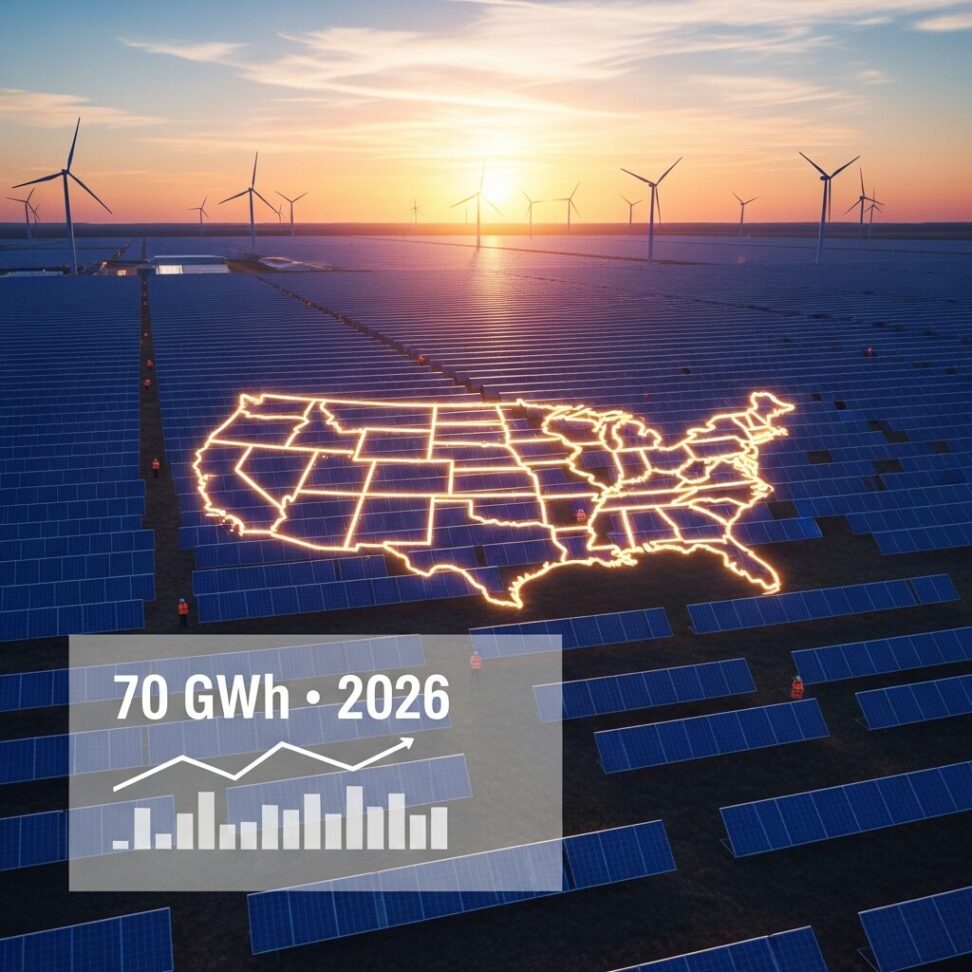
US Battery Energy Storage Capacity Projected to Reach 70 GWh
The United States is preparing for a substantial expansion in battery energy storage infrastructure, with projections indicating that capacity could reach 70 gigawatt-hours (GWh) by 2026. This growth represents a significant step forward in the nation’s ability to store renewable energy and manage grid stability.
Rapid Growth in Energy Storage Infrastructure
The American energy sector is experiencing an unprecedented buildout of battery storage systems. Current data suggests that the country’s storage capacity will more than triple over the next few years, driven by falling costs and increasing demand for grid flexibility. This expansion comes at a critical time as utilities and grid operators work to integrate higher percentages of intermittent renewable energy sources like solar and wind power.
Battery energy storage systems play a vital role in modern electrical grids by storing excess energy during periods of low demand or high renewable generation and releasing it when needed. This capability helps balance supply and demand, reduces reliance on fossil fuel peaker plants, and improves overall grid reliability.
Factors Driving the Storage Boom
Several key elements are contributing to this rapid expansion of battery storage capacity:
- Declining lithium-ion battery costs, which have dropped substantially over the past decade
- Federal incentives and state-level renewable energy mandates
- Growing penetration of solar and wind generation requiring storage solutions
- Utilities recognizing storage as a cost-effective alternative to traditional infrastructure
- Improved battery technology offering longer durations and better performance
The economics of battery storage have shifted dramatically in recent years. What was once considered an expensive niche technology has become competitive with traditional grid infrastructure investments. Utilities are now deploying storage systems to defer costly transmission upgrades and provide multiple grid services simultaneously.
Regional Distribution and Deployment
The storage capacity buildout is not evenly distributed across the country. States with aggressive renewable energy targets and supportive policies are leading the charge. California, Texas, and several northeastern states account for a significant portion of planned installations. These regions benefit from strong policy frameworks, high electricity prices, or both, making storage projects economically viable.
California continues to be at the forefront of energy storage deployment, driven by its clean energy mandates and the need to manage grid stability as fossil fuel plants retire. Texas has seen rapid growth due to its abundant renewable resources and independent grid, which requires robust storage solutions to maintain reliability.
Technology and Duration Trends
Lithium-ion batteries currently dominate the market due to their established supply chains and proven performance. However, the industry is beginning to see diversification in storage technologies. Longer-duration storage solutions, capable of discharging for four hours or more, are gaining traction as grid operators recognize the value of extended energy availability.
The shift toward longer-duration systems reflects changing grid needs. As renewable penetration increases, the grid requires storage that can bridge longer periods without sun or wind. This trend is pushing development of both improved lithium-ion systems and alternative technologies designed for extended discharge periods.
Grid Resilience and Reliability Benefits
Beyond renewable integration, battery storage systems provide critical grid services that enhance overall system reliability. These installations can respond to frequency fluctuations in milliseconds, provide voltage support, and serve as backup power during outages. Recent extreme weather events have highlighted the value of distributed storage resources in maintaining power supply during grid stress.
The projected 70 GWh of capacity represents a substantial resource for grid operators. This storage volume could power millions of homes during peak demand periods and provide essential backup capacity during emergencies. As climate-related weather events become more frequent, this resilience aspect of storage becomes increasingly valuable.
Looking Ahead to 2026 and Beyond
The pathway to 70 GWh by 2026 depends on continued policy support, supply chain stability, and project execution. While the trajectory appears strong, potential challenges include supply chain constraints for critical minerals, interconnection queue delays, and local permitting issues.
The storage industry must also address workforce development needs to support this rapid expansion. Installing and maintaining large-scale battery systems requires specialized skills and training programs to build the necessary workforce pipeline.
The achievement of 70 GWh would position the United States as a global leader in energy storage deployment, demonstrating how battery technology can transform electric grids. This infrastructure will be essential for meeting climate goals and transitioning to a cleaner energy system.
Analyzed and outlined by Claude Sonnet 4.5, images by Gemini Imagen 4.
**Source**
https://canalsolar.com.br/en/USA-70-GWH-Best-2026/