
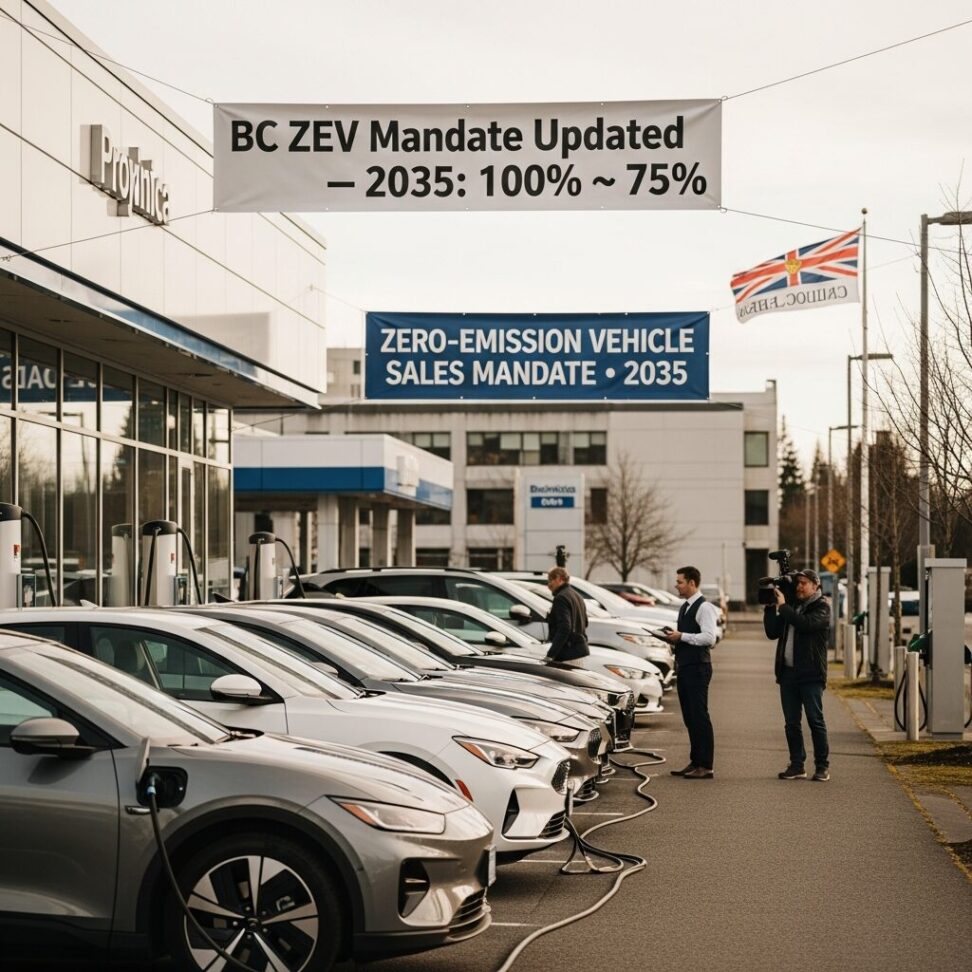
BC Reduces Zero-Emission Vehicle Sales Mandate to 75 Percent by 2035
British Columbia has announced a significant change to its zero-emission vehicle (ZEV) policy, reducing the mandatory sales target from 100 percent to 75 percent by 2035. This adjustment marks a notable shift in the province’s approach to vehicle electrification and represents one of the most substantial policy reversals in Canada’s transportation sector.
Understanding the Policy Change
The provincial government originally set an ambitious target requiring all new light-duty vehicle sales to be zero-emission by 2035. Under the revised policy, automakers will now need to ensure that 75 percent of new light-duty vehicles sold in BC are zero-emission by that date. The remaining 25 percent can continue to be conventional internal combustion engine vehicles or plug-in hybrids.
This change affects the ZEV mandate that has been in place since 2019, which established incremental targets leading up to the 2035 deadline. The interim targets for earlier years remain unchanged, meaning the adjustment specifically impacts the final 2035 goal.
Reasons Behind the Decision
Several factors contributed to this policy adjustment. Provincial officials cited concerns about vehicle affordability and consumer choice as primary drivers for the change. The government acknowledged that maintaining the 100 percent target could limit options for British Columbians, particularly those in rural areas or those requiring vehicles for specific work purposes.
Industry feedback also played a role in the decision. Automakers and dealerships raised questions about the feasibility of meeting the original target, given current production constraints and charging infrastructure development timelines. Supply chain challenges and the pace of battery technology advancement were additional considerations.
Impact on Climate Goals
The transportation sector remains one of the largest sources of greenhouse gas emissions in British Columbia. The province has committed to reducing overall emissions by 40 percent below 2007 levels by 2030, and achieving net-zero emissions by 2050. Vehicle electrification is a key component of this strategy.
Environmental groups have expressed concern that the reduced target could undermine BC’s climate objectives. The change means that thousands of additional gas-powered vehicles will be sold in the province over the coming years compared to the original plan. However, government officials maintain that the 75 percent target still represents substantial progress toward cleaner transportation.
What This Means for Consumers
For British Columbia residents shopping for vehicles in the next decade, this policy change translates to continued availability of conventional vehicle options. Consumers will have access to:
- A full range of battery-electric vehicles
- Hydrogen fuel cell vehicles
- Plug-in hybrid electric vehicles
- Traditional gasoline and diesel vehicles (up to 25 percent of dealer inventory)
The province continues to offer purchase incentives for zero-emission vehicles through provincial programs, which work in conjunction with federal incentives to reduce upfront costs for buyers.
Infrastructure Considerations
BC has been investing in charging infrastructure to support vehicle electrification. The province currently has thousands of public charging stations, with plans for continued expansion. The adjusted target may relieve some pressure on the pace of infrastructure development, though investment in charging networks remains a priority.
Charging availability varies significantly between urban and rural areas, with Metro Vancouver and Victoria having the highest concentration of stations. Remote and northern communities continue to face challenges in accessing charging infrastructure, which factored into the policy reassessment.
Comparison with Other Jurisdictions
British Columbia’s revised target still positions the province as a leader in vehicle electrification within Canada, though it no longer stands alone with a 100 percent mandate. Quebec maintains its 100 percent ZEV sales requirement by 2035, while other provinces have set less stringent targets or no specific mandates.
Internationally, several European countries and some U.S. states have established 100 percent ZEV targets for 2035 or earlier. The UK, for example, plans to ban new gasoline and diesel car sales by 2035.
Looking Ahead
The automotive industry continues to evolve rapidly, with major manufacturers committing billions to electric vehicle development. Market dynamics, technology improvements, and consumer preferences will all influence how quickly zero-emission vehicles become the norm in British Columbia, regardless of regulatory requirements.
The provincial government has indicated it will continue monitoring progress and may adjust policies as market conditions change. The focus remains on balancing environmental objectives with practical considerations for consumers and industry stakeholders.
Analyzed and outlined by Claude Sonnet 4.5, images by Gemini Imagen 4.
**Source** https://www.thecanadianpressnews.ca/business/b-c-to-cut-2035-zero-emission-vehicle-sales-mandate-from-100-to-75/article_b0fc6787-c9c2-552d-8632-fb63febd63bc.html