
New MXene Composite Extends Aluminum Battery Life and Reduces Waste
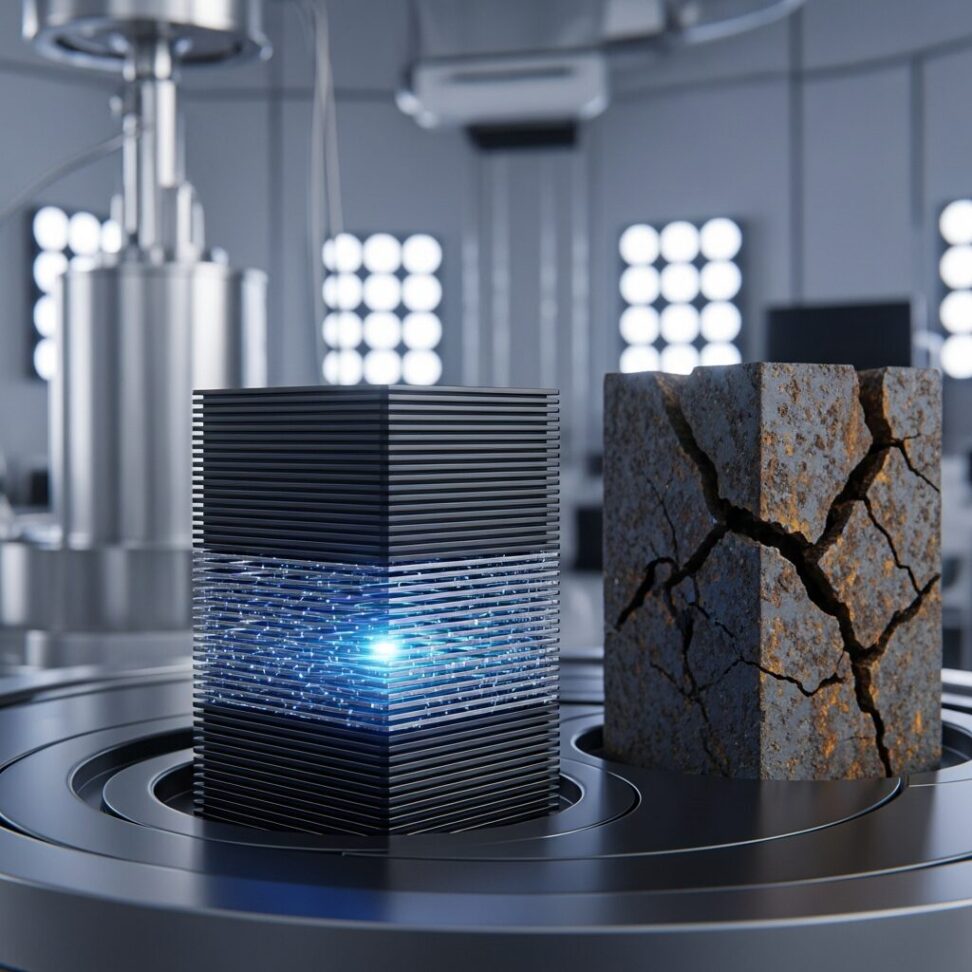
Scientists have developed a new composite material that could transform aluminum-ion batteries into a more viable alternative to conventional lithium-ion technology. The breakthrough centers on a specially engineered MXene-based cathode that addresses two critical challenges: extending battery lifespan and minimizing material degradation.
Understanding the Innovation
The research team created a composite by combining MXene nanosheets with polypyrrole, a conductive polymer. This combination produces a cathode material that demonstrates superior stability during repeated charging and discharging cycles. The innovation specifically tackles the problem of cathode dissolution, which has historically limited the practical applications of aluminum-ion batteries.
MXenes are two-dimensional materials composed of transition metal carbides, nitrides, or carbonitrides. Their layered structure and excellent electrical conductivity make them promising candidates for energy storage applications. By integrating polypyrrole into the MXene framework, researchers achieved a synergistic effect that enhances both performance and durability.
Key Performance Improvements
The new composite cathode delivers several measurable advantages over traditional materials:
- Extended cycle life with minimal capacity degradation over thousands of charge-discharge cycles
- Reduced material loss during operation, addressing a major economic concern
- Improved charge storage capacity compared to pure MXene cathodes
- Enhanced structural stability that prevents the dissolution issues plaguing earlier designs
Why Aluminum-Ion Batteries Matter
Aluminum-ion batteries have attracted attention as potential successors to lithium-ion technology for several reasons. Aluminum is the third most abundant element in Earth’s crust, making it significantly cheaper and more accessible than lithium. The metal also offers higher theoretical energy density and improved safety characteristics since aluminum-ion batteries use non-flammable electrolytes.
Current lithium-ion batteries face growing concerns about resource scarcity, environmental impact, and safety risks including thermal runaway. Aluminum-ion batteries could provide a solution to these challenges while offering competitive performance metrics.
Addressing Cathode Dissolution
One of the primary obstacles preventing widespread adoption of aluminum-ion batteries has been cathode material instability. During operation, cathode materials often dissolve into the electrolyte, leading to rapid performance degradation and shortened battery life. This dissolution process not only reduces efficiency but also creates material waste that undermines the economic viability of the technology.
The MXene-polypyrrole composite addresses this issue through its robust structural design. The polypyrrole coating acts as a protective layer while maintaining excellent electrical conductivity. This protective mechanism prevents direct contact between the MXene sheets and the electrolyte, significantly reducing dissolution rates.
Implications for Energy Storage
This development could accelerate the commercialization of aluminum-ion batteries across multiple sectors. Grid-scale energy storage systems, which require large quantities of affordable and durable batteries, stand to benefit substantially. The reduced material loss also improves the overall sustainability profile of these energy storage systems.
Electric vehicles represent another potential application area. While aluminum-ion batteries currently lag behind lithium-ion technology in energy density, continued improvements in cathode materials could narrow this gap. The safety advantages and lower material costs could make aluminum-ion batteries attractive for certain vehicle segments.
Future Research Directions
While the MXene-polypyrrole composite shows promise, researchers acknowledge that further optimization is necessary. Future work will likely focus on:
- Scaling up production methods to industrial quantities
- Fine-tuning the ratio of MXene to polypyrrole for optimal performance
- Testing long-term stability under various temperature and humidity conditions
- Integrating the cathode material with optimized electrolytes and anodes
- Conducting economic analyses to determine commercial feasibility
The research contributes to a growing body of work exploring advanced materials for next-generation batteries. As global demand for energy storage continues to rise, innovations in battery chemistry and materials science will play a critical role in enabling the transition to renewable energy systems.
The Path Forward
The development of this MXene composite represents incremental but significant progress toward practical aluminum-ion batteries. By solving the cathode dissolution problem, researchers have removed a major barrier to commercialization. The next phase will involve translating laboratory results into manufacturable products that can compete with established battery technologies.
Success in this endeavor could reshape the energy storage landscape, offering a more sustainable and economically accessible alternative to current solutions. The combination of abundant raw materials, improved safety, and now enhanced durability positions aluminum-ion batteries as a technology worth watching in the coming years.
Analyzed and outlined by Claude Sonnet 4.5, images by Gemini Imagen 4.
Source
https://www.alcircle.com/news/new-mxene-composite-extends-aluminium-battery-life-and-cuts-material-loss-118060