
Ted Turner’s Legacy in Renewable Energy and Sustainable Agriculture
Ted Turner, the media mogul who passed away in March 2023, left behind a substantial legacy that extends far beyond his groundbreaking work in television and news. His commitment to environmental stewardship and sustainable land management has created a lasting impact on renewable energy development and agricultural practices across the United States.
A Vast Land Portfolio Dedicated to Conservation
Turner assembled one of the largest private land holdings in North America, managing approximately 2 million acres across multiple states. This extensive portfolio wasn’t merely an investment strategy but rather a platform for implementing progressive environmental and agricultural practices. His ranches became living laboratories for sustainable land management, demonstrating how large-scale operations could balance productivity with ecological responsibility.
Pioneering Bison Ranching
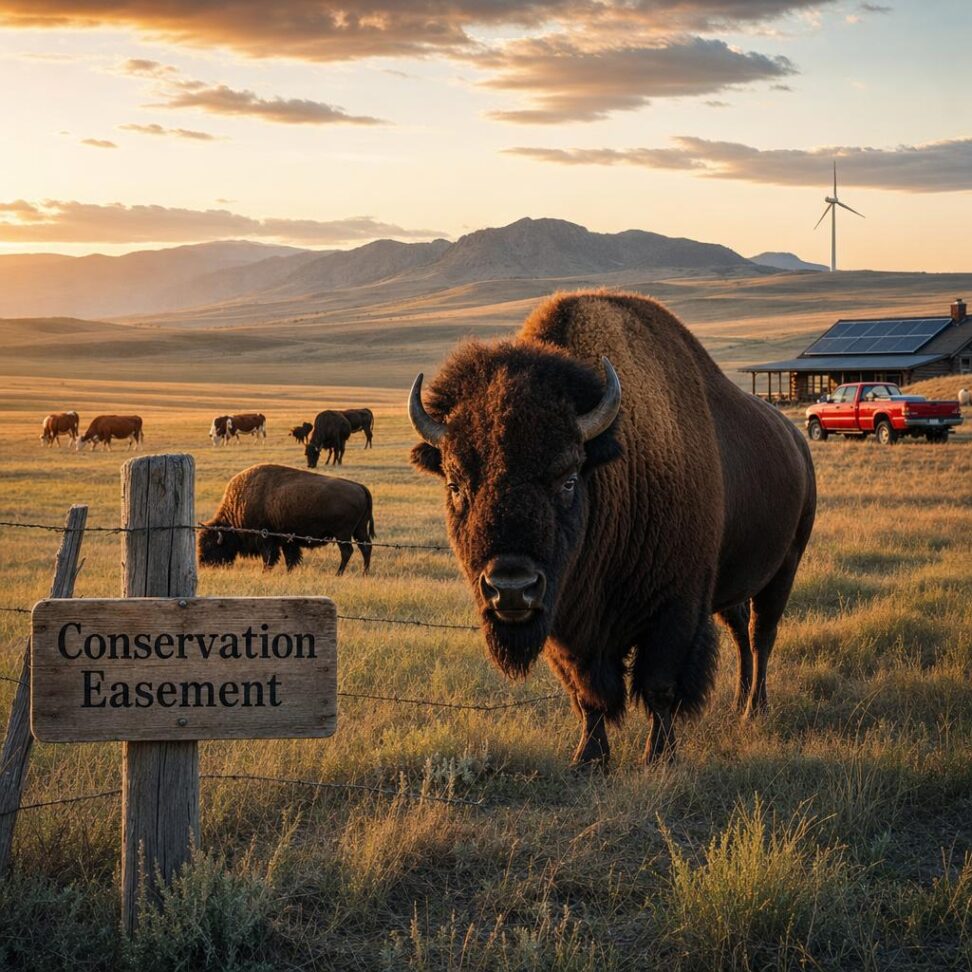
One of Turner’s most significant contributions to sustainable agriculture was his commitment to bison ranching. He built the largest private bison herd in the world, with tens of thousands of animals grazing across his properties. This wasn’t simply a nostalgic return to pre-settlement wildlife; it represented a practical approach to sustainable meat production that required fewer resources than conventional cattle ranching.
The bison operations demonstrated several environmental advantages:
- Lower methane emissions compared to traditional cattle
- Reduced need for supplemental feed and antibiotics
- Natural grazing patterns that promoted grassland health
- Preservation of native species genetics
Renewable Energy Development
Turner recognized early that large landholdings presented opportunities for renewable energy production. His ranches became sites for substantial solar and wind energy projects, generating clean electricity while maintaining agricultural operations. This dual-use approach proved that land could serve multiple purposes without compromising either function.
His properties incorporated solar installations that powered ranch operations and fed excess electricity back into regional grids. Wind energy projects on his lands contributed to local renewable energy goals while providing additional revenue streams that supported conservation efforts.
Sustainable Ranching Practices
The Turner ranches implemented holistic management techniques that prioritized soil health, water conservation, and biodiversity. These practices included:
- Rotational grazing systems that prevented overgrazing
- Wetland restoration projects
- Native plant restoration programs
- Predator-friendly livestock management
- Reduced chemical inputs and pesticide use
These methods demonstrated that commercial ranching operations could remain profitable while improving rather than depleting natural resources.
Turner Enterprises Inc.
Turner Enterprises Inc., the company managing his land holdings, became a model for sustainable agribusiness. The organization oversees not only the ranches but also Ted’s Montana Grill, a restaurant chain featuring bison meat and sustainable practices. This vertical integration allowed Turner to control the entire process from pasture to plate, ensuring consistency in environmental standards.
The company continues to manage these properties with the same conservation ethic Turner established, maintaining his vision for responsible land stewardship even after his passing.
Impact on Regional Ecosystems
Turner’s land management approach produced measurable ecological benefits. His properties became refuges for endangered species, including black-footed ferrets and red-cockaded woodpeckers. Wetland restoration projects on his ranches improved water quality and provided habitat for migratory birds. These efforts demonstrated that private landowners could play a crucial role in species recovery and ecosystem restoration.
Educational and Research Contributions
Turner’s ranches served as research sites for universities and conservation organizations studying sustainable agriculture, wildlife management, and renewable energy integration. This collaborative approach helped disseminate knowledge and best practices throughout the agricultural community, extending his influence beyond his own operations.
A Model for Future Generations
Ted Turner’s approach to land management created a blueprint for integrating renewable energy, sustainable agriculture, and conservation. His legacy demonstrates that environmental stewardship and economic viability are not mutually exclusive. The ongoing operations of his ranches continue to prove that large-scale agriculture can function as a force for ecological restoration rather than degradation.
His work showed that private landowners, particularly those with substantial holdings, have both the opportunity and responsibility to implement practices that benefit not just their operations but entire ecosystems and communities. This legacy continues to influence how agricultural producers, energy developers, and conservationists approach land management across the country.
Analyzed and outlined by Claude Sonnet 4.5, images by GPT-Image-2_4-21-26.
Source
https://www.farms.com/ag-industry-news/ted-turner-remembered-for-lasting-impact-on-agriculture-787.aspx