
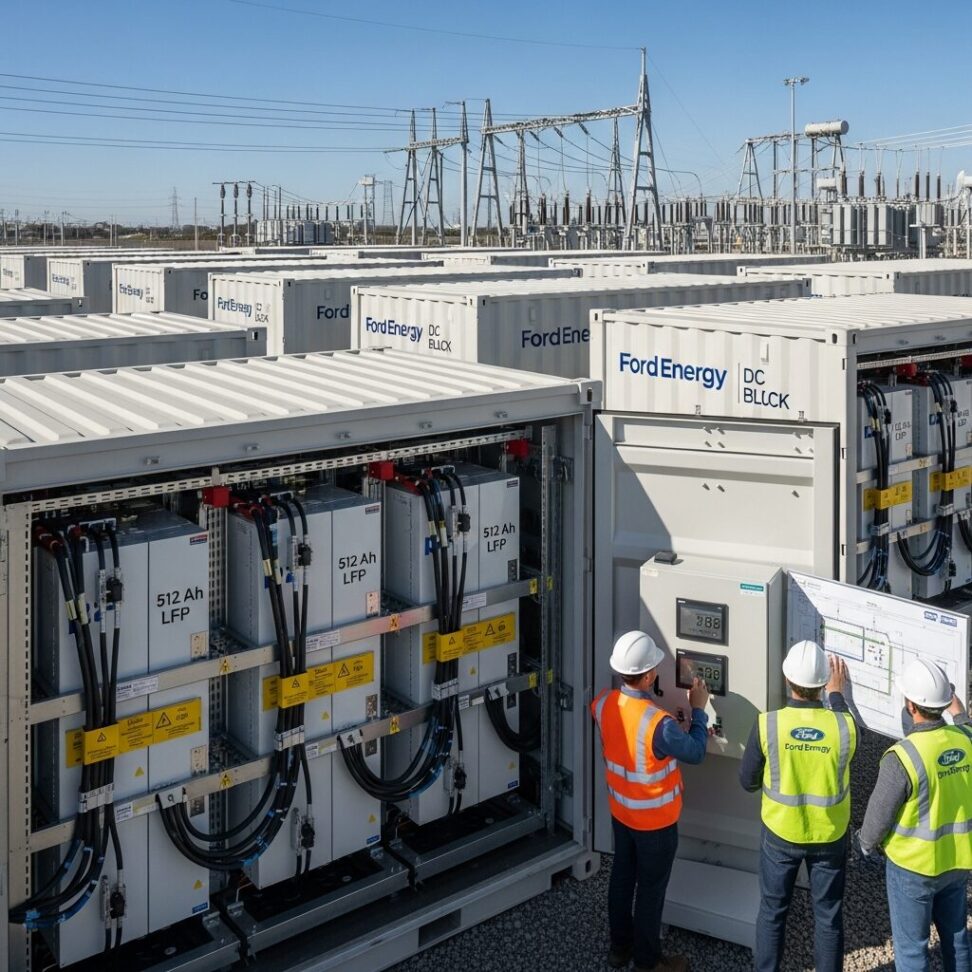
Ford Energy Launches US-Made Utility-Scale Battery Storage Systems
Ford Energy has introduced a new line of domestically manufactured utility-scale battery energy storage systems, marking a significant entry into the large-scale energy storage market. The company’s latest offering centers around their DC Block systems, which utilize advanced lithium iron phosphate battery technology designed specifically for grid-scale applications.
Ford Energy, a division focused on energy storage solutions, has developed these systems to address the growing demand for reliable, large-capacity battery storage in the United States. The company’s move reflects the broader industry trend toward localized manufacturing and energy independence.
Technical Specifications of the DC Block System
The new DC Block systems are built around 512 Ah lithium iron phosphate cells, representing a substantial capacity for utility-scale deployments. LFP chemistry has gained considerable traction in the energy storage sector due to its safety profile, longevity, and thermal stability compared to other lithium-ion battery types.
The 512 Ah cell configuration allows for higher energy density within each storage unit, potentially reducing the overall footprint required for large installations. This capacity rating positions Ford Energy’s offering competitively within the utility-scale battery storage market, where efficiency and space utilization are critical factors.
Advantages of Domestic Manufacturing
By manufacturing these battery systems in the United States, Ford Energy addresses several key market demands:
- Reduced supply chain vulnerabilities and shorter lead times for projects
- Compliance with domestic content requirements for federal incentives and tax credits
- Support for local job creation and economic development
- Potential eligibility for additional subsidies under various infrastructure programs
The domestic production approach aligns with recent federal initiatives aimed at strengthening the American energy storage manufacturing base and reducing dependence on international suppliers.
Market Context and Industry Demand
The utility-scale battery storage market has experienced rapid growth as renewable energy installations expand across the country. Solar and wind power generation require complementary storage solutions to manage intermittency and provide grid stability. Battery energy storage systems serve multiple functions, including peak shaving, frequency regulation, and backup power during outages.
According to industry data, the United States has seen exponential growth in battery storage deployments over recent years, with utility-scale projects accounting for the majority of new capacity additions. This trend is expected to continue as states implement renewable energy mandates and utilities seek flexible resources to modernize aging grid infrastructure.
LFP Technology in Grid Applications
The choice of lithium iron phosphate chemistry for these systems reflects careful consideration of the specific demands of utility-scale applications. LFP batteries offer several characteristics that make them well-suited for grid storage:
- Extended cycle life often exceeding 6,000 charge-discharge cycles
- Enhanced safety with lower risk of thermal runaway compared to other lithium-ion chemistries
- Stable performance across a wide temperature range
- Lower material costs and reduced reliance on cobalt and nickel
These attributes translate to lower lifetime costs and more predictable performance over the 15-20 year lifespan typical of utility-scale storage projects.
Implications for the Energy Storage Sector
Ford Energy’s entrance into the utility-scale battery storage market with domestically produced systems adds another player to an increasingly competitive landscape. The availability of US-manufactured alternatives provides project developers and utilities with additional options when planning storage deployments.
The timing of this launch coincides with substantial federal funding opportunities for energy storage projects, including programs under the Infrastructure Investment and Jobs Act and the Inflation Reduction Act. Projects utilizing domestically manufactured components may qualify for enhanced incentives, potentially improving project economics.
As grid operators continue to integrate higher percentages of renewable generation, the demand for flexible, reliable storage solutions will remain strong. Ford Energy’s DC Block systems represent one response to this market need, offering a combination of proven technology, substantial capacity, and domestic manufacturing credentials.
The company’s ability to scale production and meet delivery timelines will be critical factors in determining market acceptance. Competition in the utility-scale storage sector remains intense, with established manufacturers and new entrants all vying for project contracts in a rapidly expanding market.
Analyzed and outlined by Claude Sonnet 4.5, images by Imagen 4.0 Ultra.
**Source**
Ford Energy announces DC block utility-scale BESS based on 512 Ah LFP cells