
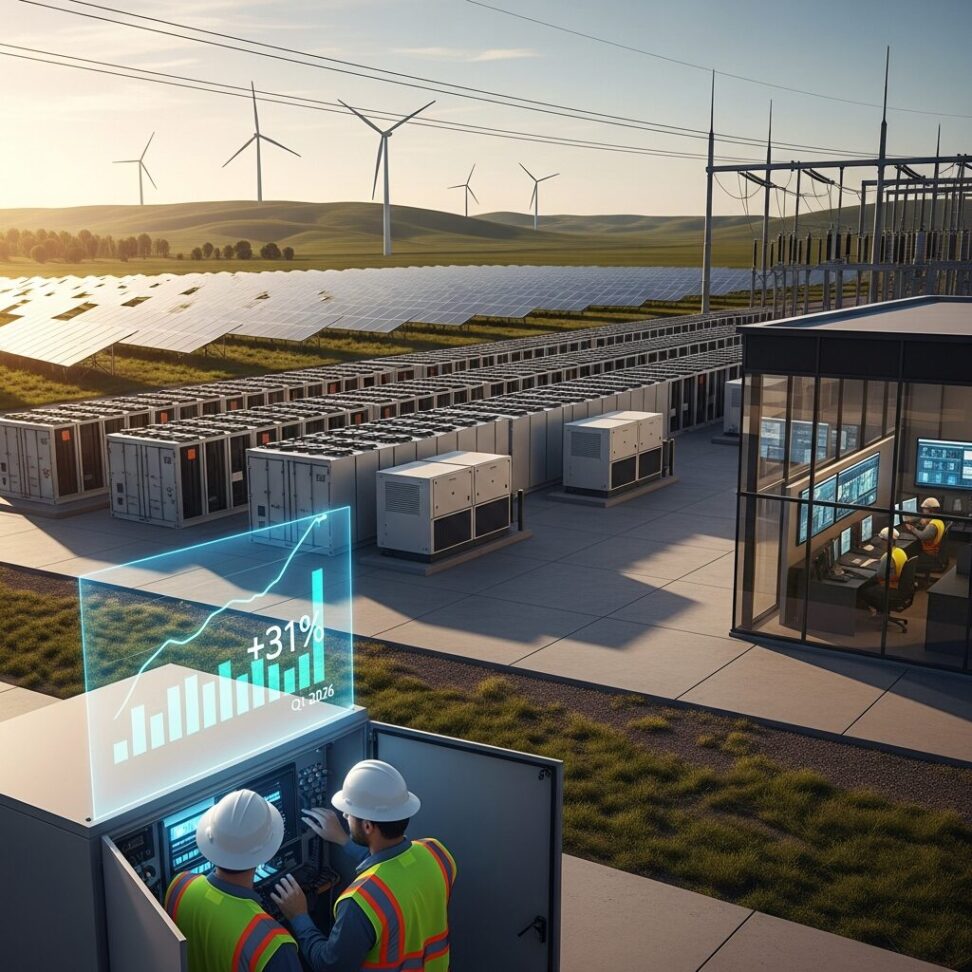
U.S. Energy Storage Booms 31% Q1 2026 Record Growth
The United States energy storage sector has achieved a significant milestone in the first quarter of 2026, with installations surging by 31% compared to the same period in 2025. This marks the strongest first-quarter performance on record for the industry, signaling continued momentum in the nation’s transition toward renewable energy infrastructure.
First Quarter Performance Sets New Benchmark
The energy storage market added substantial capacity during the January-March period of 2026, establishing a new high-water mark for Q1 installations. This growth trajectory demonstrates the increasing role that battery storage systems play in supporting grid stability and renewable energy integration across the country.
The robust performance in the opening quarter suggests that 2026 could become another banner year for energy storage deployment, building on the strong foundations laid in previous years. Industry analysts attribute this growth to several converging factors, including favorable policy frameworks, declining technology costs, and increasing demand for grid reliability solutions.
Driving Forces Behind the Growth
Multiple factors have contributed to the exceptional first-quarter performance. The expansion reflects both utility-scale projects coming online and growing adoption of commercial and residential storage systems. Several key elements have fueled this upward trend:
- Continued cost reductions in battery technology making storage systems more economically viable
- Federal incentives and state-level policies encouraging clean energy adoption
- Growing recognition of storage as essential infrastructure for grid modernization
- Increased penetration of solar and wind energy requiring storage solutions for intermittency management
- Rising concerns about grid resilience in the face of extreme weather events
Geographic Distribution and Market Segments
While specific state-by-state data varies, traditional leaders in renewable energy adoption continue to drive much of the growth. States with aggressive clean energy targets and renewable portfolio standards remain at the forefront of storage deployment. The utility-scale segment continues to dominate overall capacity additions, though distributed storage installations are gaining ground.
Industry Implications and Future Outlook
The 31% year-over-year increase in Q1 2026 reinforces expectations for continued expansion throughout the year. Industry stakeholders view this strong start as validation of long-term growth projections for the energy storage market. The performance indicates that storage is transitioning from a nascent technology to a mainstream component of the electrical grid.
Several trends are expected to sustain growth momentum through the remainder of 2026. The ongoing buildout of renewable generation capacity will necessitate corresponding storage installations to manage variability and ensure reliable power delivery. Grid operators increasingly view storage as a versatile resource capable of providing multiple services, from peak demand management to frequency regulation.
Economic and Environmental Impact
The expansion of energy storage infrastructure carries significant economic implications, creating manufacturing jobs, construction opportunities, and ongoing operations positions. The sector’s growth also supports domestic supply chain development as companies invest in domestic production facilities for batteries and related components.
From an environmental perspective, the storage boom enables higher penetration of clean energy sources by addressing their inherent intermittency challenges. This allows grid operators to maximize the utilization of solar and wind resources while maintaining system reliability, accelerating the displacement of fossil fuel generation.
Challenges and Considerations
Despite the positive growth trajectory, the industry faces ongoing challenges. Supply chain constraints, permitting processes, and interconnection queues can delay project timelines. Material sourcing for battery production, particularly critical minerals, remains a consideration for long-term sustainability and cost management.
The first quarter results for 2026 establish a strong foundation for continued energy storage expansion in the United States. With policy support, technological advancement, and market demand all aligned, the sector appears positioned for sustained growth as it becomes an increasingly integral component of the nation’s energy infrastructure.
Analyzed and outlined by Claude Sonnet 4.5, images by Imagen 4.0 Ultra.
**Source**
https://www.indexbox.io/blog/us-energy-storage-additions-rise-31-in-q1-2026-marking-strongest-first-quarter-on-record/