
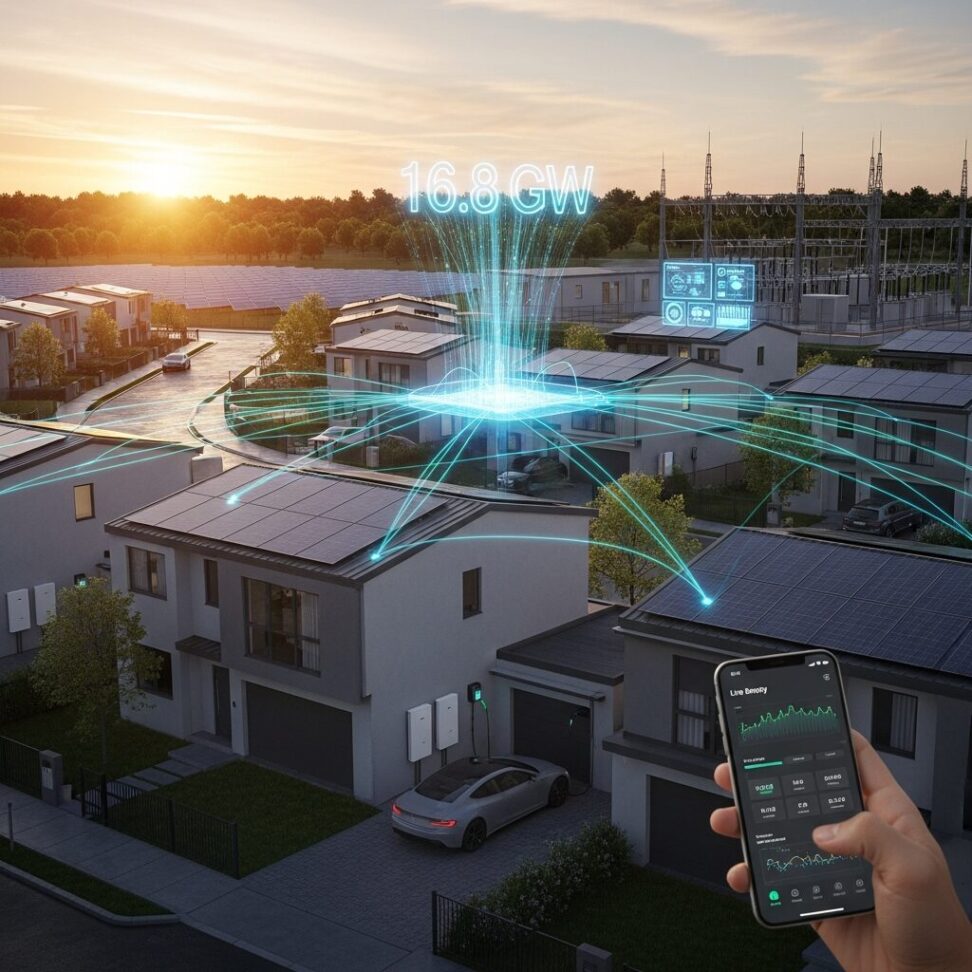
Sunrun, Tesla, and Renew Home Launch 16.8 GW Virtual Power Plant Program
A new partnership between three major players in the distributed energy space is set to reshape how residential solar and storage systems support the grid. Sunrun, Tesla, and Renew Home have announced plans to develop a 16.8 GW virtual power plant (VPP) program, marking one of the largest coordinated efforts of its kind in the United States.
What the Partnership Entails
The collaboration aims to aggregate residential solar systems, home batteries, and smart thermostats into a unified network that can deliver dispatchable energy to the grid during peak demand periods. By pooling distributed resources from thousands of homes, the program intends to provide grid services that traditionally relied on fossil fuel peaker plants.
The 16.8 GW capacity target represents a substantial scale for a VPP initiative, positioning the program as a potential model for how residential energy assets can be coordinated to support grid reliability across multiple regions.
About the Companies Involved
Sunrun is the largest residential solar, storage, and energy services company in the United States, headquartered in San Francisco, California. The company has installed solar systems on hundreds of thousands of homes across the country and has been a leading developer of residential virtual power plant programs in partnership with utilities.
Tesla, based in Austin, Texas, manufactures the Powerwall home battery system, which is widely deployed in residential energy storage applications. Tesla’s energy division has built VPP programs in California, Texas, and Puerto Rico, leveraging its software platform to coordinate distributed Powerwall fleets.
Renew Home is a smart energy company formed through the combination of Google Nest Renew and OhmConnect. The company manages one of the largest residential VPPs in North America, with millions of connected devices including smart thermostats that can adjust home energy use in response to grid signals.
How Virtual Power Plants Work
Virtual power plants connect distributed energy resources such as rooftop solar panels, home batteries, electric vehicles, and smart appliances into a coordinated network. When the grid faces high demand or supply constraints, the VPP operator can dispatch stored energy from home batteries or reduce consumption through connected devices.
Key benefits of VPPs include:
- Reducing the need for new fossil fuel peaker plants
- Providing homeowners with compensation for grid services
- Improving grid reliability during extreme weather events
- Lowering wholesale electricity costs during peak periods
- Supporting greater integration of renewable energy
Grid Reliability and Capacity Concerns
The announcement comes as electricity demand in the United States rises sharply due to data center expansion, electrification of transportation and heating, and domestic manufacturing growth. Grid operators across multiple regions have warned about potential capacity shortfalls in the coming years, prompting interest in solutions that can be deployed quickly without the long permitting timelines associated with new generation or transmission infrastructure.
Residential VPPs offer a faster deployment pathway because they leverage existing and newly installed customer-sited equipment. The U.S. Department of Energy has previously estimated that VPPs could provide 80 to 160 GW of capacity by