
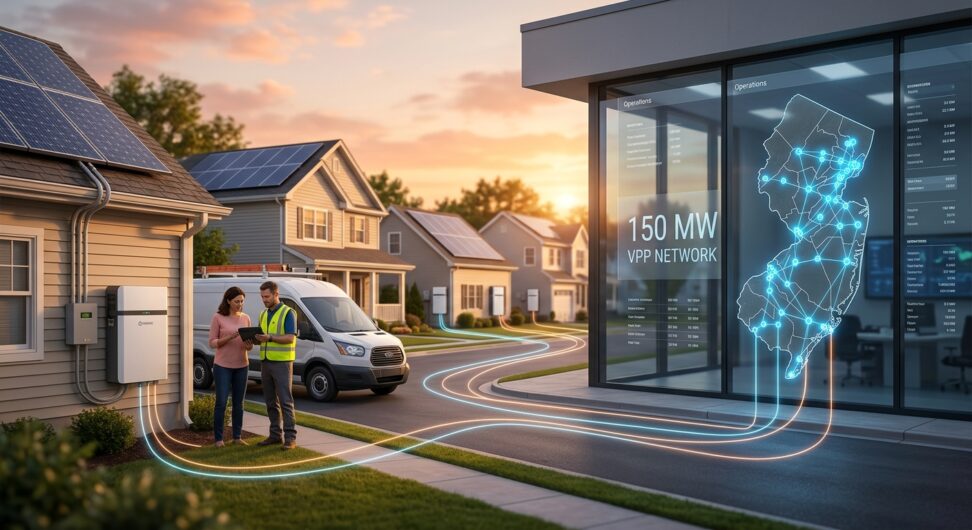
New Jersey Behind-the-Meter Storage Initiative Targets 150 MW Virtual Power Plants
New Jersey regulators are moving forward with a plan to unlock 150 megawatts of behind-the-meter battery storage capacity, aiming to stitch together a virtual power plant (VPP) that can help the state manage peak electricity demand without building new fossil fuel infrastructure. The initiative marks one of the more ambitious distributed energy resource programs in the region and signals a broader shift toward treating customer-sited batteries as a grid asset rather than a private convenience.
What the Program Aims to Achieve
The core idea behind the initiative is straightforward: instead of relying solely on centralized power plants to meet demand spikes, the state wants to aggregate thousands of smaller batteries installed in homes, businesses, and community facilities. When combined and coordinated, these distributed batteries can respond to grid signals much like a traditional power plant, discharging stored electricity during periods of high demand or grid stress.
This behind-the-meter approach differs from utility-scale storage projects because the batteries are owned and sited by individual customers, then enrolled into a program that allows a utility or third-party aggregator to call on that stored power collectively. The 150 MW target represents a significant scale for a program of this kind, comparable to a mid-sized natural gas peaker plant, but built from distributed, customer-owned assets instead.
Why New Jersey Is Pursuing This Model
New Jersey has set aggressive clean energy targets, including a goal of reaching 100% clean energy by 2050. Meeting that goal requires more than just adding wind and solar generation; it also requires flexible resources that can balance the grid as intermittent renewables make up a larger share of the energy mix.
Battery storage paired with rooftop solar or standalone home battery systems can serve several purposes at once:
- Providing backup power to individual customers during outages
- Reducing strain on the grid during peak demand hours
- Allowing utilities to defer or avoid costly infrastructure upgrades
- Creating a new revenue stream for customers who enroll their batteries in demand response programs
By tapping into behind-the-meter storage, the state can potentially avoid or delay investments in new peaking power plants, which are typically fossil-fuel powered and used only during the highest-demand hours of the year. Virtual power plants offer a cleaner alternative that also gives participating customers a financial incentive to install storage in the first place.
How Virtual Power Plants Work in Practice
A virtual power plant functions by networking many small energy resources into a single controllable unit. Software platforms monitor grid conditions and send signals to enrolled batteries, instructing them to discharge power back to the grid or reduce a customer’s draw from the grid during critical periods. Customers are typically compensated for their participation, either through bill credits, direct payments, or reduced rates.
For New Jersey’s program to reach its 150 MW target, it will likely need broad participation from residential and commercial customers alike, along with aggregators who can manage the technical coordination of dispatching thousands of individual batteries in sync. This requires reliable communication infrastructure, standardized enrollment processes, and clear compensation structures to make participation attractive to customers.
Implications for Utilities and Ratepayers
For utilities operating in New Jersey, a successful behind-the-meter storage program could ease pressure on the grid during the hottest summer afternoons and coldest winter mornings, when electricity demand typically peaks. Reducing peak demand can lower wholesale electricity costs, which in turn can help moderate rates for all customers, not just those who participate directly in the program.
Ratepayers who choose to install battery storage and enroll in the VPP program stand to benefit the most directly, gaining both resilience during outages and ongoing compensation for their participation. However, the upfront cost of battery storage remains a barrier for many households, which is why program design details around incentives, financing options, and low-income access will be important factors in determining how quickly the state reaches its 150 MW goal.
Broader Context in the Region
New Jersey’s move aligns with similar efforts underway in other states, including Massachusetts, California, and Vermont, where utilities have launched their own VPP and behind-the-meter storage programs. These programs are increasingly viewed as a practical near-term tool for grid operators facing rising electricity demand, partly driven by increased electrification of heating and transportation, as well as growing data center loads across the country.
As New Jersey works through the regulatory process to finalize program rules, stakeholders including utilities, battery manufacturers, aggregators, and consumer advocates will likely weigh in on details such as compensation rates, eligibility requirements, and how the program interacts with existing solar and storage incentives already in place in the state.
The 150 MW target, if achieved, would represent a meaningful step in New Jersey’s broader clean energy strategy, demonstrating how distributed, customer-owned resources can be organized to serve grid-wide needs traditionally met by centralized power generation.
Analyzed and outlined by Claude Sonnet 5, images by Gemini 3.1 Flash.
**Source**
https://www.utilitydive.com/news/new-jersey-seeks-150-mw-of-behind-the-meter-storage-to-support-vpp/828727/