
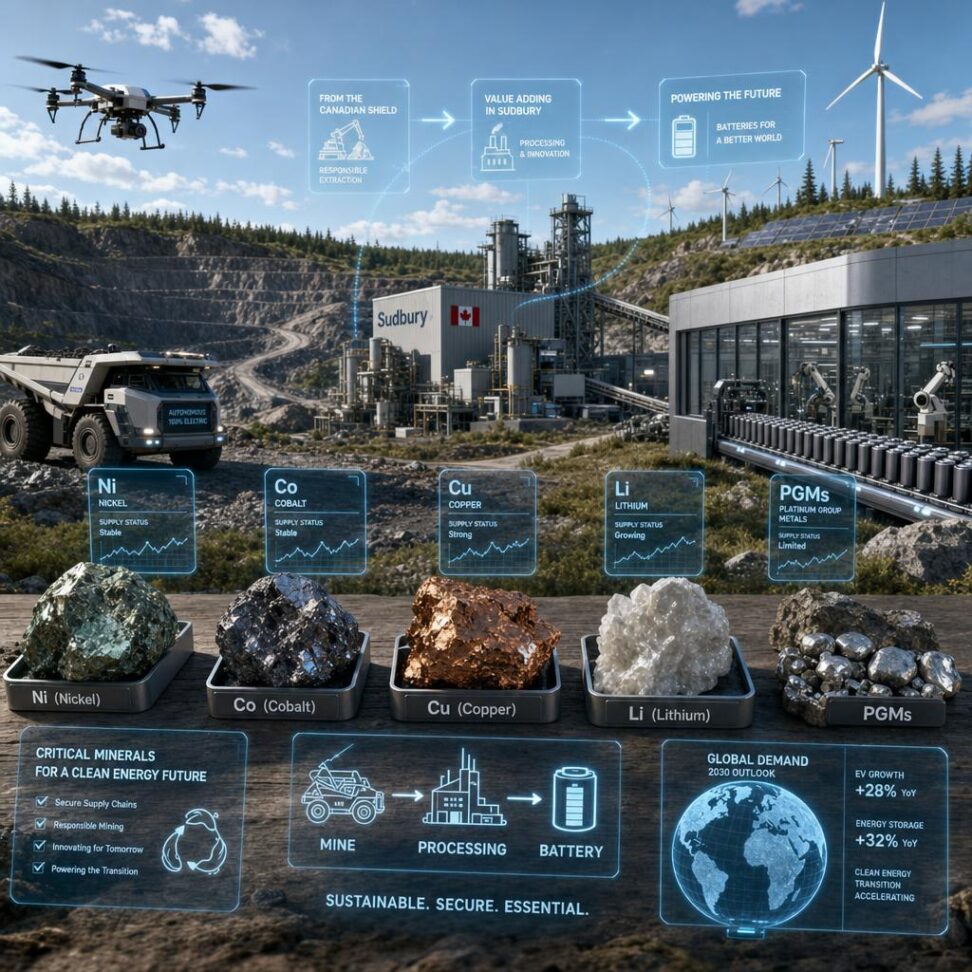
Canada’s Critical Minerals Opportunity: Sudbury’s Role in Global Clean Energy
The global transition to renewable energy has placed Canada in a strategic position, with Sudbury emerging as a key player in the critical minerals race. However, experts warn that swift action is necessary to capitalize on this opportunity before other nations secure their positions in the supply chain.
The Urgency of Canada’s Position
Canada holds substantial reserves of minerals essential for clean energy technologies, yet the window for establishing dominance in this sector is closing rapidly. The nation must accelerate its efforts to develop mining operations and processing facilities to meet the growing global demand for materials used in electric vehicles, solar panels, and wind turbines.
Sudbury, with its rich mining heritage and existing infrastructure, stands at the center of this opportunity. The region’s geological advantages and experienced workforce provide a solid foundation for expanding critical mineral extraction and processing operations.
Critical Minerals in Demand
The minerals driving this new industrial race include:
- Nickel – essential for electric vehicle batteries
- Copper – vital for electrical wiring and renewable energy systems
- Cobalt – a key component in battery technology
- Lithium – fundamental for energy storage solutions
- Rare earth elements – necessary for wind turbines and electric motors
These materials form the backbone of clean energy infrastructure, and securing reliable supply chains has become a priority for nations committed to reducing carbon emissions.
Global Competition Intensifies
While Canada deliberates its approach, other countries are moving quickly to secure their positions in the critical minerals market. China currently controls a significant portion of global processing capacity, while Australia and several African nations are rapidly expanding their mining operations.
The United States has recognized the strategic importance of these minerals and is actively seeking to establish domestic supply chains and partnerships with allied nations. This creates both pressure and opportunity for Canadian operations to align with continental supply chain strategies.
Sudbury’s Competitive Advantages
The Sudbury region offers several distinct benefits for critical mineral development:
- Established mining infrastructure and expertise spanning over a century
- Proximity to major North American markets
- Stable political environment and clear regulatory frameworks
- Advanced research institutions focused on mining technology
- Existing transportation networks for mineral distribution
These factors position Sudbury as an attractive location for companies looking to invest in critical mineral operations while maintaining supply chain security.
Challenges Requiring Attention
Despite the advantages, several obstacles must be addressed for Canada to fully realize its potential in the critical minerals sector. Regulatory approval processes can extend project timelines significantly, creating uncertainty for investors. Environmental assessment requirements, while necessary, need streamlining to balance ecological protection with economic development.
Infrastructure investment remains essential, particularly in remote areas where mineral deposits are located. Transportation networks, power supply, and processing facilities all require capital investment to support expanded operations.
The Path Forward
Experts emphasize that Canada must adopt a coordinated approach involving federal and provincial governments, industry stakeholders, and Indigenous communities. Clear policy frameworks that encourage investment while ensuring environmental stewardship will be crucial for long-term success.
Developing domestic processing capacity represents another critical step. Rather than simply exporting raw materials, Canada has the opportunity to create value-added products and become a supplier of refined materials ready for manufacturing applications.
Economic and Environmental Considerations
The critical minerals sector presents significant economic opportunities for regions like Sudbury, including job creation, tax revenue, and technological innovation. However, development must occur alongside robust environmental protections and consultation with affected communities.
Modern mining practices offer improved environmental performance compared to historical operations, with reduced water usage, lower emissions, and better land reclamation practices. Implementing these standards will be essential for maintaining social license to operate.
The transition to clean energy depends on access to critical minerals, creating a complex relationship between mining activities and environmental goals. Successfully navigating this balance will determine whether Canada can emerge as a leader in the sustainable supply of materials essential for global decarbonization efforts.
Time is of the essence, and the decisions made today will shape Sudbury’s role in the clean energy economy for decades to come.
Analyzed and outlined by Claude Sonnet 4.5, images by GPT-Image-2_4-21-26.
**Source**
https://www.thesudburystar.com/news/critical-minerals-race-canada-sudbury-must-act-fast-expert-cautions