
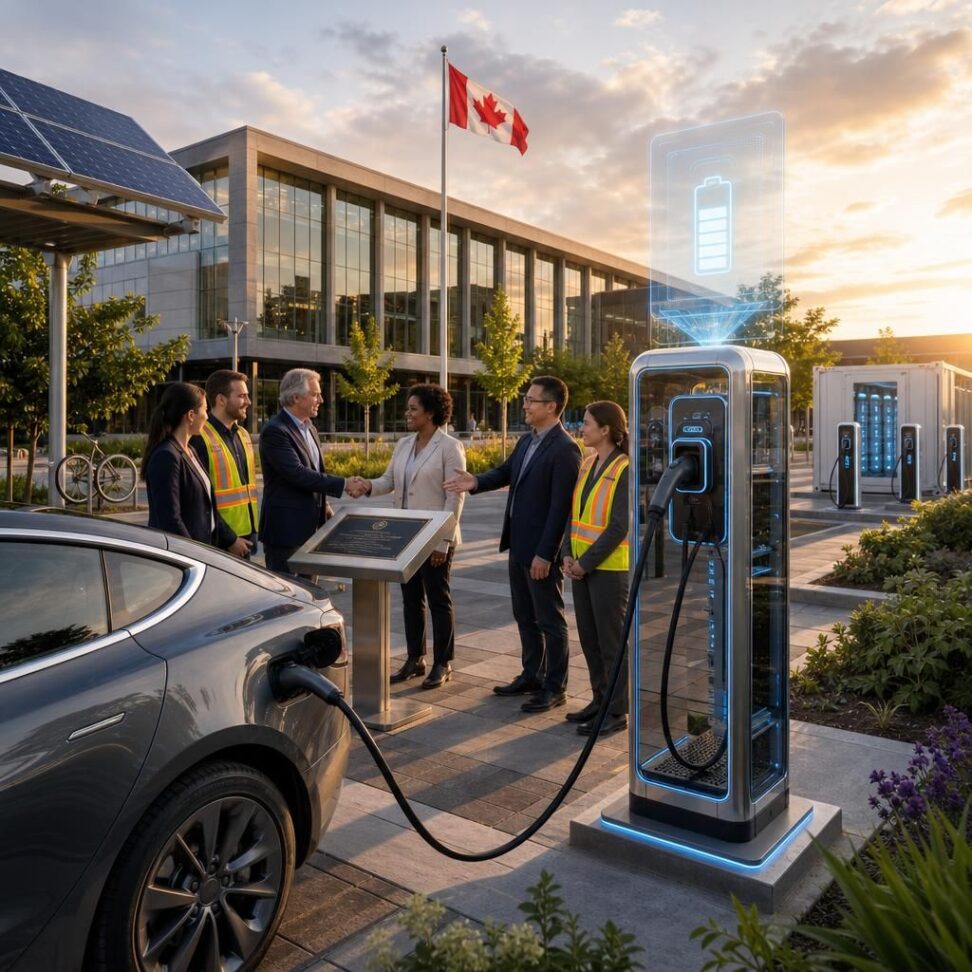
Canada’s Federal Investment in EV Infrastructure and Clean Energy Education
The Government of Canada is accelerating its transition toward a cleaner transportation future with a new federal investment aimed at expanding electric vehicle (EV) infrastructure and supporting clean energy education. The announcement highlights Ottawa’s continued commitment to reducing emissions, building a national charging network, and equipping Canadians with the skills needed for the growing green economy.
Details of the Federal Investment
The federal government has committed funding to install new electric vehicle chargers across the country, while simultaneously backing educational initiatives designed to prepare workers and communities for clean energy adoption. The investment forms part of Canada’s broader strategy to have all new light-duty vehicle sales be zero-emission by 2035.
This funding is being channelled through Natural Resources Canada’s Zero Emission Vehicle Infrastructure Program (ZEVIP), a program dedicated to addressing barriers to EV adoption by expanding charger availability in public places, on-street locations, multi-unit residential buildings, and workplaces.
Expanding EV Charging Access
The infrastructure component of the announcement focuses on installing new EV chargers where Canadians live, work, and travel. Expanding the charging network is considered a critical step in easing range anxiety and making EV ownership a practical option for more households.
- New chargers will be deployed in both urban and rural areas
- Placement will focus on high-traffic corridors and community hubs
- The rollout supports Canada’s target of a nationwide zero-emission vehicle transition
Supporting Clean Energy Education
Beyond hardware, part of the funding is directed toward clean energy education initiatives. These programs are intended to build workforce capacity, raise consumer awareness about EV benefits, and support training for technicians, installers, and other skilled tradespeople who will maintain the growing clean-tech infrastructure.
Educational programming is a key element of ensuring that the shift to electric transportation is inclusive and that Canadians in every region can participate in the emerging clean economy.
Why This Investment Matters
Transportation is one of the largest contributors to greenhouse gas emissions in Canada, accounting for roughly a quarter of the country’s total emissions. Accelerating EV adoption is central to meeting Canada’s 2030 emissions reduction goals and its net-zero commitment by 2050.
By combining infrastructure buildout with education, the federal government is aiming to address both the practical and human dimensions of the energy transition. Chargers make EVs viable; skilled workers and informed consumers make the transition sustainable.
About Natural Resources Canada
Natural Resources Canada (NRCan) is the federal department responsible for managing Canada’s natural resources, energy policy, and clean technology programs. Through initiatives like ZEVIP, NRCan plays a central role in supporting the country’s climate goals, advancing innovation, and helping build the infrastructure needed for a low-carbon future.
Looking Ahead
With EV sales continuing to climb across Canada, expanding charging infrastructure remains one of the most pressing needs. Federal investments like this one, combined with provincial programs and private-sector deployment, are