
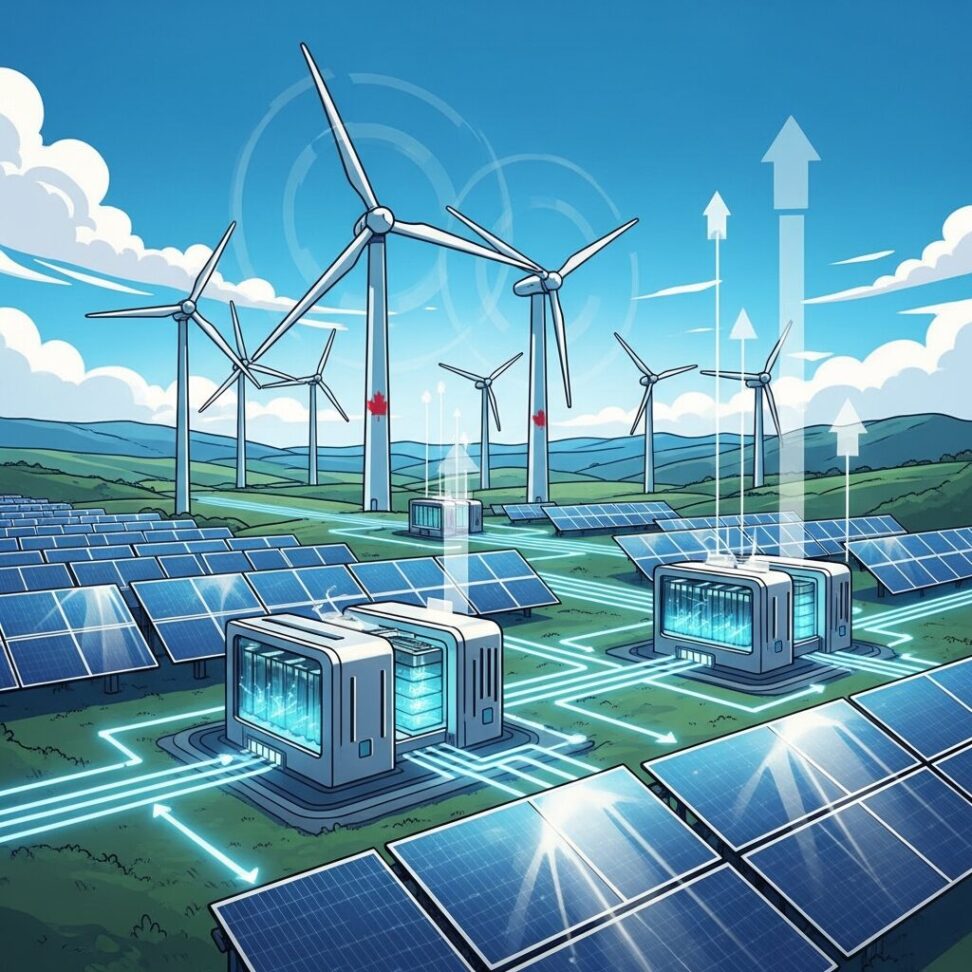
Canada’s Wind Solar and Energy Storage Industry Future
The Canadian Renewable Energy Association (CanREA) has announced that the foundation is now in place for significant growth in Canada’s renewable energy sector. This development comes as provincial and federal governments establish new frameworks to support wind, solar, and energy storage projects across the country.
New Federal Regulations Create Industry Certainty
The federal government has finalized regulations under the Canadian Net-Zero Emissions Accountability Act, providing clear direction for the renewable energy sector. These regulations establish binding emissions reduction targets for 2030 and interim objectives for 2026, creating a predictable environment for industry investment and planning.
CanREA serves as the voice of wind energy, solar energy, and energy storage solutions in Canada. The organization represents hundreds of companies operating in the renewable electricity sector, working to establish Canada as a global leader in clean energy delivery.
Provincial Commitments Drive Sector Growth
Several provinces have made substantial commitments to renewable energy development:
- Alberta plans to procure 4,000 MW of renewable energy capacity
- Ontario is moving forward with competitive procurement processes for wind and solar generation
- Saskatchewan has initiated steps toward renewable energy expansion
- Nova Scotia continues its procurement programs for clean electricity
These provincial initiatives represent a shift toward coordinated renewable energy planning across Canada. The combination of federal targets and provincial procurement processes creates multiple pathways for industry expansion.
Investment and Job Creation Potential
The renewable energy sector represents a significant economic opportunity for Canada. The industry has the capacity to attract billions of dollars in private sector investment while creating thousands of jobs in manufacturing, construction, and operations.
Energy storage technology plays a central role in this expansion. Battery storage systems enable grid operators to balance supply and demand, making renewable energy more reliable and dispatchable. This technology addresses one of the traditional challenges associated with wind and solar power generation.
Grid Modernization Requirements
The transition to higher levels of renewable energy requires substantial grid infrastructure upgrades. Canada needs to build new transmission lines and upgrade existing systems to accommodate increased renewable generation capacity. These infrastructure projects represent both a challenge and an opportunity for the sector.
Regional electricity cooperation will become increasingly important as provinces work to integrate variable renewable resources. Interprovincial transmission connections can help balance generation across different time zones and weather patterns.
Technology Costs Continue to Decline
Wind and solar technologies have experienced dramatic cost reductions over the past decade. Solar photovoltaic costs have dropped by more than 80 percent, while wind energy costs have fallen by approximately 40 percent. These trends make renewable energy increasingly competitive with traditional generation sources.
Battery storage costs have followed a similar trajectory, declining rapidly as production scales up and technology improves. The combination of cheaper generation and storage technologies makes renewable energy projects financially viable without subsidy support in many jurisdictions.
Environmental and Climate Benefits
Expanding renewable energy capacity directly supports Canada’s climate commitments under the Paris Agreement. Wind and solar generation produce electricity without greenhouse gas emissions during operation, helping to decarbonize the electricity sector.
The health benefits associated with reduced air pollution from fossil fuel combustion represent an additional advantage. Communities located near renewable energy projects experience improved air quality compared to areas dependent on coal or natural gas generation.
Industry Challenges Ahead
Despite positive developments, the sector faces several obstacles. Permitting and approval processes remain lengthy in many jurisdictions, delaying project development. Supply chain constraints affect equipment availability and project costs.
Workforce development represents another priority area. The industry needs skilled workers in electrical engineering, construction trades, and project management. Training programs and educational partnerships will be essential to meet future labor demands.
Path Forward for Stakeholders
Government policy stability will be critical for sustained industry growth. Clear regulatory frameworks and consistent procurement schedules help companies plan investments and manage risks. Streamlined permitting processes could accelerate project deployment timelines.
Indigenous partnership and community engagement remain important considerations for project development. Successful projects typically involve early consultation and benefit-sharing arrangements with affected communities.
The renewable energy sector stands at a pivotal moment in Canada. With supportive policies, infrastructure investment, and continued cost reductions, wind, solar, and energy storage can deliver an increasing share of the country’s electricity needs while creating economic opportunities and environmental benefits.
Analyzed and outlined by Claude Sonnet 4.5, images by Gemini Imagen 4.
**Source**
NEWS RELEASE: The stage is set for the future of Canada’s wind, solar and energy storage industry